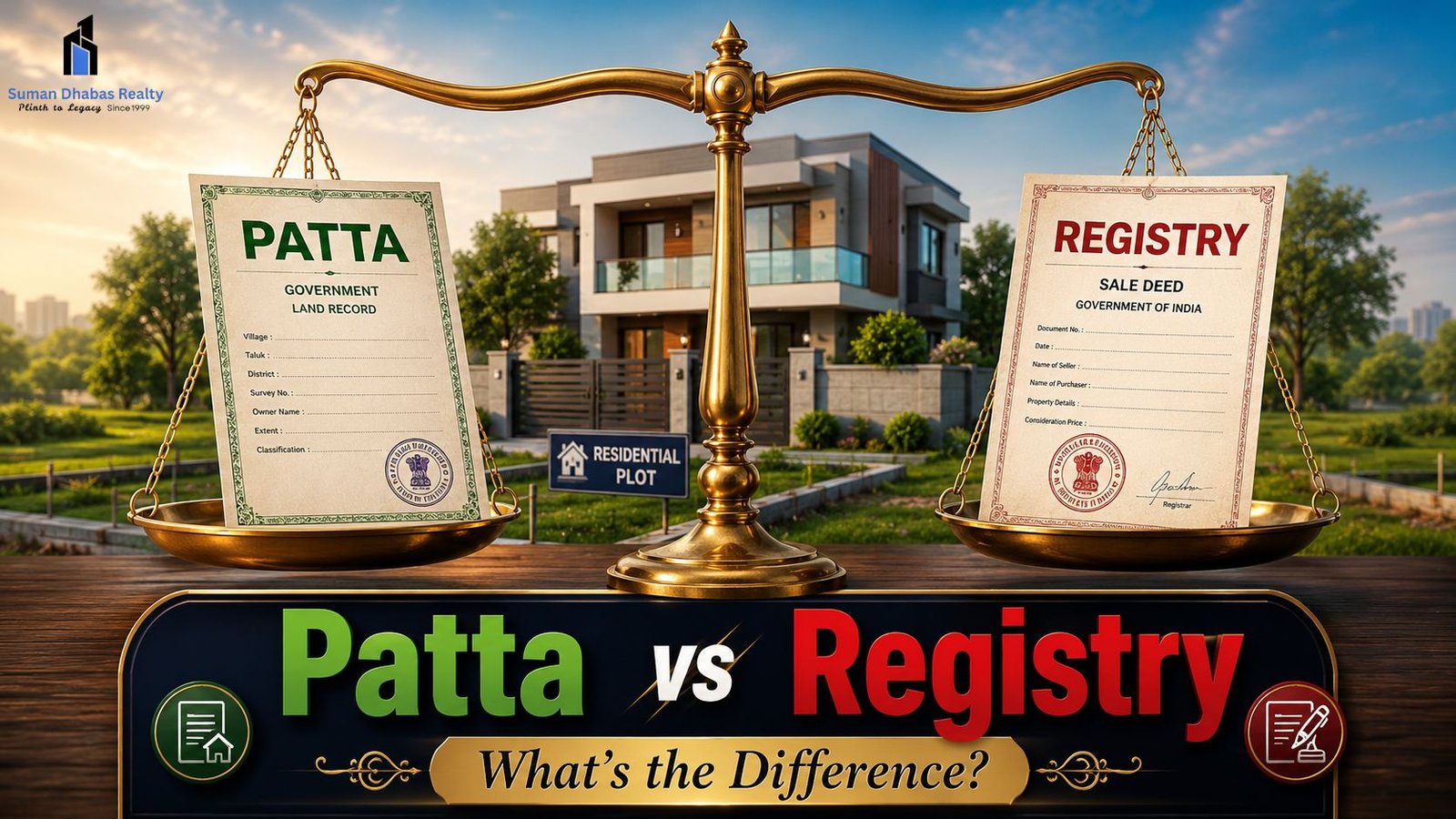
Buying property involves several documents, and each one can serve a different legal or administrative purpose. Terms such as patta, registry, sale deed, and lease deed are often used during property transactions. This can make property paperwork difficult to understand, especially for first-time buyers. The Patta vs Registry difference is particularly important when purchasing property in Rajasthan. A patta may be connected with the allotment or lease of land and the rights granted by an authority. Registry usually relates to the official registration of a property transaction.
These documents should not be considered interchangeable. Their meaning depends on the type of property, the authority involved, and the history of the transaction. Buyers should therefore understand what each document represents before moving forward with a purchase.
What Is a Patta?
A patta is a property-related document that can record allotment, leasehold rights, or certain rights over land. Its exact meaning depends on the type of property and the authority that issued it.
In Jaipur, property buyers may come across documents associated with the Jaipur Development Authority (JDA), including pattas and lease-related documents. The authority provides property services for different schemes and categories.
Not every patta carries identical rights. The terms written in the document and the manner in which the property was originally allotted are important.
A patta may include details such as:
- Plot or property number
- Property area
- Location
- Name of the allottee or holder
- Conditions attached to the property
- Name of the issuing authority
- Allotment or lease information
For this reason, buyers should carefully examine both the document and the authority responsible for issuing it.
Why Is a Patta Important?
A patta can provide evidence of an allotment or certain rights granted by the relevant authority. It can therefore be an important part of a property’s documentation.
However, a patta should not be examined by itself. A buyer also needs to understand the property’s title, earlier transactions, land records, approvals, and any restrictions that may apply.
For properties connected with the Jaipur Development Authority, online services can also provide access to certain property records and verification facilities.
This means a patta is useful, but it is only one component of a wider property verification process.
What Is Registry?
Registry generally means the official registration of a property transaction with the appropriate registration authority. In a normal property sale, the sale deed is registered as part of the transaction.
In Rajasthan, property registration services are available through the Registration and Stamps Department’s ePanjiyan system. The process can involve valuation, document preparation, payment of applicable charges, and registration.
Once the transaction is registered, an official record of that transaction is created.
A registered sale deed can contain information such as:
- Names of the buyer and seller
- Description of the property
- Agreed sale value
- Conditions of the transaction
- Execution and signature details
- Registration information
The ePanjiyan system also provides property search facilities. Depending on the available records, searches can be made using details such as the document number, party name, or property address.
These records can be useful when carrying out property due diligence before purchasing land or a house.
Patta vs Registry: What Is the Difference?
The simplest way to understand Patta vs Registry is to look at what each document is intended to establish.
| Factor | Patta | Registry |
|---|---|---|
| Basic purpose | May record allotment, leasehold rights, or related property rights | Records a legally registered property transaction |
| Usually connected with | Allotment, authority, scheme, or lease | Sale, transfer, or another registrable transaction |
| Issued/recorded by | Relevant land or development authority | Registration authority or sub-registrar |
| Main use | Records rights or conditions connected with the property | Creates an official record of the registered transaction |
| Verification | Verify the issuing authority and related property records | Check the registered deed and registration records |
| Can stand alone? | Should not be considered the only evidence of clear title | Registration does not automatically resolve every title-related concern |
The key point in the Patta vs Registry comparison is that these documents do not necessarily replace one another.
A property may have a patta from an authority and also have registered documents showing later transfers. Both sets of documents can form part of the property’s history.
Patta vs Registry: Which One Is More Important?
It would be incorrect to say that a patta is always more important than a registry, or vice versa.
The importance of each document depends on the property’s background. The original method of allotment, ownership structure, authority involved, and subsequent transfers can all affect which documents need to be examined.
Consider a property that was first allotted by a development authority. If that property was later sold, the buyer may need to review the original allotment or patta-related document along with the registered sale documents.
Therefore, the better question is not simply which document carries more importance.
Instead, buyers should ask whether the documents together show a consistent and understandable chain of rights and transactions.
Patta vs Registry When Buying a Plot
When purchasing a residential plot, looking at only the patta or registry is not enough.
Begin by checking the current owner’s name. Then compare it with earlier property documents. Details such as the plot number, area, location, and boundaries should be checked across the available records.
You should also look for issues that could affect the purchase. These may include outstanding dues, mortgages, restrictions, disputes, or other claims connected with the property.
Rajasthan’s ePanjiyan portal can help buyers access registration-related services and available property search information.
However, online searches should support document checking rather than replace it.
Does Registry Mean the Property Is Completely Safe?
No. Registration is an important part of a property transaction, but it does not mean that every possible property-related risk has been eliminated.
A buyer should still investigate the seller’s ownership, earlier documents, land records, approvals, and encumbrances. The property’s physical details should also match the information recorded in the documents.
For plotted developments and larger projects, buyers may also need to review project approvals and applicable RERA information. Rajasthan RERA records can contain information concerning matters such as the promoter’s title and encumbrances relating to project land.
Therefore, registration should be treated as one part of the complete verification process, not as a guarantee that no further checking is required.
Documents to Check Before Buying Property
Whether you are trying to understand Patta vs Registry or preparing to purchase property, it helps to create a document checklist.
Depending on the property, relevant documents and records may include:
- Current ownership documents
- Patta or lease deed, if applicable
- Registered sale deed
- Earlier sale deeds
- Land and revenue records
- Property tax records or applicable dues
- Approved layout or site plan
- Land-use details
- Records relating to encumbrances
- Development authority approvals
- RERA information, where applicable
- Physical measurements and property boundaries
The required paperwork can differ from one property to another. Buyers should therefore confirm the applicable requirements with the relevant authority or a qualified property professional.
How to Verify Property Documents in Rajasthan
Start by gathering copies of the documents available for the property. Do not rely on one document alone.
Next, compare the information across the documents. Check the owner’s name, plot number, property area, location, and boundaries. Any unexplained difference should be investigated before the transaction moves ahead.
The next step is to check relevant government records. Rajasthan’s ePanjiyan portal offers registration services and property search facilities.
For properties in Jaipur, the Jaipur Development Authority also provides online property-related services, including facilities connected with property records and verification.
Online records are useful, but they should not be the only source of verification. If the ownership chain is complicated or the documents contain inconsistencies, professional legal advice can help clarify the situation before purchase.
Patta vs Registry: Common Mistakes Buyers Make
Property buyers can make several mistakes when reviewing these documents.
One common mistake is assuming that having a patta automatically means the property’s title is completely clear. Another is believing that registration makes additional verification unnecessary.
Some buyers also examine only the current owner’s documents. They may overlook previous sale deeds and earlier ownership records.
Physical verification is another area that is sometimes ignored. The plot number, measurements, boundaries, and location mentioned in the paperwork should correspond with the actual property.
These checks matter because a document may contain information that does not match what exists on the ground.
Why Due Diligence Matters in Township Projects
Document verification remains important when buying property in a planned township. Organised roads, residential plots, open areas, and planned infrastructure can make a development attractive, but these features do not replace legal and document checks.
Buyers considering developments around Jaipur and the Khatu Shyam region may come across companies such as Suman Dhabas Realty Pvt Ltd as part of the area’s growing real estate activity.
When comparing a township or plotted development, buyers should examine the property’s documents, approvals, infrastructure information, and legal background. Marketing material should not be the only basis for a purchase decision.
A document-first approach gives buyers a clearer understanding of what they are actually purchasing.
Patta vs Registry: What Should a Buyer Remember?
The main idea behind Patta vs Registry is that the two can perform different functions.
A patta may document allotment, leasehold rights, or other property rights associated with an authority or scheme. Registry generally relates to the formal registration of a property transaction, such as a sale deed.
Neither document should be treated as a substitute for complete due diligence.
Before purchasing a property, review the full document chain. Confirm the ownership details and check relevant government records. Review approvals and compare the property’s physical details with the paperwork. It is also important to identify possible mortgages, disputes, restrictions, or other concerns.
Most importantly, do not base a major property purchase decision on the presence of just one document.
Final Thoughts on Patta vs Registry
Understanding Patta vs Registry can make property paperwork easier to evaluate.
A patta and a registered document can have different purposes, and both may appear in the documentation of the same property. The correct approach is to understand the role of each document rather than treating them as competing alternatives.
Before buying a plot or house, examine who issued each document, what rights it records, and how it connects with the property’s earlier and current records. Check whether the details remain consistent throughout the document chain.
Careful verification before purchasing can help buyers identify discrepancies early and make a more informed property decision.