If you own a plot and are planning to sell it, knowing how to sell a residential plot properly can help you avoid legal, financial and documentation problems. Selling a plot is not simply about finding a buyer and receiving payment. You also need to verify ownership, collect important documents, agree on the sale terms and complete the legal transfer correctly.
A residential plot may have several records connected to it, such as a sale deed, patta or lease deed, allotment documents, possession documents, site plans and mutation records. The exact documents depend on the location and type of property.
The process can become much easier when you prepare everything before finding a buyer. This guide explains the major steps involved in selling a residential plot in a simple way.
How to Sell a Residential Plot Step by Step
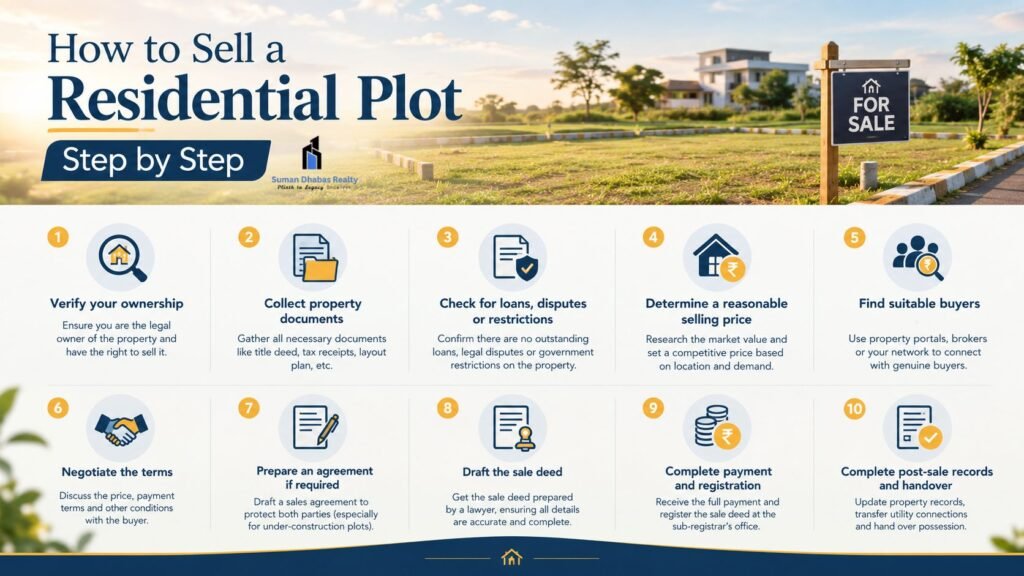
The basic process can be divided into the following stages:
- Verify your ownership
- Collect property documents
- Check for loans, disputes or restrictions
- Determine a reasonable selling price
- Find suitable buyers
- Negotiate the terms
- Prepare an agreement if required
- Draft the sale deed
- Complete payment and registration
- Complete post-sale records and handover
Let’s understand each step in detail.
1. Verify Your Ownership Before Selling
The first step in how to sell a residential plot is confirming that you have the legal right to sell it.
Check the ownership document available for your property. Depending on the property, this could be a registered sale deed, lease deed, patta, allotment document or another legally relevant document.
Your name and other property details should match the available records.
Also check:
- Plot number
- Plot size
- Location
- Boundaries
- Ownership details
- Previous transaction details
- Property identification numbers, where applicable
If the property has multiple owners, make sure the rights of all owners are properly understood before proceeding with the sale.
For example, if a plot is jointly owned by two people, one owner generally should not assume that they can independently sell the entire property.
2. Collect All Important Property Documents
Before advertising the plot, prepare a complete document file.
Common documents may include:
- Original registered sale deed
- Patta or lease deed, where applicable
- Allotment letter
- Possession letter
- Previous ownership documents
- Mutation or name-transfer records
- Approved site plan or plot map
- Property tax receipts
- No-dues certificate, where applicable
- Identity and address proof
- Relevant development authority documents
The exact list can vary depending on the location and nature of the property.
For example, JDA-related plot transfers can require documents such as the registered sale deed, possession letter, lease deed or patta, allotment letter and site plan.
3. Check for Loans, Disputes and Restrictions
Before you try to sell the plot, make sure there is no issue that could stop or delay the transaction.
Check whether the property has:
- An outstanding loan
- Mortgage
- Court case
- Stay order
- Ownership dispute
- Pending dues
- Acquisition issue
- Encumbrance
- Development authority restrictions
If the plot is mortgaged, speak with the lender before finalising the transaction.
Do not hide an existing legal or financial issue from the buyer. Such problems can create serious complications during registration.
A clean property file also makes the plot more attractive to genuine buyers.
4. Check the Property Records
Property records should be checked before entering into a final transaction.
In Rajasthan, the official e-Panjiyan system provides property-related services, including property searches and registration-related information. Its public e-search facility allows users to search property details using information such as document number, party name and property address.
This can help you review available registration information and previous ownership records.
However, online records should not be treated as a substitute for professional legal verification where the transaction involves complicated ownership or title issues.
5. Decide the Right Selling Price
Pricing is one of the most important parts of how to sell a residential plot.
Do not decide the price only by looking at what another seller is asking.
Consider:
- Location
- Plot size
- Road width
- Corner location
- Facing
- Nearby development
- Accessibility
- Local market rates
- Availability of utilities
- Development authority status
- Applicable government valuation
In Rajasthan, the e-Panjiyan system provides valuation-related services and information about DLC rates.
The market price and government valuation are not necessarily the same. Therefore, understand both before negotiating with buyers.
6. Prepare the Plot for Sale
A plot does not need expensive renovation like a house. However, its presentation still matters.
Make sure the boundaries are clear and the site is reasonably clean.
If possible, keep important information ready, such as:
- Plot dimensions
- Total area
- Road width
- Direction or facing
- Nearby landmarks
- Location map
- Available utilities
- Ownership documents
Clear information can make it easier for buyers to evaluate the property.
7. Find Genuine Buyers
Once your documents and pricing are ready, you can start marketing the plot.
You can use:
- Property websites
- Local property networks
- Social media
- Personal contacts
- Newspaper advertisements
- Local property consultants
However, avoid sharing sensitive documents publicly.
For example, you may show a buyer relevant ownership documents during verification, but you should avoid uploading personal identification documents or confidential information openly on the internet.
8. Negotiate the Sale Terms
Once you find an interested buyer, discuss the important terms clearly.
These may include:
- Final sale price
- Token amount
- Payment schedule
- Registration date
- Possession date
- Responsibility for applicable charges
- Documents to be provided
- Conditions for cancellation
Do not rely only on verbal promises.
Important terms should be properly documented.
9. Use an Agreement to Sell When Appropriate
Depending on the transaction, the parties may enter into an agreement to sell before the final sale deed.
An agreement can record the basic understanding between the seller and buyer.
It may mention:
- Property details
- Agreed price
- Advance amount
- Balance payment
- Registration timeline
- Default conditions
- Other agreed terms
A lawyer should review the agreement when the transaction involves significant value or complicated conditions.
An agreement to sell should also not be confused with the final registered sale deed.
10. Prepare the Sale Deed
The sale deed is the document through which the property transfer is formally recorded.
It should accurately mention details such as:
- Seller’s details
- Buyer’s details
- Property description
- Plot number
- Area
- Boundaries
- Sale consideration
- Payment details
- Other applicable terms
Errors in the property description can create problems later.
Therefore, carefully compare the sale deed with the original property documents before signing.
11. Complete Stamp Duty and Registration
This is one of the most important stages in how to sell a residential plot.
In Rajasthan, property registration is handled through the Registration and Stamps Department’s e-Panjiyan system. The portal provides services for property valuation, registration entry, payment and document-related processes.
The registration process can involve entering property and party details, preparing the deed, making applicable payments, uploading relevant documents and booking a registration appointment. The official process also requires presentation of original documents before the Sub-Registrar.
The applicable stamp duty and registration charges depend on the transaction and applicable rules. Always check the latest government rates instead of relying on an old estimate.
12. Receive the Sale Consideration Properly
The seller should maintain a clear record of the payment received from the buyer.
Avoid informal cash arrangements that are not properly documented.
The payment terms should match the sale agreement and sale deed.
For large property transactions, it is advisable to discuss the tax and financial implications with a qualified professional before finalising the transaction.
13. Complete Mutation and Name Transfer
Registration of the sale deed is an important part of transferring property rights, but post-registration records may also need to be updated.
Mutation or name transfer updates the ownership name in relevant government records.
The Rajasthan Local Self Government Department describes mutation as the process of transferring the recorded title ownership from one person to another after a property transfer.
Depending on the property and authority involved, the buyer may need to complete the relevant name-transfer process after registration.
Documents Required to Sell a Residential Plot
The exact documents vary by property. However, sellers should generally keep the following ready:
| Document | Purpose |
|---|---|
| Registered Sale Deed | Establishes ownership |
| Patta/Lease Deed | Relevant for leasehold properties |
| Allotment Letter | Shows original allotment details |
| Possession Letter | Supports possession records |
| Mutation Record | Shows recorded name transfer |
| Site Plan | Identifies plot layout and boundaries |
| Property Tax Receipts | Helps establish payment of dues |
| Identity Proof | Required for transaction formalities |
| No-Dues Documents | Helps show outstanding dues, where applicable |
| Previous Title Documents | Helps establish ownership history |
Not every property will require every document.
Common Mistakes to Avoid When Selling a Plot
Knowing how to sell a residential plot also means knowing what mistakes to avoid.
1. Selling Without Checking Title
Do not assume that an old document automatically proves clear ownership.
2. Accepting a Large Advance Without Documentation
Record payment terms properly before accepting significant amounts.
3. Giving Incorrect Plot Details
The area, boundaries and plot number should match the relevant records.
4. Ignoring Existing Loans
A mortgage or loan can affect the transaction.
5. Underestimating Registration Costs
Understand the applicable government charges before finalising the sale price.
6. Handing Over Documents Too Early
Provide documents for legitimate verification, but protect original documents and sensitive personal information.
7. Skipping Legal Verification
A professional property lawyer can identify issues that may not be obvious to a seller.
How Long Does It Take to Sell a Residential Plot?
There is no fixed timeline.
The time can depend on:
- Location
- Asking price
- Market demand
- Documentation
- Buyer availability
- Loan requirements
- Legal verification
- Registration appointment
- Any pending property issue
A plot with clear documents, realistic pricing and good accessibility may attract buyers more easily.
On the other hand, unclear ownership or missing documents can significantly delay the transaction.
Final Checklist Before Selling Your Plot
Before completing the sale, check the following:
Ownership is clear
Property documents are available
Plot details match the records
No major dispute is pending
Loan or mortgage status is clear
Property dues are checked
Selling price is decided
Buyer identity is verified
Payment terms are documented
Sale deed is checked carefully
Applicable stamp duty and registration charges are confirmed
Registration is completed
Possession and relevant documents are handed over properly
Post-registration name-transfer requirements are understood
Conclusion
Learning how to sell a residential plot is important because a plot transaction involves more than finding a buyer and agreeing on a price.
Start by verifying your ownership and collecting the complete property file. Then check for loans, disputes, dues and other restrictions. Set a realistic price and carefully negotiate the payment terms.
Once the buyer is finalised, ensure that the agreement and sale deed accurately describe the property. Complete the applicable stamp duty and registration process through the relevant authority. In Rajasthan, e-Panjiyan provides online facilities for valuation, registration and related property services.
Finally, make sure the necessary post-registration records and name-transfer formalities are completed.
A well-prepared seller can make the transaction smoother while reducing the risk of avoidable legal and financial problems.