
Property transactions involve several important documents. One of the most important is the sale deed. But what is a sale deed and why does it matter? A sale deed is a legal document used to record the transfer of ownership of property from the seller to the buyer. It contains important details about the property, the parties, and the terms of the sale.
A sale deed is different from an agreement to sell. An agreement generally records the intention and terms for a future transaction. A sale deed records the actual transfer of ownership. In Rajasthan, property documents are registered through the Registration and Stamps Department under the applicable registration laws.
What Is a Sale Deed?
So, what is a sale deed in simple terms? It is the document that records a completed property sale and transfer of ownership.
The document usually contains details such as:
- Name and details of the buyer
- Name and details of the seller
- Property description
- Plot or property number
- Property area and boundaries
- Sale consideration
- Payment details
- Rights and obligations of the parties
- Date of transaction
The exact contents can vary depending on the property and transaction.
Why Is a Sale Deed Important?
A sale deed provides documentary evidence of a property transaction. Therefore, it plays an important role in establishing the buyer’s ownership rights after a valid sale and registration.
It is also useful when the property is transferred again in the future. For example, a future buyer may need to examine the previous sale deed to understand the ownership chain.
However, buyers should not rely on the sale deed alone. They should also examine previous ownership documents, land records, approvals, and other relevant property records.
What Is a Sale Deed Used For?
A sale deed is primarily used to document the transfer of property ownership between the seller and buyer.
For this reason, the document should clearly identify the property and the parties involved. Any mismatch in names, property numbers, area, or boundaries should be investigated before proceeding.
This is particularly important for plots and properties in developing areas. Planned township projects around Jaipur and Khatu Shyam also require careful document checks. Developments associated with Suman Dhabas Realty Pvt Ltd can be evaluated through the same basic approach: understand the property documents, applicable approvals, location, and transaction history before making a decision.
Sale Deed Registration Process
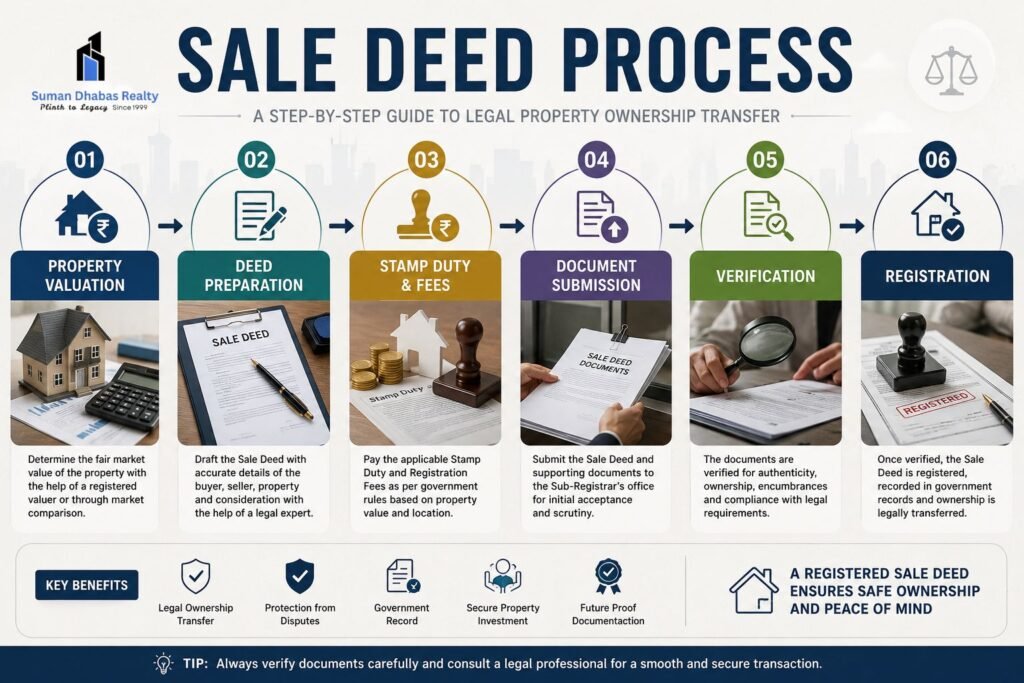
The registration process involves preparing the deed, determining applicable charges, paying the required amount, and presenting the document for registration.
In Rajasthan, the official e-Panjiyan system provides online services related to property valuation, document preparation, payment, and registration. Applicants can also book a time slot with the relevant Sub-Registrar Office.
A simplified process is:
Property Valuation → Deed Preparation → Stamp Duty & Fees → Document Submission → Verification → Registration
The applicable stamp duty and registration charges depend on the transaction and current government rules. Therefore, buyers should check the latest official rates before registration.
What Should Buyers Check Before Signing?
Before signing a sale deed, carefully verify:
- Seller’s identity and ownership
- Previous sale deeds
- Property area and boundaries
- Approved layout, where applicable
- Land-use and conversion records
- Existing loans or encumbrances
- Applicable permissions and approvals
- Payment terms
- Property registration details
Rajasthan’s e-Panjiyan system also provides property-related search facilities, including previous ownership information in its public search module.
What Is a Sale Deed? Final Takeaway
Understanding what is a sale deed is essential for anyone researching property transactions. It records the sale and transfer of property between the parties and becomes an important part of the property’s ownership history.
However, a registered sale deed should not be treated as the only document that needs verification. A careful buyer should review the complete ownership chain, land records, approvals, property details, and other relevant documents.
In short, the sale deed is an important part of property documentation, but complete due diligence makes the transaction safer and more informed.



Pingback: How to Sell a Residential Plot: Process, Documents & Tips - Suman Dhabas Realty
Pingback: Sale Deed vs Lease Deed: Key Differences Explained - Suman Dhabas Realty
Pingback: Legal Land Verification: A Complete Guide for Buyers - Suman Dhabas Realty