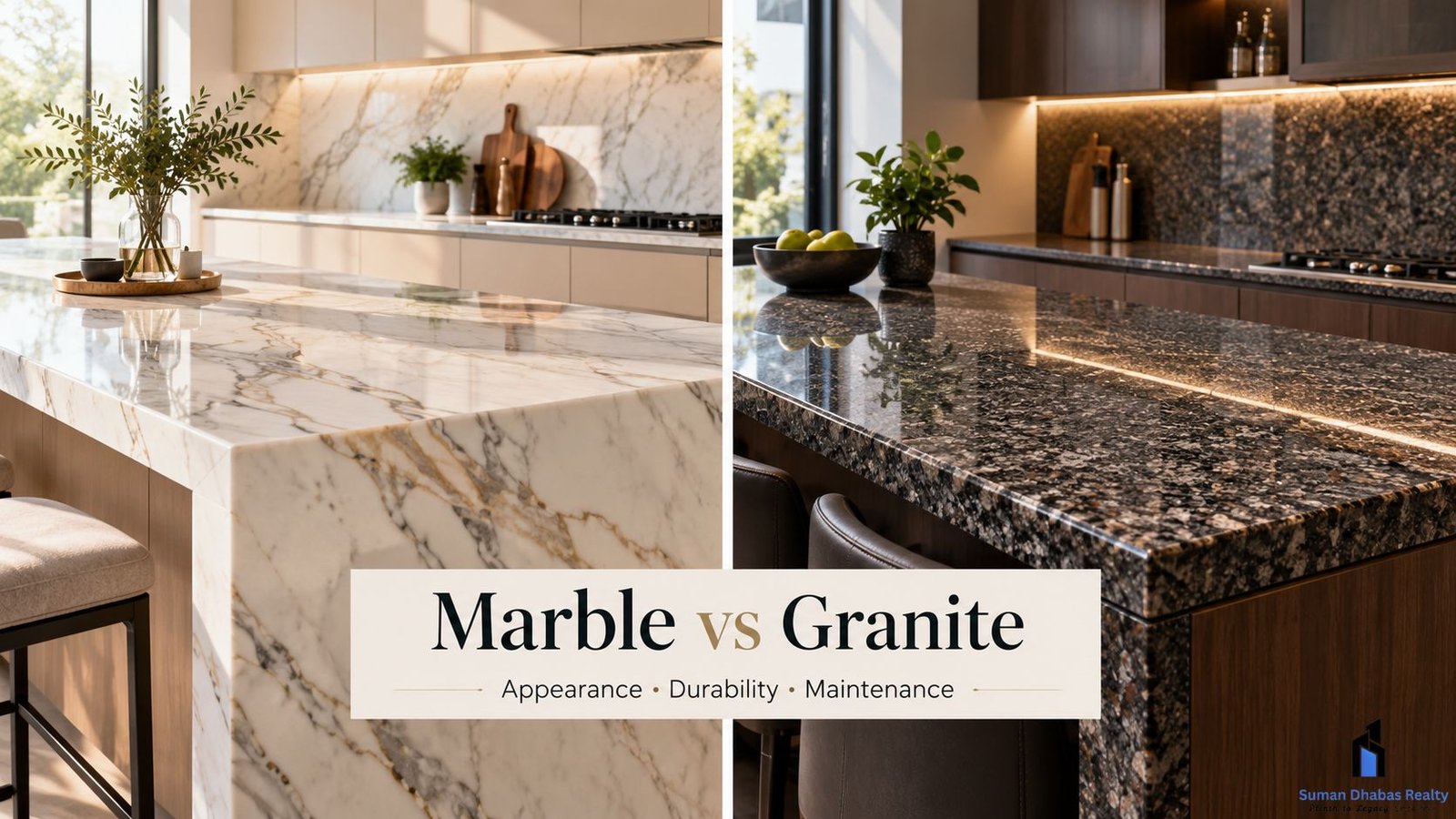
Choosing a natural stone for a home often comes down to appearance, durability, maintenance, and budget. The difference between marble and granite becomes important when selecting materials for kitchen counters, flooring, walls, bathrooms, and other surfaces. Both stones are popular, but they have different properties and suit different requirements.
What Is Marble?
Marble is a natural stone formed when limestone undergoes heat and pressure deep inside the earth. This process changes the original rock and creates the distinctive patterns found in marble.
Marble usually has a smooth appearance with soft veins running across its surface. White marble remains especially popular, although it is also available in shades such as beige, green, brown, grey, and black.
Because of its elegant appearance, marble is often used for flooring, staircases, bathroom surfaces, wall panels, countertops, and decorative features. However, marble can react with acidic substances. Lemon juice, vinegar, and some cleaning products may leave marks or dull the surface if they remain in contact with it.
What Is Granite?
Granite is an igneous rock formed when molten material cools slowly beneath the earth’s surface. It contains minerals such as quartz, feldspar, and mica. These minerals give granite its grainy appearance and wide range of natural colours.
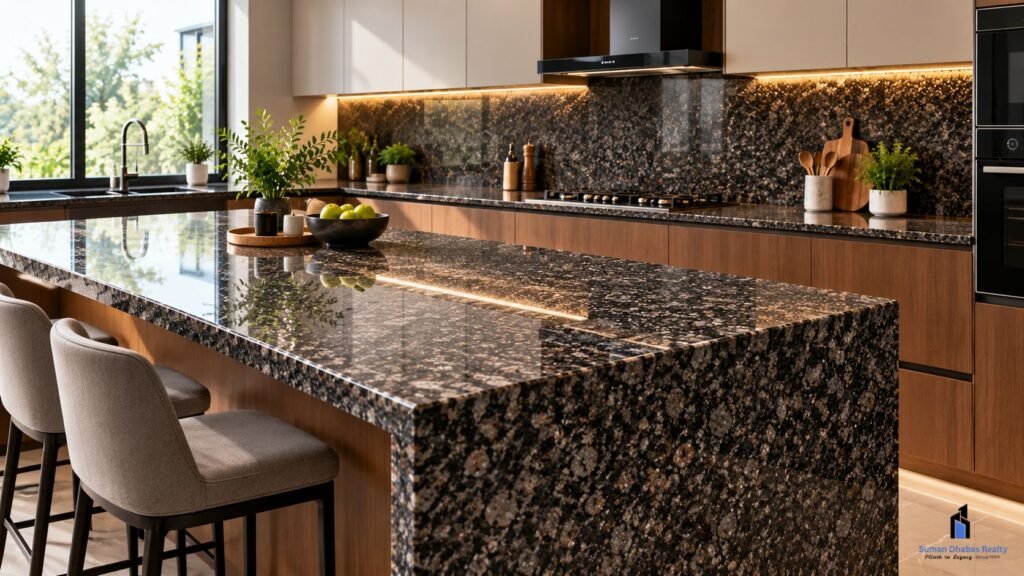
Granite is known for its strength and resistance to everyday wear. It comes in many shades, including black, white, grey, brown, red, and green. Its patterns can range from fine grains to bold mineral formations.
Granite works well for kitchen countertops, outdoor surfaces, flooring, stairs, bathroom counters, and areas that receive regular use. Its relatively strong and durable nature makes it a practical option for busy spaces.
Difference Between Marble and Granite
The difference between marble and granite mainly comes from their formation, composition, hardness, appearance, and maintenance needs.
| Feature | Marble | Granite |
|---|---|---|
| Rock type | Metamorphic | Igneous |
| Appearance | Veined and smooth | Grainy and speckled |
| Hardness | Generally softer | Generally harder |
| Scratch resistance | Moderate | High |
| Stain resistance | Requires more care | Generally better |
| Acid sensitivity | Higher | Lower |
| Common use | Flooring and decorative surfaces | Countertops and heavy-use areas |
| Maintenance | Regular care required | Usually easier to maintain |
Marble offers a softer and more luxurious visual character. Granite, on the other hand, often provides a stronger surface for demanding applications.
Marble or Granite for Kitchen Countertops?
For kitchen countertops, granite is often considered a practical choice because it handles regular use well. It also has good resistance to heat and scratches when properly maintained.
Marble can also be used in kitchens, but it requires greater attention. Acidic foods and spills can affect its finish. Therefore, homeowners should consider their cooking habits and maintenance preferences before selecting the material.
Marble or Granite for Flooring?
Both stones can work well for flooring. Marble creates a classic and refined appearance, making it suitable for living rooms, entrances, staircases, and other decorative areas.
Granite offers strong performance in spaces that experience frequent movement. It can be useful for commercial areas, entrance floors, stairs, and other high-traffic locations.
The final choice should depend on the room’s purpose, expected foot traffic, design style, and maintenance routine.

Maintenance Requirements
Natural stone requires proper care regardless of the material selected. Regular cleaning helps preserve the surface and prevents dirt from building up.
Marble generally needs more careful cleaning because acidic substances can damage its surface. Granite is usually more forgiving, but spills should still be cleaned promptly.
Sealing can also help protect some natural stone surfaces. The appropriate sealing schedule depends on the stone, finish, installation, and manufacturer’s recommendations.
Which One Should You Choose?
There is no single answer for every home. The difference between marble and granite becomes easier to understand when the intended use is considered first.
Choose marble if you want distinctive veins, a sophisticated appearance, and a decorative natural-stone finish. Choose granite if durability, everyday practicality, and resistance to regular wear are higher priorities.
Budget also matters. Prices can vary significantly depending on the stone’s quality, colour, thickness, finish, availability, and installation requirements. Therefore, comparing specific slabs is more useful than judging only by the material name.
For people planning a new home or evaluating residential property, material selection is only one part of the decision. Location, construction quality, infrastructure, documentation, and long-term usability also deserve attention. A research-focused approach, such as the one followed by Suman Dhabas Realty Pvt. Ltd., can help buyers consider these practical aspects alongside the property’s design and features.
Final Thoughts
Understanding the difference between marble and granite can make natural-stone selection easier. Marble stands out for its elegant veins and decorative appeal, while granite offers excellent durability for regular-use surfaces.
Before making a decision, compare the actual stone, installation requirements, maintenance needs, expected usage, and total cost. A suitable choice should balance appearance with practical performance.