
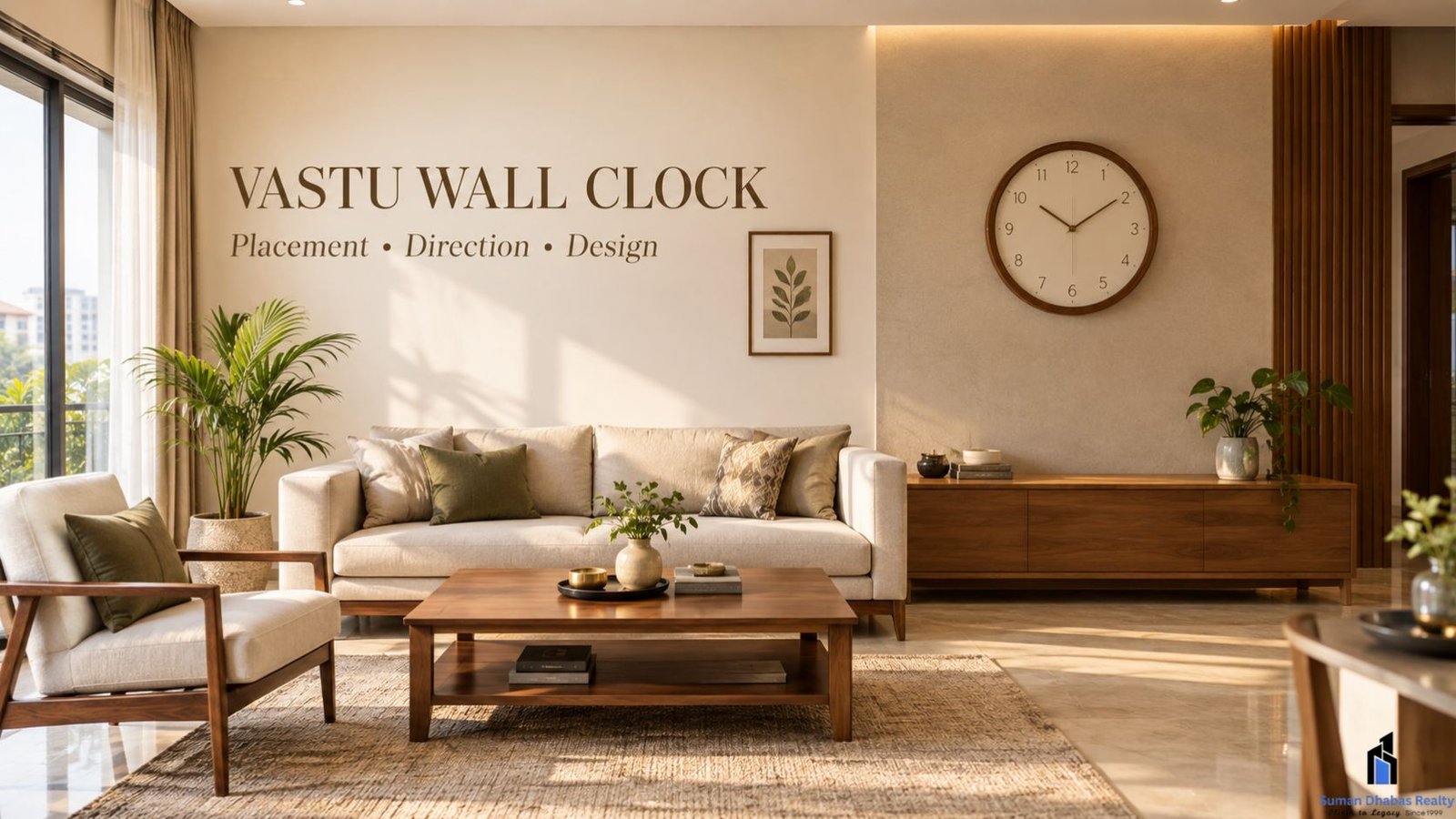
A wall clock is a practical part of home décor, but its placement also receives attention in traditional Vastu practices. The wall clock direction as per Vastu is generally considered important because different directions are associated with different qualities and energies. North and east are commonly recommended, while west may work as an alternative. South is usually avoided for clock placement.
When choosing a location, however, homeowners should also consider visibility, wall space, room layout, and overall décor. A clock should remain easy to read without making the wall look crowded.
Wall Clock Direction as Per Vastu: Which Direction Is Best?
According to commonly followed Vastu guidelines, the north direction is one of the preferred locations for a wall clock. North is traditionally associated with prosperity and financial growth. Therefore, many homeowners choose a north-facing wall for clocks in living rooms, studies, or other common areas.
The east direction is another commonly recommended option. Vastu traditions associate the east with the rising sun and new beginnings. As a result, an east-wall clock can be considered for bedrooms, living rooms, study areas, or spaces used in the morning.
The west direction is also mentioned in several Vastu guides. It can be useful when the north or east walls are occupied by windows, furniture, artwork, or other essential features.
Wall Clock Direction as Per Vastu for Different Rooms
The right position can vary depending on the room. Instead of following one rule without considering the layout, look at the room’s function and available wall space.
Living room:
North or east walls are commonly preferred. Place the clock where it remains clearly visible from the main seating area.
Bedroom:
East or north is often recommended. Keep the clock at a comfortable viewing height and avoid placing it directly above the bed.
Study room:
An east or north wall can provide a practical location. Choose a simple design that does not distract from the workspace.
Dining area:
A clock can be placed on a suitable north, east, or west wall if the position does not interfere with furniture or movement.
Directions to Avoid for a Wall Clock
The south direction is generally discouraged in popular Vastu guidance for wall clocks. Some traditions associate this direction with qualities that are considered unsuitable for a timekeeping object.
Southwest placement is also commonly avoided in modern Vastu recommendations. However, Vastu guidelines can differ between practitioners, so homeowners may encounter variations in specific recommendations.
More importantly, do not compromise everyday practicality just to place a clock in a particular spot. The clock should not obstruct a doorway, interfere with lighting, or create a safety issue.
Keep the Wall Clock Working and Accurate
One of the most frequently repeated Vastu suggestions is to avoid keeping stopped or broken clocks on display. A non-working clock is traditionally associated with stagnation or delayed progress.
Therefore, replace dead batteries promptly and repair damaged clocks. If a clock no longer works properly, removing it is a simple way to keep the space neat.
Also, make sure the clock shows the correct time. This is useful from a practical perspective even without considering Vastu.
Choose a Suitable Clock Shape
Round clocks are commonly preferred in Vastu-based interior guidance because their continuous shape is associated with smooth movement and balance.
However, square and rectangular clocks can also suit contemporary interiors. The final choice should depend on the room’s design, furniture, wall size, and personal preference.
Avoid choosing an oversized clock simply because the wall feels empty. The clock should complement the proportions of the room.
What Colours Work Well for Wall Clocks?
Light and neutral shades are frequently suggested for wall clocks. White, cream, light blue, metallic tones, and natural wood finishes can work well with many interior styles.
For a modern home, select a colour that coordinates with the existing furniture and wall finish. For example, a wooden clock can suit warm interiors, while a simple metallic clock can complement a contemporary room.
The colour should support the overall appearance rather than dominate the wall.
Practical Tips for Clock Placement
Along with following the wall clock direction as per Vastu, consider these simple placement tips:
- Keep the clock at a comfortable viewing height.
- Make sure it is clearly visible from commonly used seating areas.
- Avoid placing it where doors can hit it.
- Do not let furniture completely block the clock.
- Keep the surrounding wall reasonably uncluttered.
- Replace damaged clocks instead of displaying them.
- Check the battery regularly.
- Match the clock size with the wall.
These small details can make the clock both functional and visually balanced.
Wall Clock Placement in a Planned Home
Clock placement is only one small part of creating a comfortable home. When planning a residential property, buyers also consider the layout, room orientation, open areas, connectivity, infrastructure, and documentation.
This is particularly relevant in planned township developments, where the wider layout can influence how individual homes are designed and furnished. Suman Dhabas Realty Pvt. Ltd. works across plotted developments and other real estate formats, with its website describing an in-house approach covering areas such as planning, construction, and interiors.
For buyers considering a township or residential plot around Jaipur and nearby growth areas, these broader factors can be considered alongside personal preferences for interiors and traditional Vastu practices. The company’s portfolio includes plotted developments, villas, farmhouses, and resorts.
Final Thoughts
The wall clock direction as per Vastu is traditionally associated with the north and east directions, while west is often considered an alternative. South is generally avoided in popular Vastu recommendations.
Still, clock placement should also make practical sense. Choose a visible location, maintain the clock properly, and select a design that fits the room. Most importantly, remember that Vastu is a traditional design belief system, so these recommendations should be treated as guidance rather than guaranteed outcomes.
A well-positioned wall clock can add both function and character to a room when its placement, size, design, and surroundings work together.



Pingback: Things You Can Hang on a Wall: 10 Stylish Ideas - Suman Dhabas Realty