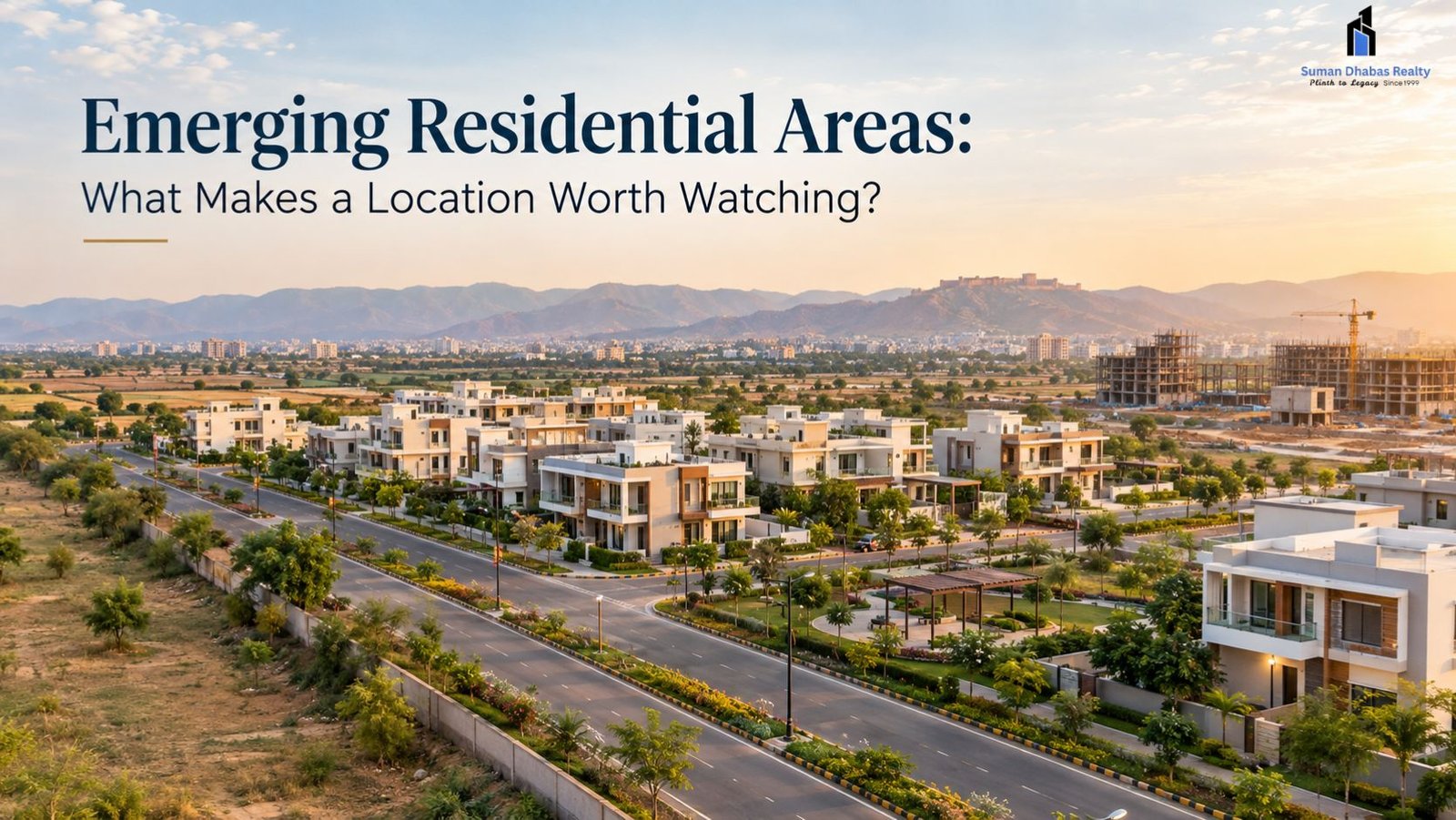
Emerging Residential Areas are locations that are gradually developing into attractive places for housing, investment, and everyday living. These areas may currently have open land, limited facilities, or developing infrastructure. However, new roads, commercial activity, schools, and housing projects can change their future potential.
For homebuyers and investors, identifying such locations early can be useful. However, growth should never depend on assumptions alone. Buyers should study infrastructure, connectivity, planning approvals, surrounding development, and long-term demand before making a decision.
What Are Emerging Residential Areas?
Emerging Residential Areas are neighbourhoods that are moving from early development toward more established residential communities. They may sit on the outskirts of a growing city or near major roads, employment centres, educational institutions, tourism destinations, or commercial hubs.
Initially, these locations may appear less developed than established neighbourhoods. Over time, however, new infrastructure can increase their attractiveness.
For example, a new road can improve accessibility. A nearby commercial centre can create convenience. Similarly, schools, hospitals, and public transport can encourage more families to move into the area.
What Makes Emerging Residential Areas Attractive?
Not every developing location becomes a successful residential destination. Several factors can influence its growth.
1. Better Road Connectivity
Connectivity is one of the first things buyers should examine. A residential location becomes more practical when residents can easily reach major roads, highways, workplaces, schools, markets, and other important destinations.
However, buyers should look beyond the current road network. Planned road improvements can also influence future accessibility.
2. Upcoming Infrastructure
Infrastructure often acts as a catalyst for residential development. New roads, transport links, utilities, educational institutions, healthcare facilities, and commercial zones can gradually change a locality.
Therefore, buyers should research both existing and officially planned infrastructure. Rumours about future projects should not form the basis of an investment decision.
3. Employment and Commercial Growth
People usually prefer to live within reasonable reach of workplaces and everyday services. As offices, businesses, retail centres, and industrial areas develop nearby, residential demand may increase.
This creates a useful connection between employment growth and housing demand. A location with genuine economic activity can have stronger long-term prospects than an area that depends only on speculative development.
Emerging Residential Areas and Property Demand
Property demand often develops in stages. Initially, buyers may choose an area because of lower prices or larger plots. Later, growing infrastructure can attract families and end users.
As more people move into the neighbourhood, shops and services may follow. This can create a cycle of development.
However, growth is not guaranteed. Buyers should compare actual demand with the number of new projects coming into the market. Too much supply without sufficient demand can affect resale prospects.
How to Evaluate Emerging Residential Areas
Before considering a developing location, create a simple evaluation checklist.
Check Location and Accessibility
Start by studying the area’s distance from major roads, employment hubs, schools, hospitals, markets, and transport facilities. Also consider how easily residents can access these places during normal traffic conditions.
Study Infrastructure Plans
Check whether proposed infrastructure has official backing. Government announcements, development plans, and approved projects can provide more reliable information than informal claims.
Verify Property Documents
Location alone does not make a property safe. Buyers should verify ownership records, land-use details, approvals, title documents, and other relevant paperwork before proceeding.
This is particularly important in developing areas because rapid growth can attract multiple projects and property claims.
Examine the Surrounding Development
Visit the area instead of relying entirely on online listings. Look at existing homes, roads, drainage, electricity, water supply, nearby businesses, and construction activity.
A physical visit can reveal details that property advertisements often miss.
Emerging Residential Areas Around Jaipur
Jaipur continues to expand beyond its traditional urban centres. As the city grows, several peripheral and developing locations are receiving greater attention from homebuyers and property investors.
Areas connected to highways, employment zones, tourism destinations, and upcoming infrastructure can gradually attract residential activity. Khatu Shyam is another location that has gained attention because of its strong religious tourism and increasing visitor movement.
This combination of tourism, connectivity, and residential development can create interesting possibilities. Still, buyers should assess each project and location independently rather than assuming that every developing area will appreciate.
Emerging Residential Areas and Township Development
Township projects can play a role in shaping developing residential locations. A well-planned township can bring housing, internal roads, open spaces, and supporting facilities together within a planned environment.
For example, Suman Dhabas Realty Pvt Ltd is involved in residential township development associated with the Khatu Shyam area. Its township planning reflects the broader trend of combining residential opportunities with the changing needs of developing locations.
For buyers, the important point is to evaluate the location, connectivity, documentation, planning, and future surroundings together. The township itself should be assessed on these practical factors rather than on promotional claims alone.
Benefits and Risks to Consider
Emerging locations can offer several potential advantages. Entry prices may sometimes be more accessible than established neighbourhoods. Buyers may also get larger plots or newer residential options.
At the same time, development can take years. Roads, utilities, schools, and commercial facilities may not arrive as quickly as expected.
Therefore, buyers should consider both opportunity and risk.
Potential benefits include:
- Greater choice of new properties
- Developing infrastructure
- Potentially lower entry costs
- New residential communities
- Future improvement in amenities
Possible risks include:
- Slow infrastructure development
- Limited current amenities
- Lower immediate rental demand
- Oversupply of properties
- Unverified development claims
Conclusion
Emerging Residential Areas can offer opportunities for people looking beyond established neighbourhoods. Yet, the best locations are not simply those with the lowest property prices. They are areas supported by genuine infrastructure, connectivity, economic activity, residential demand, and proper planning.
Before buying, study the location carefully. Verify property documents, visit the site, check official development plans, and compare current demand with future supply.
With this approach, buyers can make more informed decisions and identify residential locations that have realistic long-term potential rather than relying on speculation.