
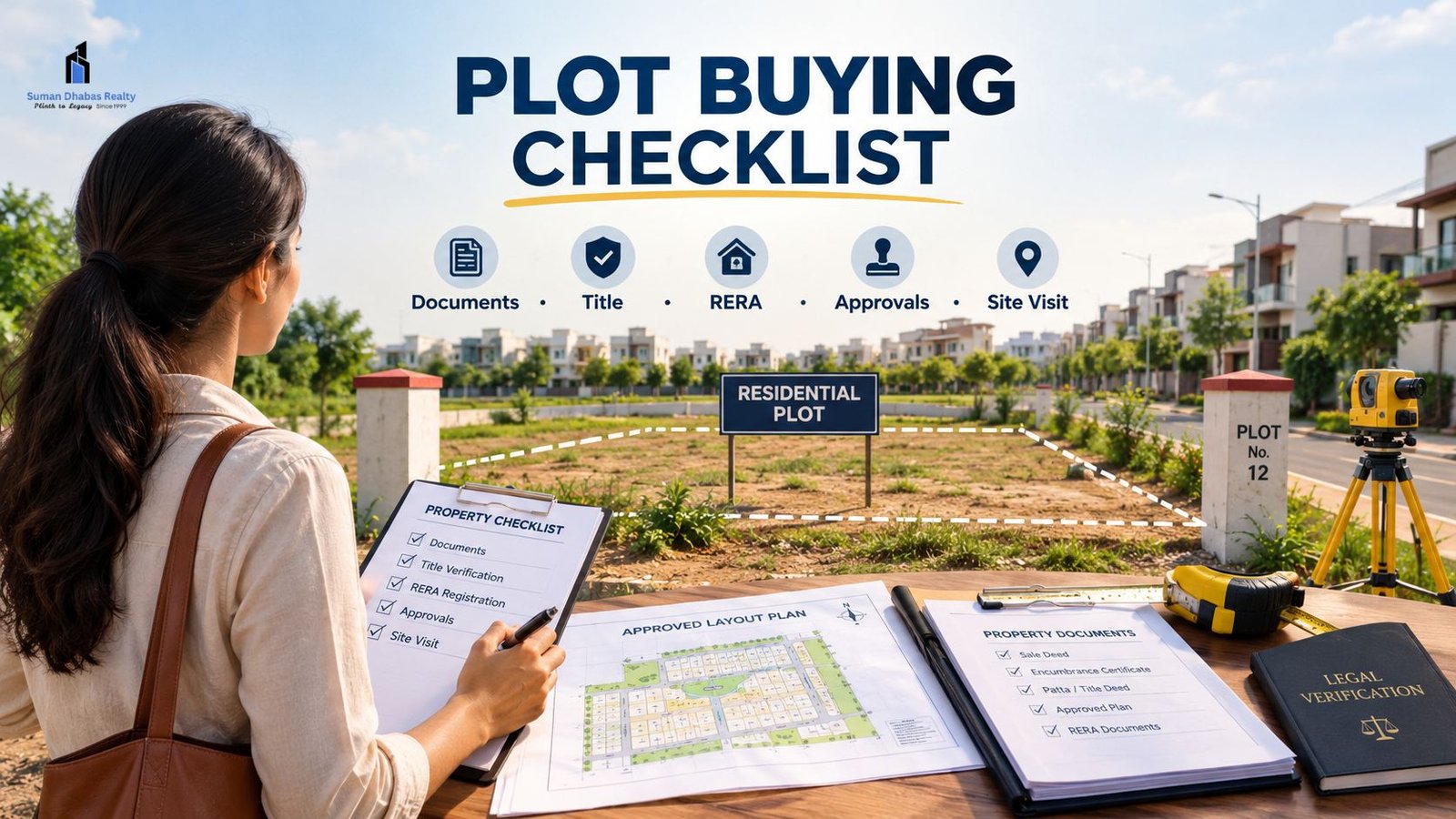
A Plot Buying Checklist can help you make a safer and more informed property purchase. Buying a plot involves more than checking the location and negotiating the price. You also need to verify ownership, documents, approvals, land use, boundaries and access before committing your money. Therefore, checking every important detail before paying a token amount can help you avoid costly problems later.
Plot Buying Checklist: 10 Important Checks
1. Verify the Seller and Ownership
First, confirm that the seller legally owns the plot and has the right to sell it. Check the registered sale deed, patta, lease deed, allotment letter or other relevant ownership documents.
Also compare the seller’s name with the property records. If the plot has multiple owners, verify that all required parties are involved in the transaction.
2. Check the Title History
Next, review the property’s ownership history. A plot may have changed hands through sale, inheritance, gift, partition or another transfer.
Therefore, do not check only the latest document. Review the previous ownership documents as well. A property lawyer can help identify gaps or potential title issues.
3. Check Encumbrances and Disputes
Before purchasing, check whether the plot has any mortgage, registered charge, legal dispute or other claim.
Also ask about pending loans, court cases, acquisition notices and family disputes.
A clean ownership history can make the transaction considerably safer.
4. Verify Land Use and Approvals
A plot may look suitable for a house but still have restrictions on its use. So, verify the applicable land-use classification.
If you are buying a plot in a developed project, check the approved layout plan and confirm that your plot appears correctly on it.
If the project falls under RERA, also check its registration details on the relevant state RERA portal. However, remember that RERA registration does not replace independent title and document verification.
5. Match the Plot With the Documents
Now compare the physical plot with its paperwork.
Check the:
- Plot number
- Plot area
- Length and width
- Four boundaries
- Road access
- Location in the approved layout
If the documents mention one area but the physical site appears different, investigate the difference before proceeding.
6. Visit the Plot Yourself
Never rely only on photographs or brochures.
Visit the site and inspect the surroundings. Check the actual road, drainage, electricity, water supply, streetlights and nearby development.
Also look for encroachments or construction that could affect the plot.
A physical inspection often reveals details that documents and advertisements cannot show.
7. Check Road Access
Proper access is essential for a residential plot.
Confirm that the plot connects to a usable road and that the access shown in the approved plan exists on the ground.
Also consider whether the road is wide enough for regular vehicles, construction equipment and emergency services.
8. Compare the Price and Total Cost
Do not judge a plot only by its asking price.
Compare similar properties in the same locality based on size, road width, location, development and approval status.
Additionally, calculate other expenses such as:
- Stamp duty
- Registration charges
- Legal fees
- Development charges
- Maintenance charges
- Applicable taxes
In Rajasthan, the official e-Panjiyan portal provides property valuation and registration-related services. It also provides information related to DLC rates and applicable charges.
9. Check Property Dues
Before finalising the purchase, check whether any dues remain unpaid.
These may include property tax, development charges, maintenance charges or other authority-related payments.
Ask the seller for relevant receipts and supporting records. Clearing these issues before registration can prevent unnecessary complications.
10. Review the Agreement Before Paying
Finally, carefully review the sale agreement before making a significant payment.
The agreement should clearly mention:
- Buyer and seller details
- Plot number and area
- Sale price
- Advance amount
- Balance payment
- Registration date
- Possession terms
- Other agreed conditions
Do not sign an agreement you do not understand. If the transaction involves complex ownership or legal issues, have a qualified property lawyer review it.
Quick Plot Buying Checklist
Before buying, make sure you have checked:
- ✓ Seller’s ownership
- ✓ Title history
- ✓ Encumbrance and disputes
- ✓ Land use
- ✓ Layout approval
- ✓ RERA status, where applicable
- ✓ Plot number and dimensions
- ✓ Physical site
- ✓ Road access
- ✓ Infrastructure
- ✓ Property dues
- ✓ Market price
- ✓ Registration costs
- ✓ Sale agreement
Red Flags to Watch For
Be especially careful if:
- The seller refuses to show original documents.
- Plot details do not match the paperwork.
- Approval documents cannot be verified.
- Agricultural land is being marketed as a residential plot without clear conversion status.
- The seller pressures you to pay immediately.
- The price is unusually low compared with nearby properties.
- Someone asks for a large undocumented cash payment.
These signs do not automatically mean the property is unsafe. However, they should encourage you to investigate further before proceeding.
Conclusion
A detailed Plot Buying Checklist helps you examine a property from both legal and practical perspectives. Start with ownership and title verification. Then check land use, approvals, encumbrances, physical boundaries and road access. Finally, compare the total cost and review the sale agreement carefully.
For Rajasthan properties, official e-Panjiyan services can help with property valuation, registration and property-related searches.
Most importantly, do not let a good location or attractive price replace proper due diligence. Spending extra time checking the property before buying can help you avoid much bigger problems later.



Pingback: Yelahanka Bangalore Area: Location, Connectivity & Real Estate - Suman Dhabas Realty