

Purchasing land involves more than finding a suitable location and agreeing on a price. Before making a payment or signing any property agreement, buyers need to establish that the land is legally clear and that the seller has the authority to transfer it. This is why knowing How to Perform a Legal Land Verification is essential before moving forward with a land purchase.
Proper verification involves reviewing ownership records, checking previous transactions, examining land details, identifying possible disputes, and confirming whether the property can legally be used for its intended purpose. It also means comparing documents with official records instead of depending only on information supplied by the seller.
A property can appear attractive and still have unresolved legal concerns. Differences in records, incomplete ownership history, mortgages, claims, or land-use restrictions can create problems later. A careful verification process helps buyers identify such issues before committing their money.
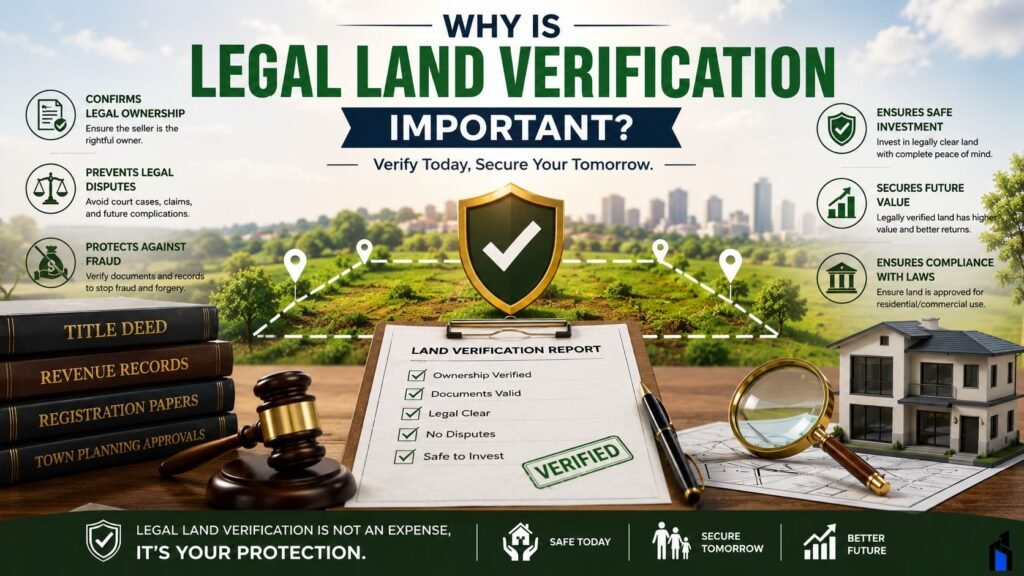
Why Should You Verify Land Before Buying?
Land cannot be treated like an ordinary purchase that can simply be returned if a problem appears. Once a transaction has been completed, resolving an overlooked legal issue can take considerable time and money.
Verification helps establish whether the person selling the property has a valid right to sell it. It can also bring attention to mortgages, claims, disputes, charges, or inconsistencies in property records.
Another advantage is that buyers can compare the information provided by the seller with government records. This creates a clearer picture of the property and helps reduce the possibility of avoidable complications.
A Practical Process for Legal Land Verification
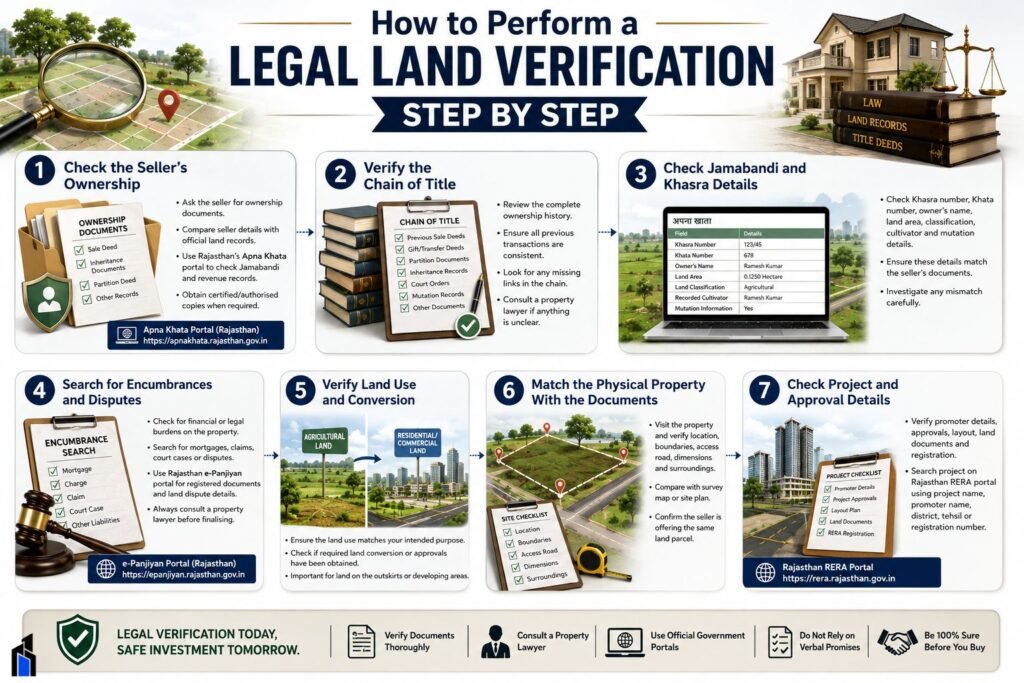
1. Establish Who Owns the Property
Start by confirming the current owner of the land. The seller should provide documents that support their ownership claim.
Depending on the property’s history, relevant records may include:
- Registered sale deeds
- Earlier title documents
- Inheritance documents
- Partition deeds
- Other records connected with ownership
The seller’s name should not be checked only against a brochure or agreement. Compare it with the applicable official land records as well.
For properties in Rajasthan, the government’s Apna Khata portal provides access to information such as Jamabandi and other revenue records. However, its online copies are meant for general information and may not immediately include every mutation. Where an authorised or certified copy is needed, buyers should obtain the appropriate record.
2. Trace the Property’s Ownership History
The latest sale deed does not always tell the complete story. A property may have passed through several owners before reaching the current seller.
Review the earlier documents to understand how ownership changed over time. The ownership history should form a consistent chain without unexplained gaps.
Depending on the property, examine records such as:
- Earlier sale deeds
- Gift or transfer deeds
- Partition documents
- Inheritance records
- Applicable court orders
- Mutation records
- Other documents affecting ownership
Rajasthan’s land-record modernization guidelines describe title search as an examination of present and previous ownership. They also refer to information concerning earlier transactions and non-encumbrance records.
If the ownership chain contains an unexplained gap, it is better to have a qualified property lawyer review the documents before proceeding.
3. Compare Jamabandi and Khasra Information
Land records provide important details that should correspond with the property’s supporting documents. In Rajasthan, Jamabandi records can help buyers examine ownership and other land-related information.
Check details including:
- Khasra number
- Khata number
- Recorded owner’s name
- Land area
- Land classification
- Recorded cultivator or holder
- Mutation details
The information should be consistent across the relevant records.
For example, if the area stated in a sale document differs from the land record, do not immediately treat the difference as a clerical error. Ask the seller for an explanation and supporting documents before continuing with the transaction.
4. Look for Mortgages, Claims and Disputes
A property may have an existing financial or legal interest attached to it. Therefore, checking for encumbrances is another important part of How to Perform a Legal Land Verification.
An encumbrance can include a mortgage, charge, claim, or another interest affecting the property. Buyers should also determine whether the land is connected with a court case or another dispute.
Rajasthan’s e-Panjiyan system provides an online search facility for registered documents and includes options concerning land dispute information.
Online searches are useful, but they should not be considered a replacement for professional legal examination. If a search reveals an unclear transaction, claim, or possible dispute, consult a property lawyer before making payment.
5. Confirm the Permitted Land Use
Land cannot automatically be used for every type of development. Its permitted use depends on its classification and applicable requirements.
Agricultural land, for example, may be subject to different rules from land intended for residential or commercial use. If your plan involves constructing a home or purchasing a plot in a development, check whether the land is suitable for that purpose.
You should also determine whether the necessary conversion or approvals have been obtained wherever they are applicable.
This check becomes especially relevant around the outskirts of expanding cities. New development can increase interest in an area, but growth potential does not replace the need to confirm the property’s legal status.
6. Inspect the Actual Land
Document verification is only one part of the process. Buyers should also visit the property and compare what they see on the ground with the available records.
During the inspection, consider:
- Location
- Boundaries
- Access road
- Approximate dimensions
- Surrounding development
A survey or site plan can help you understand the property’s position more clearly. Where the boundaries are uncertain, a professional survey can provide additional clarity.
Most importantly, confirm that the land being offered by the seller is the same parcel identified in the documents.
7. Examine Development and Project Approvals
A separate level of verification is necessary when purchasing a plot inside a township or larger development.
In such cases, examine the project’s relevant documents instead of checking only the individual plot. Important information can include the promoter’s details, layout, project approvals, land documents, and applicable registration requirements.
For projects covered by RERA requirements, buyers can search the official Rajasthan RERA portal using information such as:
- Project name
- Promoter name
- District
- Tehsil
- Registration number
The Rajasthan RERA registration checklist also refers to project information such as its location, site plan, total project area, promoter details, and legal title documents.
Therefore, a township should not be evaluated only on the basis of its appearance, amenities, or location. The legal status and documentation behind the development are equally important.
Legal Verification for a Township Plot
A township purchase requires buyers to look beyond the boundaries of their individual plot. The wider land and development framework can also affect the transaction.
Before proceeding, review information concerning:
- Ownership of the underlying land
- Layout and development approvals
- Plot size and dimensions
- Road and access arrangements
- Applicable land-use permissions
- Project registration, where required
- Promoter and project information
- Sale and registration documents
For buyers considering township opportunities associated with Suman Dhabas Realty Pvt Ltd, the specific project documents and applicable approvals should be reviewed before making an investment decision.
Good infrastructure can make a development attractive, but it should complement legal due diligence rather than take its place.
8. Review the Sale and Registration Papers
Once the property’s legal background has been examined, carefully review the transaction documents before completing the purchase.
Check that the agreement and proposed sale deed correctly state details such as:
- Buyer’s name
- Seller’s name
- Property description
- Khasra or plot details
- Area and dimensions
- Sale consideration
- Payment terms
- Possession details
- Other agreed conditions
Rajasthan’s e-Panjiyan system provides online facilities connected with property registration and related procedures. Its citizen guidance includes entering property and party information, preparing the deed, scheduling a registration appointment, and presenting original documents at the Sub-Registrar Office.
Do not sign a document simply because the seller asks you to do so. If any clause is unclear, seek professional advice before signing. A property lawyer can help explain terms that could create obligations in the future.
Mistakes Buyers Should Avoid
Even a detailed verification process can become ineffective if buyers overlook basic precautions.
Depending Only on Seller-Provided Documents
Documents supplied by the seller should be cross-checked against official records. Never treat them as the only source of verification.
Ignoring Earlier Ownership Records
The current owner’s document may not explain the complete ownership history. Earlier records can be important for establishing a clear chain of title.
Treating Mutation as Proof of Ownership
Mutation updates revenue records, but it does not by itself establish the complete legal title. The underlying ownership documents still require examination.
Skipping the Site Visit
Paperwork should correspond with the actual property. Physical inspection can help identify differences in location, boundaries, dimensions, or access.
Paying Because of Urgency
A limited-time offer or pressure for immediate payment should not cause you to skip due diligence. Take enough time to review the property’s legal position.
Avoiding Professional Legal Advice
Complex ownership histories, disputes, or unclear documents can be difficult to assess without professional assistance. A qualified property lawyer can examine such issues before you proceed.
Legal Land Verification Checklist
Before finalising a land purchase, use a checklist to make sure the important areas have been covered.
Ownership and Records
- Seller’s identity and ownership
- Original title documents
- Previous ownership documents
- Chain of title
- Jamabandi details
- Khasra and Khata information
- Mutation records
Legal Status
- Encumbrance or transaction search
- Existing claims
- Court disputes, where applicable
- Land-use status
- Conversion documents, where applicable
Project Verification
- Layout approvals
- Development permissions
- Promoter details
- Project registration, where applicable
- RERA information, where applicable
Physical and Transaction Checks
- Property boundaries
- Physical measurements
- Access and location
- Sale agreement
- Proposed sale deed
- Registration-related documents
Final Thoughts
Understanding How to Perform a Legal Land Verification can help buyers make a more informed property decision. The process involves more than checking one document. Ownership, past transactions, revenue records, encumbrances, land use, project approvals, physical boundaries, and registration papers all deserve attention.
Most importantly, do not rely on appearance, location, or verbal assurances alone. Compare documents with official records, investigate inconsistencies, and seek professional legal assistance when the ownership history or documentation is complicated.
A systematic verification process makes the purchase more organised and can help reduce the risk of costly legal problems later.



Pingback: Residential Plot for Investment: Benefits, Risks & Buying Tips - Suman Dhabas Realty
Pingback: Emerging Residential Areas: Key Factors for Future Growth - Suman Dhabas Realty