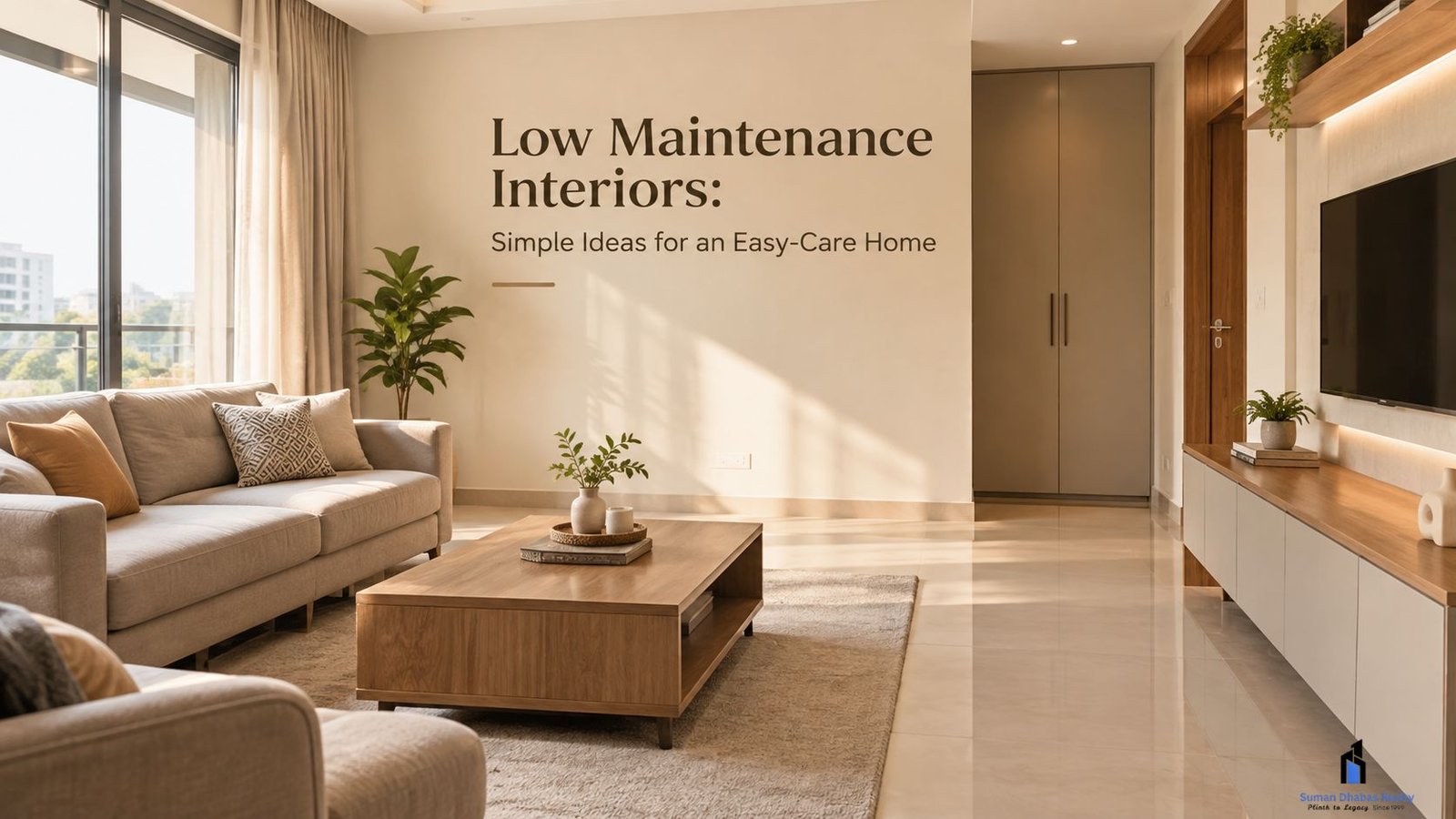
A beautiful home does not always need complicated décor or constant upkeep. Low Maintenance Interiors focus on practical materials, simple layouts, easy-to-clean surfaces, and furniture that fits everyday routines. This approach can make a home more comfortable while reducing the time spent on cleaning, repairs, and frequent replacements. With thoughtful planning, homeowners can create spaces that look neat without making daily maintenance a difficult task.
What Are Low Maintenance Interiors?
Low Maintenance Interiors use design choices that are simple to manage over time. Instead of selecting materials only for their appearance, homeowners can consider durability, cleaning requirements, moisture resistance, and everyday use.
For example, washable wall finishes can make routine cleaning easier. Durable flooring can handle regular foot traffic, while furniture with simple shapes can collect less dust than heavily detailed pieces.
The goal is not to create a plain home. Instead, the idea is to balance appearance with practicality.
Choose Easy-Clean Flooring
Flooring has a major effect on daily maintenance. Smooth surfaces are generally easier to sweep and mop because they have fewer grooves where dust can collect.
Porcelain and ceramic tiles are common choices for areas that need regular cleaning. They are available in different colours, patterns, and finishes. Vinyl flooring can also provide a practical option in suitable indoor spaces.
For bedrooms and living areas, homeowners should also consider how easily the flooring handles stains, scratches, and everyday movement.
Select Practical Wall Finishes
Walls can require regular cleaning, especially in homes with children or pets. Washable paint can make small marks easier to remove without repainting the entire wall.
Neutral shades can also help create a clean appearance. Beige, soft grey, white, and muted earthy colours can work with different furniture styles. Moreover, simple wall treatments reduce the need for frequent decorative updates.
Use Furniture With Simple Designs
Furniture can influence both cleaning time and visual clutter. Large pieces with complicated detailing may require more effort to dust. Therefore, simple furniture designs can work well for Low Maintenance Interiors.
Choose furniture with smooth surfaces and practical finishes. Storage beds, closed cabinets, and multipurpose tables can also help keep everyday items organised.
Furniture should also leave enough space for cleaning tools to move around easily. A well-planned layout can make regular sweeping and mopping much simpler.
Add Smart Storage Solutions
Clutter can make even a clean home appear untidy. Smart storage helps keep frequently used items organised and reduces the number of objects left on open surfaces.
Built-in wardrobes, closed shelves, drawers, and storage benches can provide useful space without adding unnecessary visual elements. In smaller homes, multifunctional furniture can offer additional storage without occupying too much floor area.
As a result, homeowners can maintain a more organised interior with less daily effort.
Focus on Durable Kitchen Materials
The kitchen needs materials that can handle frequent cooking, spills, heat, and cleaning. Easy-to-wipe countertops and cabinet finishes can make everyday maintenance more convenient.
Tiles or other suitable washable surfaces can also simplify cleaning around cooking areas. Handles and fittings should be practical and easy to access.
Good ventilation is equally important. It helps move cooking odours and excess moisture out of the space. This can contribute to a more comfortable kitchen environment.
Keep Bathrooms Simple and Functional
Bathrooms benefit from materials that can handle regular exposure to water and humidity. Smooth tiles, easy-clean fittings, and practical storage can reduce cleaning challenges.
Avoiding unnecessary decorative elements can also make the room easier to maintain. Wall-mounted storage may help keep products organised while leaving more floor area open for cleaning.
Proper ventilation should remain a priority because it helps reduce excess moisture inside the bathroom.
Use Fabrics That Are Easy to Maintain
Soft furnishings can add warmth without creating unnecessary maintenance work. Washable curtains, removable cushion covers, and durable upholstery can be useful choices for busy households.
For rugs, select materials that suit the amount of foot traffic in the room. A low-pile rug, for example, can be easier to vacuum than a thick, high-pile alternative.
These small decisions can support the practical nature of Low Maintenance Interiors.
Choose Quality Over Excessive Décor
A low-maintenance home does not need to be completely minimal. However, every decorative item adds another surface that may need cleaning.
Instead of filling every corner, choose a few useful or meaningful pieces. A simple artwork, indoor plant, mirror, or statement light can provide character without creating excessive visual clutter.
This approach also makes it easier to change the appearance of a room later.
Consider Maintenance Before Designing
Before selecting any material or furniture, think about how it will perform in everyday life. Ask whether the surface is easy to clean, whether the material can handle regular use, and whether replacement parts are readily available.
This practical approach is especially useful when planning a new home. For people exploring residential developments, factors such as layout, ventilation, storage, and material quality can influence long-term convenience.
Suman Dhabas Realty Pvt Ltd is associated with residential development in the Khatu Shyam area of Jaipur. For prospective homeowners, considering everyday functionality alongside location and planning can help create a home that remains comfortable and practical over time.
Benefits of Low Maintenance Interiors
A well-planned interior can offer several practical benefits:
- Less time spent on routine cleaning
- Easier organisation
- Better use of available space
- Lower need for frequent replacements
- Greater convenience for busy households
- A cleaner and more organised appearance
- Better suitability for everyday family life
However, low maintenance does not mean maintenance-free. Every home still needs regular cleaning, repairs, and occasional upgrades.
Conclusion
Low Maintenance Interiors are based on practical choices rather than complicated decoration. Durable flooring, washable surfaces, simple furniture, organised storage, and easy-care fabrics can reduce everyday effort while keeping a home attractive.
The best approach is to consider maintenance at the planning stage. When appearance, durability, comfort, and usability work together, homeowners can create interiors that remain functional and pleasant for years.