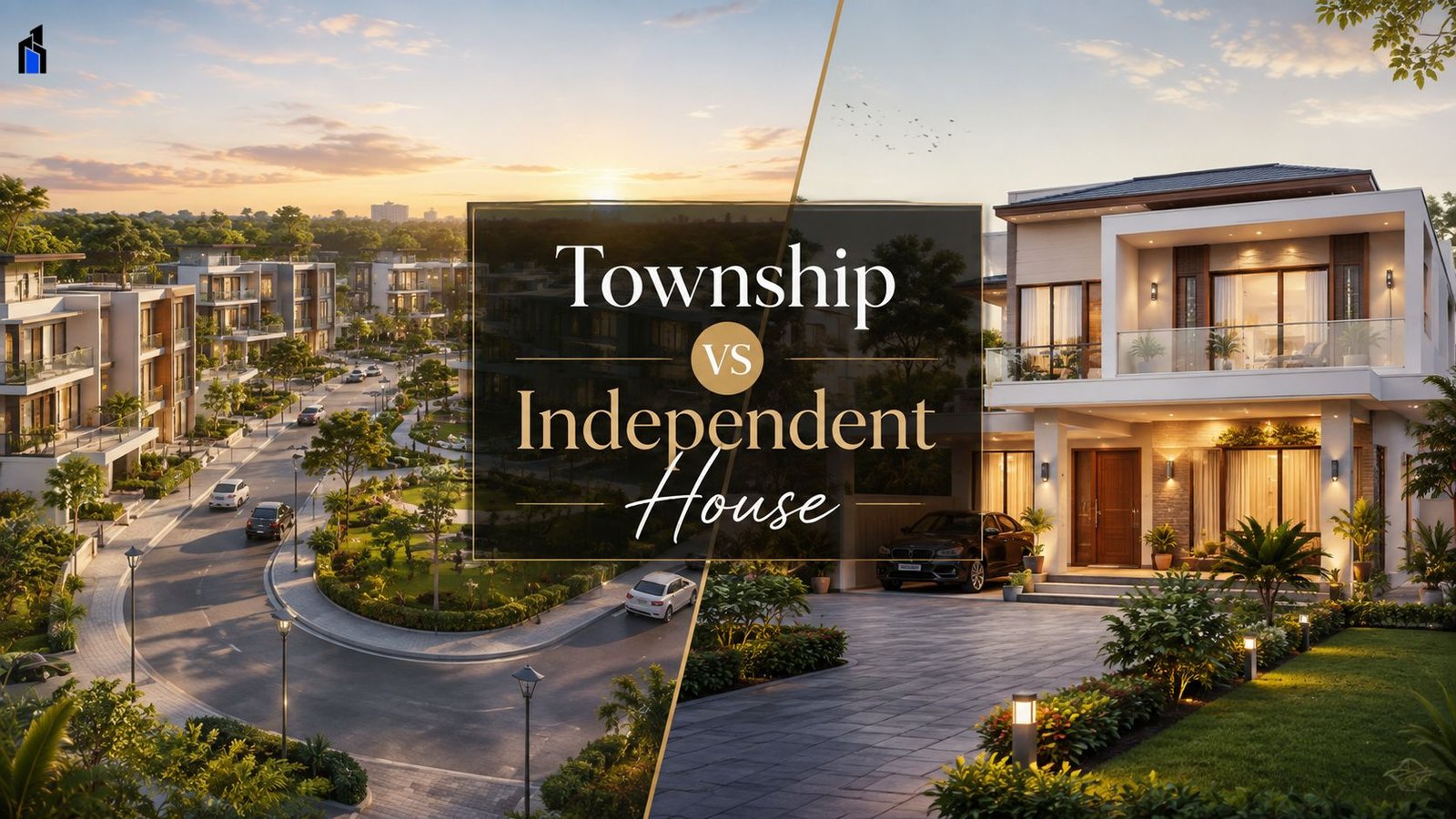
Buying a home is a long-term decision that can shape your lifestyle, finances, and future plans. When comparing Township vs Independent House, buyers often focus on price. However, factors such as privacy, maintenance, security, space, location, and community living can be equally important.
A township provides a planned residential environment with shared infrastructure and community facilities. An independent house gives the owner greater control over the property and its design. The better choice depends on what suits your family, budget, lifestyle, and future requirements.
Understanding the Two Options
A township is a planned residential development that brings homes or plots together with common infrastructure. Depending on the project, it may include roads, landscaped areas, parks, walking spaces, security arrangements, community areas, and recreational facilities.
The main benefit of township living is the overall planning. Residents become part of an organized residential environment instead of developing a property separately.
An independent house, by comparison, is a standalone property. The owner generally has greater control over the building, land, interiors, parking, garden, and future modifications. This flexibility can be valuable, but it also means taking responsibility for repairs, maintenance, security, and other property-related work.
Township vs Independent House: Major Differences
Privacy and Personal Space
An independent house usually provides greater privacy because you do not share common residential spaces with a large community. It can suit buyers who prefer a quieter and more private lifestyle.
A township can still provide privacy, particularly when it offers independent homes or plots. However, residents remain part of a larger planned community.
If privacy ranks highest on your list, an independent house may be more suitable.
Security
Security requirements can differ significantly between the two options.
With an independent house, owners may need to arrange measures such as gates, boundary walls, CCTV systems, alarms, or security personnel.
A township may provide shared security arrangements as part of its infrastructure. However, facilities differ between developments. Buyers should check the actual security provisions instead of assuming that a particular service comes with the property.
Maintenance Responsibilities
Maintenance is another important factor to consider.
Independent homeowners usually handle most property-related work themselves. This may include plumbing, electrical repairs, drainage, gardens, external walls, and other maintenance needs.
In a township, certain common facilities and infrastructure may receive collective maintenance. This can reduce some individual responsibilities. However, maintenance charges and responsibilities vary from one project to another, so buyers should understand the complete maintenance structure before purchasing.
Which Option Gives You More Freedom?
An independent house generally offers more flexibility. Owners can make decisions about interiors, landscaping, renovations, and other changes within applicable building rules and local regulations.
Townships may follow community guidelines to maintain consistency throughout the development. These rules can cover construction, external appearance, parking, landscaping, and common areas.
Therefore, buyers who want extensive customization should carefully review the rules attached to both options.
Compare the Total Cost
The Township vs Independent House decision should not depend only on the advertised purchase price.
An independent house may involve additional expenses for construction, interiors, boundary walls, landscaping, security, and future repairs.
A township may provide a more structured purchase experience, but buyers should still account for registration, maintenance, development charges, utilities, and other applicable costs.
Instead of comparing only the initial price, estimate the total expenses you may face over several years.
Community Living or Independent Lifestyle?
Township living can work well for people who enjoy a community-oriented environment. Families may appreciate nearby neighbours, shared open spaces, and common facilities when available.
An independent house provides a different experience. It allows homeowners to maintain their own space without being closely connected to a larger residential community.
Neither lifestyle is automatically better. Your personal preferences should guide the decision.
Think About Your Future Requirements
Your housing needs can change over time. Your family may grow, you may require a home office, need additional parking, or consider renting part of the property in the future.
An independent house often provides more room for customization and future changes. A township may appeal more to buyers who value a planned setting and convenience over extensive modifications.
Consider your expected needs before making a final choice.
Location Still Matters
Property type should never be the only deciding factor. Location can strongly influence your daily experience and long-term suitability.
Check road connectivity, nearby schools, healthcare facilities, markets, public transport, surrounding development, and your regular travel needs. If you are exploring areas around Jaipur and Khatu Shyam, visit the location personally to understand the surroundings and connectivity.
Complete Legal Checks Before Buying
Regardless of the property type, complete the necessary legal checks before purchasing.
Verify ownership documents, relevant approvals, land records, and registration details. For eligible projects in Rajasthan, buyers can use the official Rajasthan RERA portal to check project information through details such as district, tehsil, project name, promoter, or registration number.
The Rajasthan e-Panjiyan portal also provides property registration services and public property search facilities. These checks can support better decision-making, although they do not replace professional legal advice.
Final Verdict
There is no universal winner in the Township vs Independent House comparison.
Choose a township if you value planned surroundings, community living, common infrastructure, and shared facilities. An independent house may suit you better if you prioritize privacy, control, customization, and flexibility.
Before buying, compare the location, total cost, maintenance, security, available space, community environment, legal documentation, and future potential. A property that matches your current needs while supporting your long-term plans is likely to be the better choice.