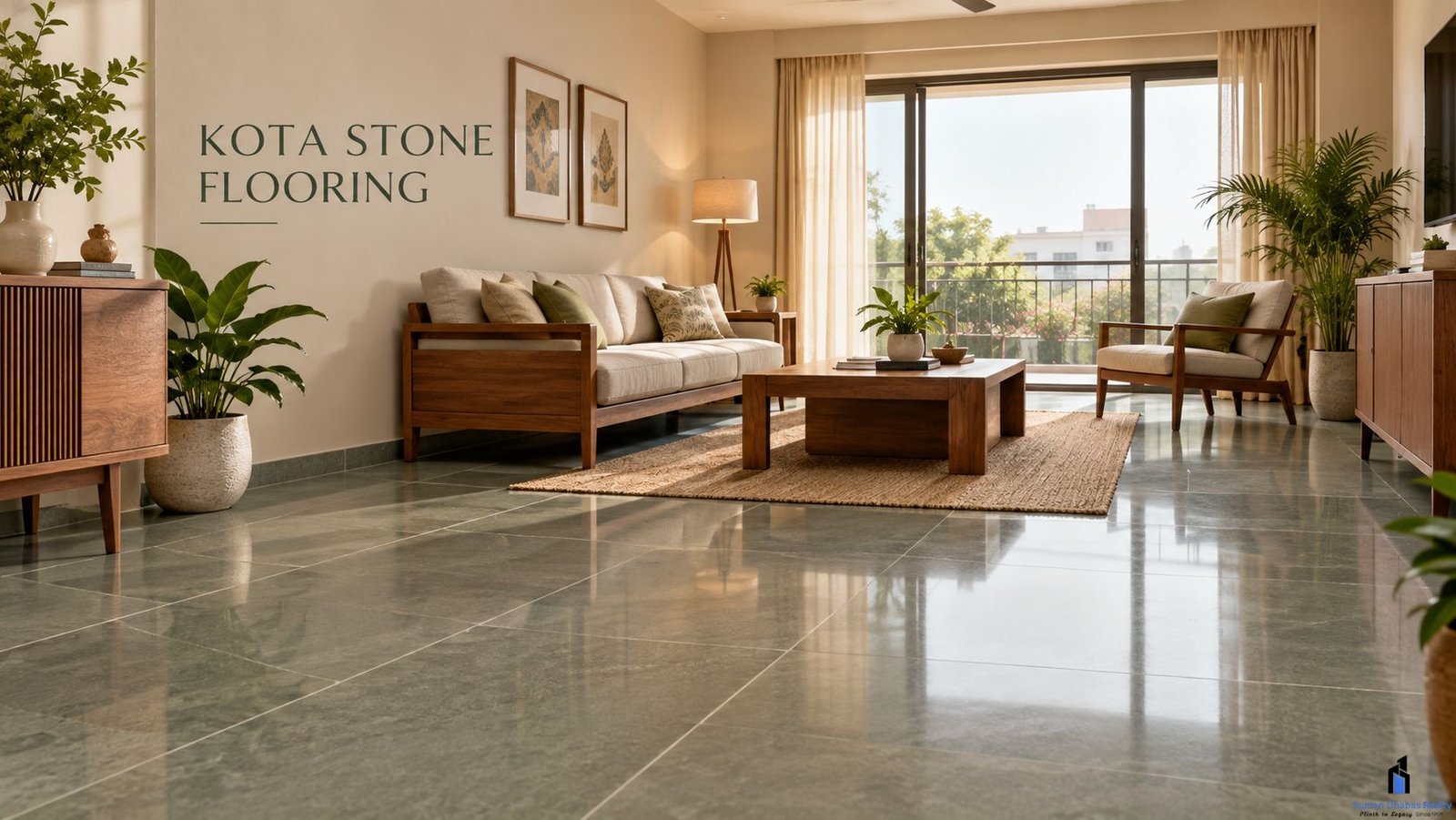
Kota stone flooring is a natural stone flooring option made from limestone quarried mainly around Kota and nearby regions of Rajasthan. The stone is widely known for its practical appearance, durability, and availability in different shades. Rajasthan government sources identify Kota stone as a limestone used extensively as slabs for flooring.
Its simple surface makes it suitable for homes, offices, corridors, staircases, courtyards, and other areas. Moreover, its natural appearance can work with both traditional and contemporary interiors.
Why Choose Kota Stone Flooring?
Kota stone has remained popular because it offers a combination of practical and visual benefits.
1. Durable Surface
A well-installed Kota stone floor can handle regular foot traffic. This makes it suitable for areas such as passages, entrance spaces, staircases, and common areas. Government construction specifications also include Kota stone for common circulation areas and staircases.
2. Natural Appearance
The stone has a subtle, earthy appearance rather than a highly decorative finish. Therefore, it can complement wooden furniture, neutral walls, plants, and traditional décor.
3. Different Colour Options
Kota stone is available in several natural shades. Common options include green, brown, grey, and bluish-grey tones. The exact shade can vary according to the stone source and finish.
4. Suitable for Different Spaces
Kota stone can be used in several parts of a property. For example, it can work for living areas, verandas, balconies, staircases, pathways, courtyards, and utility spaces.
Kota Stone Flooring Colours and Finishes
The colour and finish can significantly change the overall appearance of a floor.
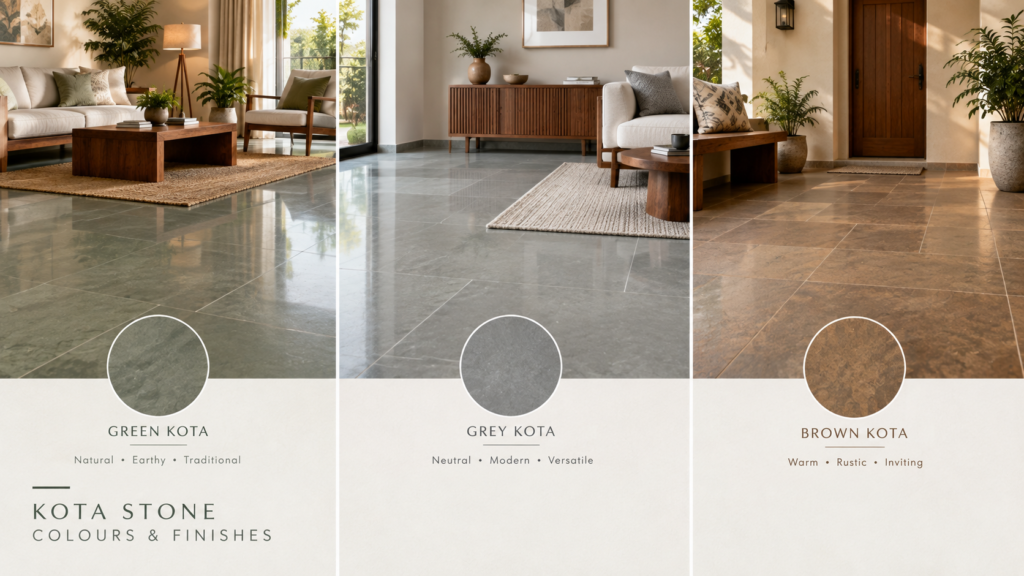
Green Kota stone offers a deeper natural appearance and can suit traditional or earthy spaces.
Grey Kota stone gives a neutral and understated look. It can pair well with modern walls and simple furniture.
Brown or earthy shades create a warmer appearance. They can work particularly well with outdoor areas and rustic design themes.
The stone can also receive different surface treatments. Polishing creates a smoother and more refined appearance, while a natural or honed finish can retain a more understated look.
Where Can Kota Stone Be Used?
One advantage of Kota stone flooring is its versatility. It can be considered for both indoor and outdoor applications.
Indoor Areas
Kota stone can be used in living rooms, corridors, kitchens, utility areas, and staircases. It can also be considered for areas that experience regular movement.
Outdoor Areas
The stone can suit verandas, courtyards, pathways, balconies, and entrance areas. However, the selected finish should match the intended location and expected surface conditions.
Government project specifications also show Kota stone being used for flooring, skirting, steps, pillars, and related applications.
How to Maintain Kota Stone Flooring
Regular maintenance can help preserve the floor’s appearance.
First, sweep or dust the surface regularly to remove loose dirt. Next, clean it with a suitable mild cleaning solution and avoid harsh chemicals unless they are specifically recommended for the stone.
Wipe spills quickly, especially in areas where substances may leave marks. Also, avoid dragging heavy furniture directly across the surface.
Periodic polishing can be considered when the finish becomes dull. The frequency depends on foot traffic, surface treatment, and the condition of the floor.
Kota Stone Flooring vs Other Flooring Options
Every flooring material has different characteristics. Tiles offer a broad range of printed designs and patterns. Marble provides a more decorative and luxurious appearance. Granite is often selected for its hard surface and varied colours.
In comparison, Kota stone flooring provides a natural stone appearance with relatively simple patterns. It can therefore be useful when the goal is to create a practical floor without relying on highly decorative designs.
The final choice should consider the room, expected traffic, maintenance requirements, installation quality, budget, and desired appearance.
Tips Before Installing Kota Stone
Before installation, check the stone slabs for consistent quality, thickness, colour, and surface condition. It is also important to measure the area accurately and plan the layout before fixing the slabs.
The base should be prepared properly because uneven installation can affect the final appearance. Government specifications for Kota stone flooring include a mortar base, cement slurry joints, and rubbing and polishing as part of the installation process.
For a new home, flooring should also be planned alongside the overall interior and exterior design. Homebuyers exploring residential developments, such as township projects in and around Jaipur, can consider flooring materials as part of their broader construction and finishing plan.
Suman Dhabas Realty Pvt Ltd works in the real-estate space and is associated with residential development projects. For buyers considering a home or plot, practical details such as flooring, layout, finishes, and long-term maintenance can form part of the overall property planning process.
Final Thoughts
Kota stone flooring remains a practical natural-stone option for many Indian properties. Its earthy colours, versatile applications, and relatively simple appearance make it suitable for both traditional and modern spaces.
Before choosing it, consider the location, surface finish, installation quality, expected foot traffic, and maintenance routine. With the right selection and installation, Kota stone can become a functional part of a home’s flooring design.