
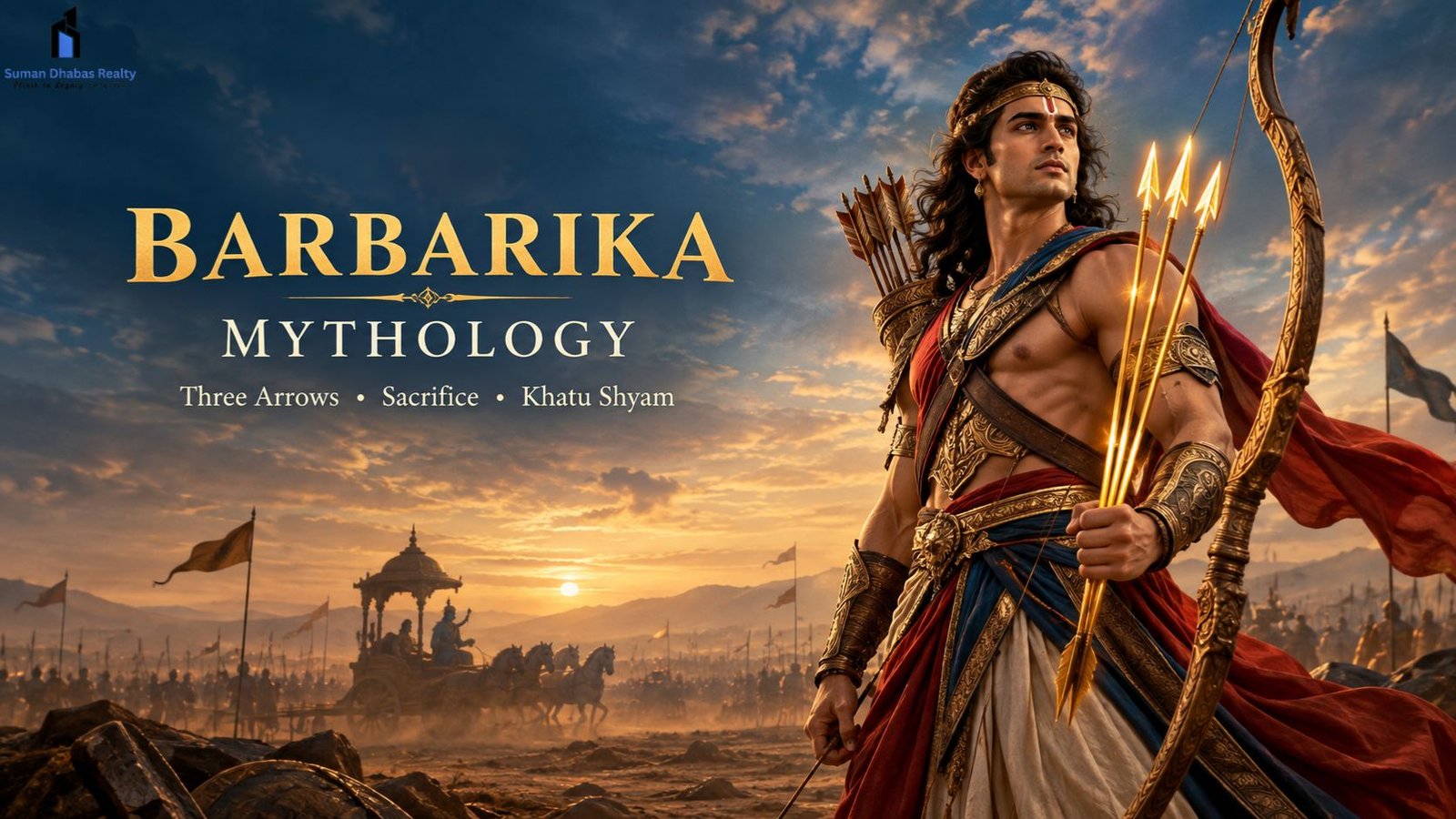
Indian mythology contains many stories of courage, sacrifice, devotion, and extraordinary warriors. Barbarika Mythology is one such fascinating tradition connected with the Mahabharata and the worship of Khatu Shyam Ji. Barbarika is remembered as a powerful warrior who possessed three divine arrows and a unique ability to change the course of a battle. His story also explains why devotees worship him today as Khatu Shyam Ji, especially in Rajasthan.
Who Was Barbarika?
According to popular traditions, Barbarika was the son of Ghatotkacha and Maurvi. Ghatotkacha was the son of Bhima and Hidimbi. Therefore, Barbarika belonged to the Pandava family through his father.
From an early age, Barbarika showed great courage and devotion. He trained extensively in warfare and received powerful weapons through divine blessings. Among these weapons, his three arrows became the most important part of his legend.
Barbarika also followed a strict principle. He promised to always support the weaker side in a battle. This vow later created a remarkable situation during the Kurukshetra war.
Barbarika Mythology and the Three Arrows
The three arrows form the central element of Barbarika Mythology. According to the traditional story, each arrow had a special purpose.
The first arrow could mark everything that Barbarika wanted to target. The second arrow could mark the things he wanted to protect. The third arrow could destroy all the marked targets before returning to him.
Together, the three arrows gave him extraordinary power.
Barbarika also possessed a divine bow. With these weapons, he could potentially finish a battle very quickly. However, his vow to support the weaker side created a serious problem.
If Barbarika entered the Kurukshetra war, he would support whichever side appeared weaker. Once that side became stronger, he would switch to the other side. As a result, he could continue changing sides throughout the battle.
Why Did Barbarika Not Fight in the Mahabharata War?
Before the Kurukshetra war began, Barbarika wanted to participate in the battle. According to the popular legend, Lord Krishna met him while travelling toward the battlefield.
Krishna asked Barbarika about his weapons and his battle plan. Barbarika explained his vow and demonstrated the power of his three arrows.
Krishna understood that Barbarika’s participation could drastically change the outcome of the war. His vow could potentially lead to a situation where neither side could secure a final victory.
Therefore, Krishna asked Barbarika to make the ultimate sacrifice.
Barbarika's Sacrifice
Krishna asked Barbarika for his head as a sacrifice before the war began. Barbarika agreed because of his devotion and commitment to dharma.
However, he made one request. He wanted to witness the entire Kurukshetra battle.
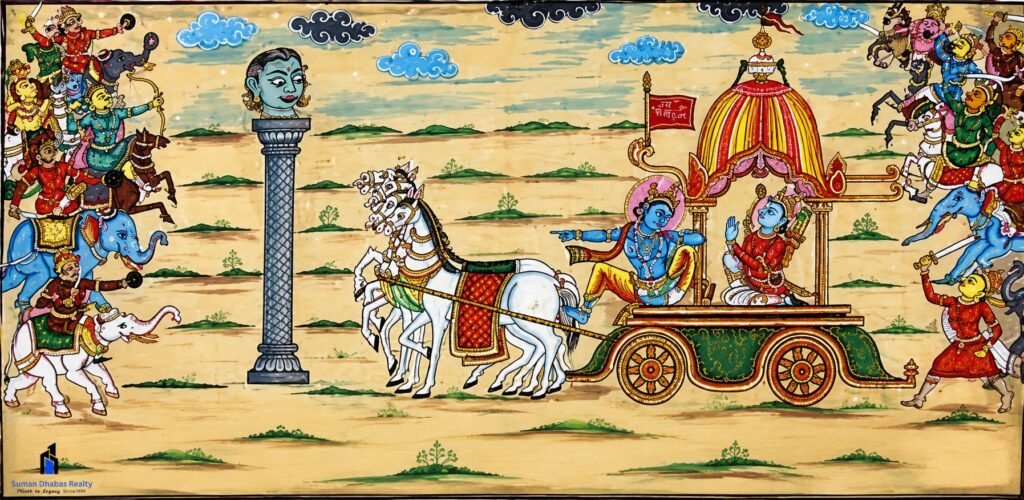
Krishna granted this wish. According to the tradition, Barbarika’s head was placed at a high location from where he could observe the battle.
The story says that Barbarika watched the entire war without physically participating in it. After the battle, Krishna asked him who truly influenced the victory.
Barbarika’s answer highlighted the divine role of Krishna in the battle. This part of the legend reinforces the themes of devotion, humility, and divine guidance.
Barbarika Mythology and Khatu Shyam Ji
The connection between Barbarika Mythology and Khatu Shyam Ji is especially important for devotees in Rajasthan and across India.
Popular belief identifies Barbarika with Khatu Shyam Ji. According to tradition, Krishna blessed Barbarika and declared that he would be worshipped by his name in the future age.
The story also connects Barbarika’s head with the region of Khatu in Rajasthan. This tradition forms an important part of the religious identity surrounding the Khatu Shyam Temple.
Today, millions of devotees visit Khatu to seek blessings and express their devotion to Shyam Baba. The annual Khatu Shyam Mela also attracts large crowds of pilgrims.
The Spiritual Meaning of Barbarika's Story
Beyond the dramatic events of the Mahabharata, the story carries several deeper messages.
Sacrifice and Devotion
Barbarika willingly accepted a difficult sacrifice. His decision represents devotion and surrender to a higher purpose.
Keeping a Promise
His vow to support the weaker side shows the importance he placed on his word. At the same time, the story demonstrates that even a noble promise can create unexpected consequences.
Power With Responsibility
Barbarika possessed extraordinary weapons. Yet the story focuses on why such power must come with wisdom and responsibility.
Humility Before Divine Wisdom
The legend ultimately places divine wisdom above individual strength. Barbarika was a powerful warrior, but he accepted Krishna’s decision.
Why Barbarika's Story Remains Popular
Barbarika Mythology continues to attract interest because it connects several important themes. It combines the Mahabharata, heroic traditions, divine weapons, sacrifice, and the origin story associated with Khatu Shyam Ji.
The story also has a strong connection with Rajasthan. Khatu has developed into an important pilgrimage destination, and the surrounding region has gained attention among religious travellers.
For visitors planning a trip, understanding the mythology can make the journey more meaningful. They can explore the temple traditions while also learning about the cultural history of the Khatu Shyam region.
This religious and cultural interest also contributes to wider tourism activity around Khatu. As connectivity, infrastructure, and local facilities develop, the region continues to attract visitors from different parts of India.
In this wider regional context, developments such as residential townships and plotted communities can also become relevant to people interested in the long-term growth of areas around Khatu Shyam. Suman Dhabas Realty Pvt Ltd is associated with real estate development in the broader region, including township-focused projects. For anyone studying the area’s changing landscape, tourism, infrastructure, and residential development offer useful perspectives together.
Final Thoughts
Barbarika Mythology tells a powerful story of courage, sacrifice, devotion, and divine wisdom. Barbarika’s three arrows made him an extraordinary warrior, but his greatest contribution came through his willingness to sacrifice himself.
His connection with Khatu Shyam Ji has given the story a lasting place in Rajasthan’s religious and cultural traditions. Today, devotees continue to remember Barbarika as Shyam Baba and visit Khatu to seek his blessings.
The story therefore goes beyond the battlefield of the Mahabharata. It continues through temples, festivals, pilgrimage journeys, and generations of devotees who keep the tradition alive.



Pingback: Khatu Shyam Divine Powers: Meaning & Spiritual Significance - Suman Dhabas Realty