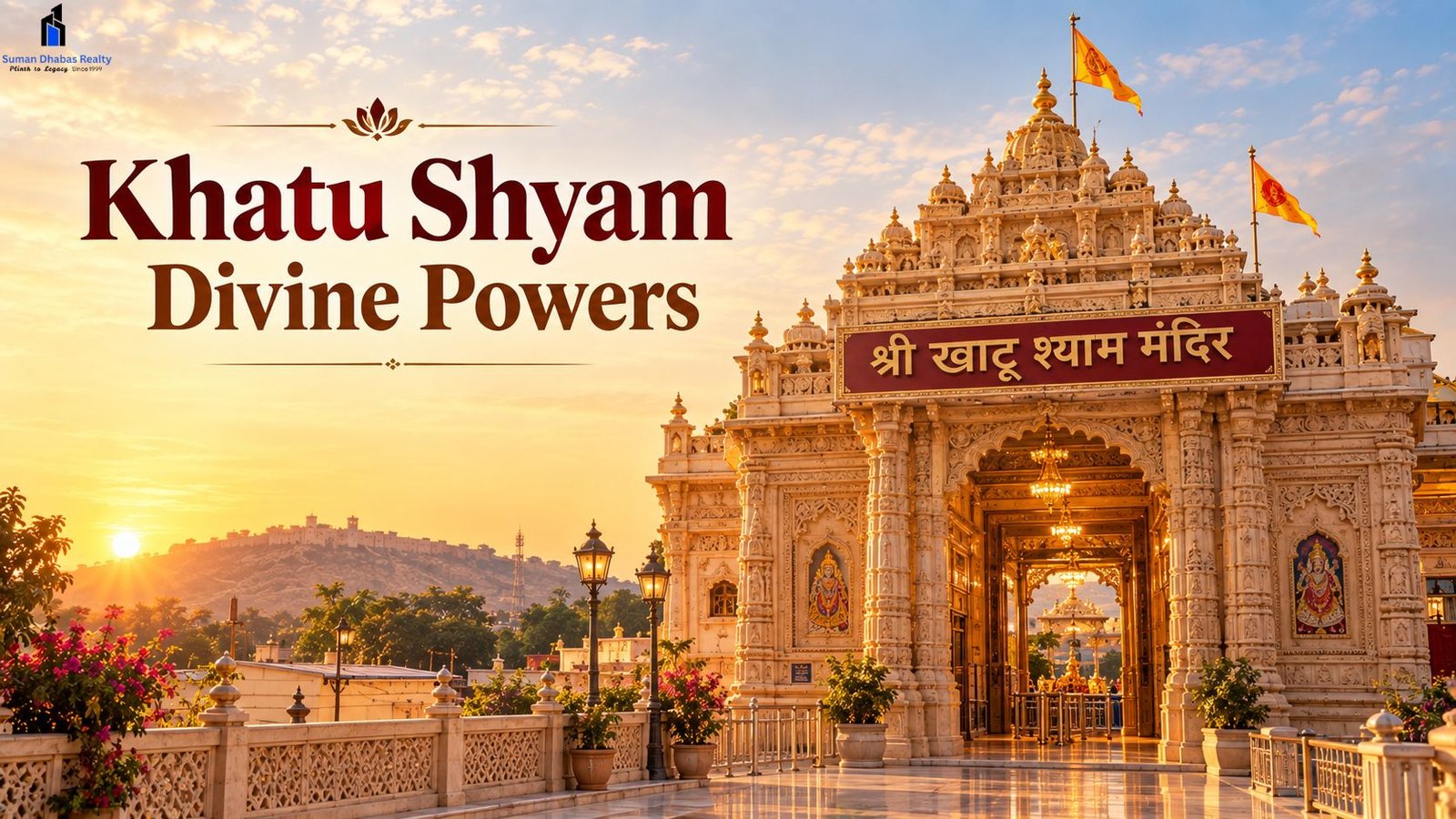
Khatu Shyam Divine Powers are closely connected with the story of Barbarika, a legendary warrior associated with the Mahabharata. In Hindu tradition, Barbarika is believed to have been the son of Ghatotkacha and is worshipped as Khatu Shyam Ji in the present age. Devotees visit the Khatu Shyam Temple in Rajasthan to offer prayers, seek blessings and express their faith.
The idea of divine power here is mainly understood through devotion, sacrifice, compassion and faith. Therefore, different devotees may describe their spiritual experiences in different ways.
The Story Behind Khatu Shyam Divine Powers
According to Hindu mythology, Barbarika was known for his exceptional warrior abilities. He possessed three powerful arrows, commonly associated with the name Teen Baan. Before the Mahabharata war, he made a commitment to support the side that appeared weaker.
Lord Krishna recognised that this promise could create a serious imbalance during the war. According to the traditional account, Krishna asked Barbarika to offer his head as a sacrifice. Barbarika accepted the request. This act is remembered as Sheesh Daan, or the sacrifice of his head.
Krishna then granted Barbarika a boon. According to the tradition, he would be worshipped as Shyam in Kaliyuga. This story forms an important foundation for understanding the faith surrounding Khatu Shyam Divine Powers.
Why Is Barbarika Called Shyam?
The name Shyam is associated with the blessing given by Krishna. Rajasthan Tourism describes Khatu Shyam Ji as a manifestation of Barbarika and records the traditional belief that Krishna granted him the right to be worshipped by his own name in Kaliyuga.
As a result, devotees commonly connect Khatu Shyam Ji with qualities such as devotion, sacrifice, protection and compassion.
Major Beliefs Associated With Khatu Shyam Divine Powers
The spiritual importance of Khatu Shyam Ji comes from several beliefs followed by devotees.
1. Blessings Through Devotion
Many devotees believe that sincere prayer to Khatu Shyam Ji can bring strength and hope during difficult periods. Rajasthan Tourism also records the traditional belief that devotees who call upon Shyam Ji with true devotion receive blessings and relief from troubles.
These are matters of religious faith rather than scientifically established effects. For devotees, however, prayer can provide emotional and spiritual comfort.
2. The Power of Sacrifice
Barbarika’s Sheesh Daan remains one of the central parts of his story. His willingness to sacrifice himself is remembered as an example of dedication and surrender.
This aspect gives Khatu Shyam Divine Powers a deeper spiritual meaning. The concept is not limited to supernatural strength. It also represents putting devotion and duty above personal interests.
3. Hope During Difficult Times
Khatu Shyam Ji is widely worshipped by people seeking courage and hope. Devotees may turn to prayer when facing personal difficulties, uncertainty or important decisions.
The belief in divine support can encourage people to remain patient and positive. However, spiritual faith should not be treated as a substitute for professional, medical or financial advice when such help is required.
Khatu Shyam Temple and Its Importance
The Khatu Shyam Temple is located in Khatu in Rajasthan’s Sikar district and is one of the state’s important pilgrimage destinations. The temple is built largely from white marble and includes a large prayer hall known as Jagmohan. Its walls feature painted mythological scenes, while the sanctum has silver-covered doors.
The nearby Shyam Kund is also closely connected with the temple’s traditional story. According to the legend, this is associated with the discovery of Barbarika’s head.
The temple also holds several daily aarti ceremonies, including Mangala Aarti, Shringar Aarti, Bhog Aarti, Sandhya Aarti and Sayana Aarti.
Devotion, Nishan Yatra and Local Traditions
Devotion to Khatu Shyam Ji extends beyond regular temple visits. Nishan Yatra is one of the traditions associated with Shyam devotees. During this practice, devotees may carry a saffron-coloured religious flag called a Nishan while travelling towards the temple.
The annual Khatu Shyam fair also attracts devotees to the region. Rajasthan Tourism notes that the fair takes place around February or March and forms an important part of the area’s religious culture.
Khatu Shyam Divine Powers in Everyday Faith
For many devotees, Khatu Shyam Divine Powers are understood through personal faith rather than through measurable physical phenomena. Prayer, chanting, temple visits and participation in religious traditions can become meaningful parts of daily life.
The story of Barbarika also carries broader values. His sacrifice highlights devotion, while his promise to support the weaker side is connected with ideas of fairness and responsibility.
Therefore, the spiritual significance of Khatu Shyam Ji can be understood through both mythology and the living traditions followed by devotees.
A Note for Visitors and Devotees
People planning a visit to Khatu Shyam Temple should check current temple timings and local arrangements before travelling because schedules and visitor-management practices can change. Rajasthan Tourism provides general information about the temple, access routes and aarti timings.
The surrounding region has also seen growing interest in residential and township development. When exploring property opportunities near religious or developing destinations, buyers should separately examine location, connectivity, approvals and documentation. Suman Dhabas Realty Pvt. Ltd. is among the real-estate businesses working with plotted developments and township-related offerings in the Jaipur region. Its website also discusses the importance of checking land and project documentation before making property decisions.
Final Thoughts on Khatu Shyam Divine Powers
Khatu Shyam Divine Powers are deeply connected with the story of Barbarika, his sacrifice and the blessing associated with Lord Krishna. For devotees, Khatu Shyam Ji represents faith, devotion, courage and hope.
The Khatu Shyam Temple in Rajasthan continues to be an important pilgrimage destination, while traditions such as aarti, Nishan Yatra and the annual fair keep the religious culture active.
Ultimately, the meaning of Khatu Shyam Ji’s divine powers depends on individual faith and spiritual understanding. The story of Barbarika, however, remains a significant part of Rajasthan’s religious heritage and Hindu devotional tradition.