
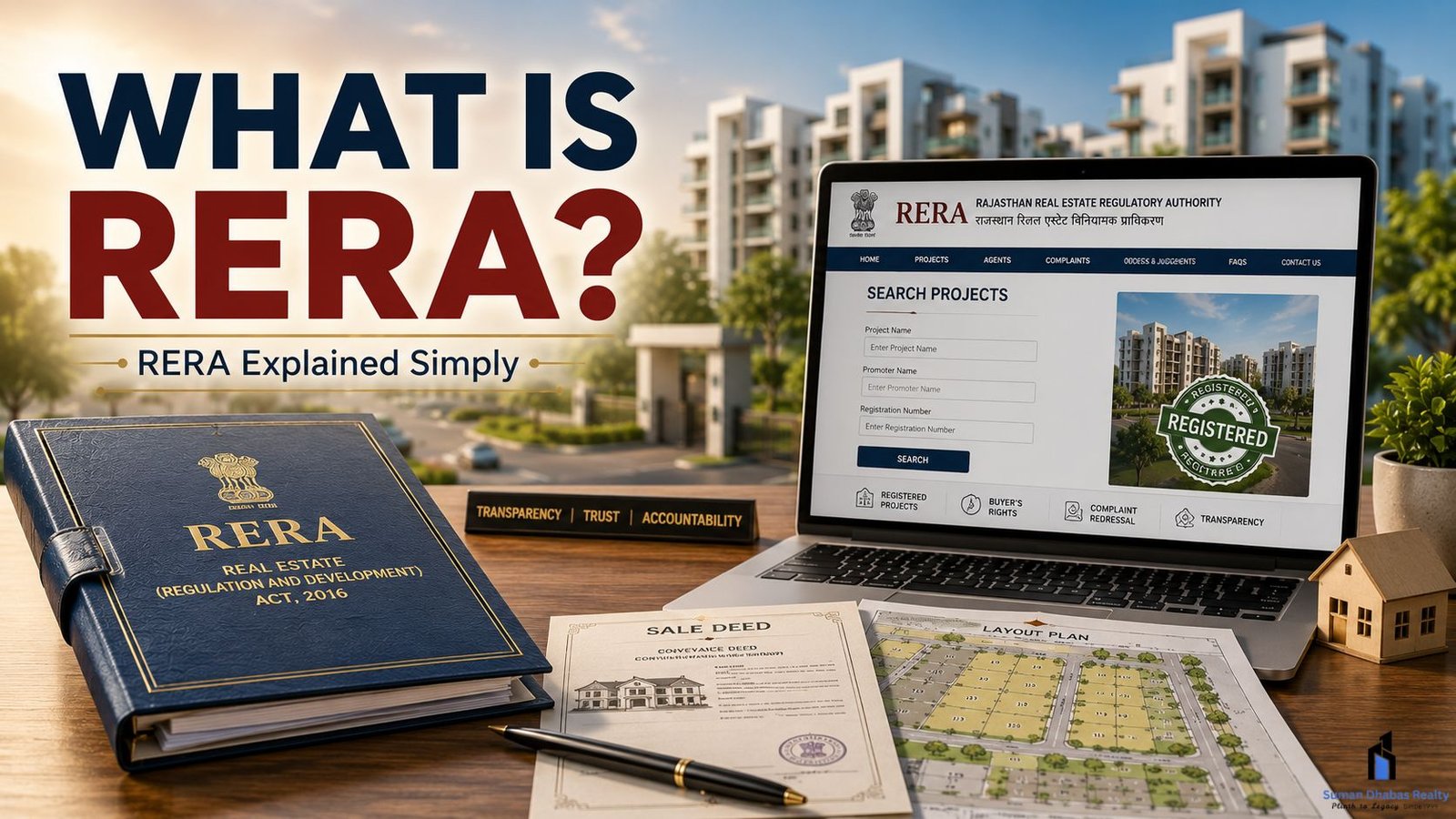
Real estate involves large investments and important legal documents. Therefore, knowing what is RERA can help buyers understand their rights and make better property decisions. RERA stands for the Real Estate (Regulation and Development) Act, 2016. It aims to bring greater transparency, accountability, and regulation to the real estate sector.
Before RERA, property buyers often faced problems related to project delays, unclear information, and changes in promised facilities. The RERA framework was introduced to improve transparency and protect the interests of homebuyers and other allottees.
What Is RERA and Why Was It Introduced?
RERA is a regulatory framework created for the real estate sector in India. The Act focuses on protecting buyers while also creating greater accountability for real estate promoters.
The main objectives include:
- Protecting the interests of property buyers
- Improving transparency in real estate projects
- Reducing delays and unfair practices
- Promoting standardisation in the sector
- Providing a regulatory mechanism for disputes
- Improving accountability between promoters and buyers
The central RERA law received presidential assent in March 2016. Several provisions came into effect in May 2016, while the major registration provisions came into force from May 2017.
As a result, RERA became an important part of the property-buying process.
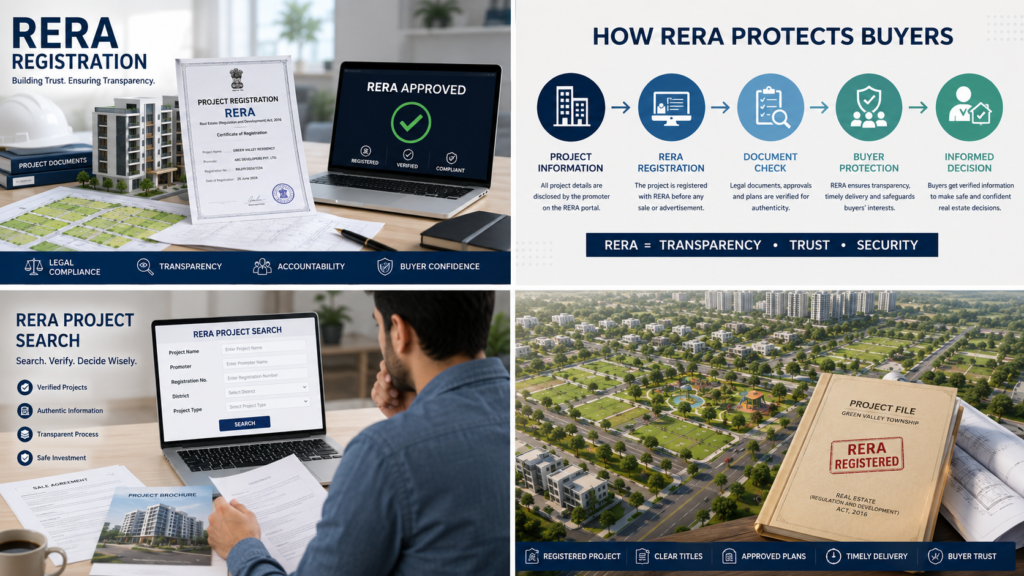
How Does RERA Work?
RERA works through state-level regulatory authorities. These authorities maintain information about registered projects, promoters, agents, and complaints.
For example, Rajasthan has the Rajasthan Real Estate Regulatory Authority (Rajasthan RERA). Its online portal allows users to search registered projects using details such as district, project name, promoter name, registration number, project type, and status.
This makes it easier for buyers to access project-related information before making a decision.
What Is RERA Registration?
RERA registration is the process through which an eligible real estate project gets registered with the relevant state authority.
However, not every project automatically requires registration. The applicable requirements and exemptions depend on the RERA Act and state-level rules or orders.
In Rajasthan, the state authority has clarified that projects generally require registration when the development area exceeds 500 square metres or the number of apartments exceeds eight, subject to the applicable provisions and exemptions.
Therefore, buyers should not assume that every small property development must have a RERA registration number.
What Information Can Buyers Check?
One major advantage of RERA is the availability of project-related information.
Depending on the project, buyers may be able to check details such as:
- Project name
- Promoter details
- Registration number
- Project location
- Project type
- Estimated completion date
- Approved plans and documents
- Project status
- Available units or plots
- Compliance information
For instance, Rajasthan RERA’s project records can show project details, promoter information, land details, sanctioned units, and other uploaded documents.
Still, buyers should review these details carefully. RERA information should complement, not replace, proper legal and land-document verification.
Benefits of RERA for Property Buyers
RERA provides several important benefits to buyers.
What Is RERA's Role in Buyer Protection?
The framework encourages promoters to provide accurate project information and follow applicable requirements. It also gives buyers a formal regulatory mechanism for raising certain disputes.
Another important feature involves the use of project funds. Under the RERA framework, promoters are required to maintain the prescribed separate account structure, including the retention of 70% of amounts realised for land and construction costs, subject to the Act and applicable rules.
This mechanism aims to reduce the misuse or diversion of project funds.
Better Project Transparency
RERA also improves access to project information. Buyers can compare the information provided by a promoter with records available through the relevant RERA authority.
For this reason, checking the RERA registration details should be part of the property research process whenever RERA applies.
Is RERA Registration Enough to Buy a Property?
No. RERA registration is useful, but it should not be the only check.
A buyer should also examine:
- Ownership documents
- Sale deed and previous documents
- Land records
- Approved layout
- Applicable land-use permissions
- Development approvals
- Encumbrance-related information
- Property location and boundaries
- Promoter’s documentation
- Applicable JDA or local authority records
This is especially important for plotted developments and townships. A RERA registration does not remove the need for independent legal and property due diligence.
RERA and Township Projects
Township developments often involve multiple plots, infrastructure, common areas, roads, and planned amenities. Therefore, buyers should understand the project’s legal and regulatory background before making a decision.
In growing areas around Jaipur and Khatu Shyam, planned residential developments are attracting increasing interest. Projects associated with companies such as Suman Dhabas Realty Pvt Ltd can also be evaluated through the same basic principle: understand the project documents, applicable approvals, development details, and regulatory status before proceeding.
The goal should always be informed decision-making rather than relying on promotional claims alone.
How to Check a RERA Registered Project
The process is relatively simple.
First, visit the official RERA portal for the relevant state. Then search for the project using its name, promoter, district, or registration number.
Next, compare the information shown on the portal with the documents and details provided by the promoter.
If important information does not match, ask questions before making a financial commitment.
For Rajasthan properties, the official Rajasthan RERA portal provides search options for registered projects, promoters, agents, and complaints.
What Is RERA? Final Takeaway
So, what is RERA? In simple terms, RERA is a legal framework designed to make the real estate sector more transparent and accountable.
It gives buyers access to important project information and provides a regulatory mechanism for eligible real estate projects and disputes.
However, RERA should be treated as one part of property due diligence, not a complete guarantee of a property’s legal or financial safety. Buyers should still verify ownership, approvals, land records, layouts, and other relevant documents.
A careful approach can help buyers understand the property better and make a more informed decision.



Pingback: Plot Buying Checklist: Documents, Legal Checks & Buyer Tips - Suman Dhabas Realty
Pingback: Benefits of Township Living: A Better Way to Live
Pingback: Hennur Main Road Bangalore: Location & Property Guide - Suman Dhabas Realty
Pingback: GujRERA 2.0: Features, Registration, Project Search & Guide - Suman Dhabas Realty
Pingback: GUJRERA: Registration, Rules and Property Buyer Guide - Suman Dhabas Realty