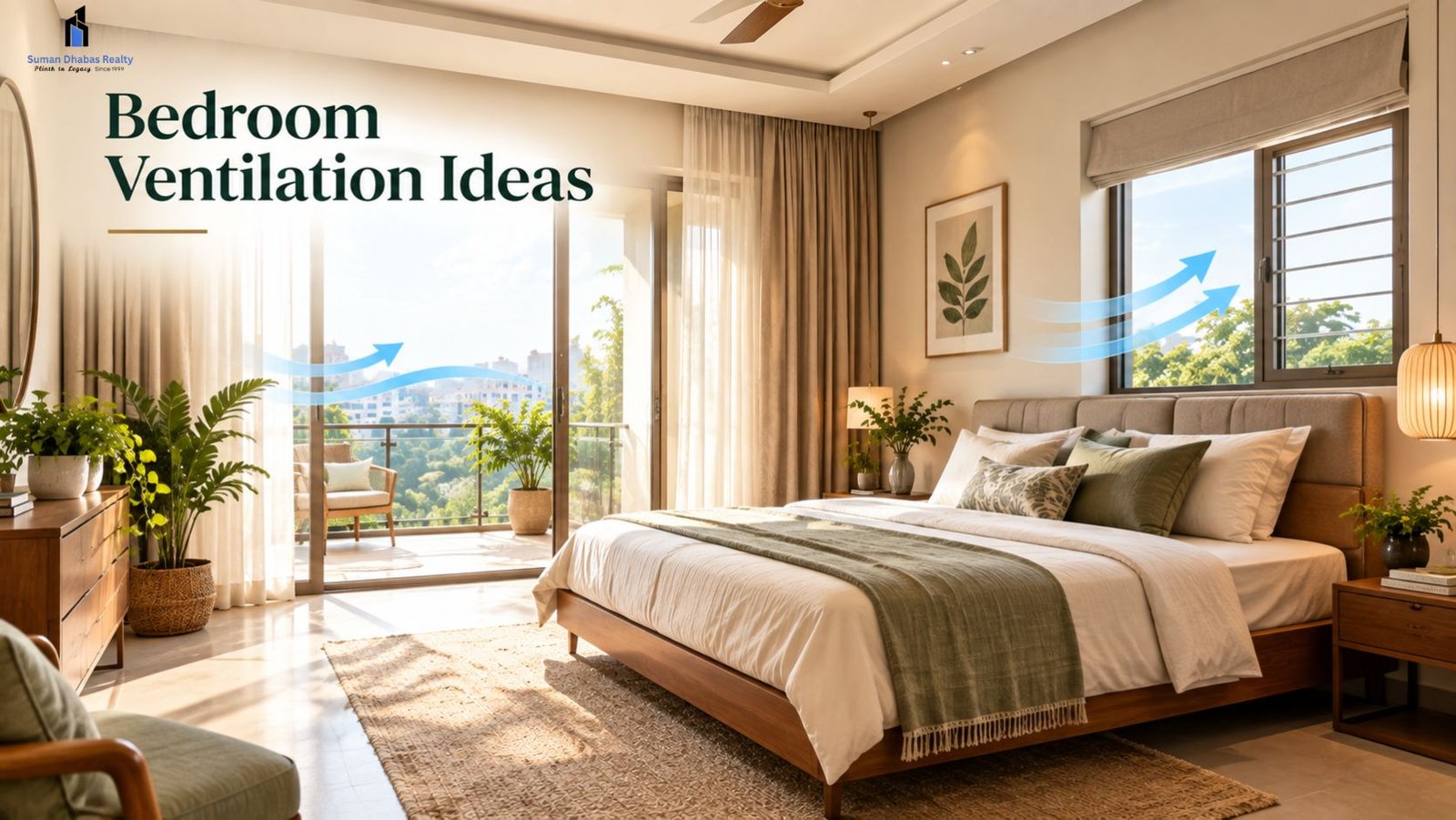
A well-ventilated bedroom can feel fresher, more comfortable and pleasant throughout the day. Bedroom Ventilation Ideas can help improve natural airflow, reduce stuffiness and support a healthier indoor environment. Simple changes such as opening windows, improving cross ventilation and keeping air pathways clear can make a noticeable difference without requiring major changes to the room.
Why Bedroom Ventilation Matters
Bedrooms remain occupied for several hours, especially during the night. As a result, indoor air can become warm and stale when there is limited air movement. Good ventilation allows fresh outdoor air to enter while helping indoor air, moisture and unwanted odours move out.
Proper airflow can also help control excess humidity. This is particularly useful in homes where condensation or dampness occurs around windows, walls or poorly ventilated corners.
However, ventilation should suit the local climate, outdoor air quality and building design. Opening a window is useful when outdoor conditions are suitable, but it may not always be the best option during periods of heavy pollution, extreme heat or dust.
Bedroom Ventilation Ideas for Natural Airflow
Natural ventilation uses openings such as windows, doors and ventilators to encourage air movement without relying entirely on mechanical systems.
1. Place Windows Strategically
Window placement plays an important role in bedroom airflow. When possible, windows on different walls can encourage air to move across the room rather than entering and stopping in one area.
Even with a single window, keeping the surrounding area unobstructed can improve the movement of air. Avoid placing large wardrobes, curtains or bulky furniture directly against the opening.
2. Create Cross Ventilation
Cross ventilation occurs when air enters through one opening and leaves through another. This creates a natural path for air to travel through the room.
For example, a bedroom with windows on opposite or adjacent sides may have better airflow than a room with only one small opening. The actual performance depends on the building’s orientation, window size, surrounding structures and local wind conditions.
3. Keep Air Pathways Clear
Furniture placement can affect ventilation more than many homeowners realise. A large wardrobe positioned directly beside a window can restrict airflow.
Instead, maintain reasonable clearance around windows, doors and ventilators. Use lightweight curtains that can move freely when windows are open.
More Bedroom Ventilation Ideas for Indian Homes
Indian homes experience different climate conditions across regions. Therefore, ventilation strategies should reflect the local environment.
4. Use Exhaust Fans Where Needed
An exhaust fan can help remove warm or humid air, particularly when a bedroom has an attached bathroom or dressing area.
If moisture from a bathroom enters the bedroom, running the bathroom exhaust fan during and after use can help reduce humidity. Make sure the exhaust system vents air outdoors rather than into another enclosed part of the house.
5. Consider Ceiling Fans
Ceiling fans do not bring outdoor air into a room, but they can improve perceived comfort by circulating indoor air. They work particularly well alongside natural ventilation.
When windows are open, a ceiling fan can help distribute incoming air more evenly throughout the room.
6. Use Ventilators and High-Level Openings
High-level ventilators can support the release of warm air because warmer air tends to rise. Their usefulness depends on the room’s design and the availability of suitable air inlets.
In new homes, ventilation openings should be considered during the planning stage rather than added as an afterthought.
Bedroom Ventilation Ideas for Better Humidity Control
Humidity can make a bedroom feel uncomfortable and may contribute to dampness when it remains high for extended periods. Regular ventilation can help remove moisture produced through everyday activities.
Keep bathroom doors closed after bathing and use the exhaust system where available. Dry wet clothes away from the bedroom whenever possible. Also, inspect areas around windows and external walls if you notice repeated condensation or damp patches.
If natural ventilation is insufficient, mechanical ventilation or a dehumidification system may be considered depending on the room and climate.
Plan Ventilation When Designing a Home
Ventilation is easier to achieve when it becomes part of the home’s initial design. Window orientation, room layout, opening sizes, shading and the position of nearby buildings can all influence airflow.
For people exploring residential plots or planned communities, these factors can be considered before construction begins. A well-planned township can provide an opportunity to think about home orientation, open spaces and building placement alongside other design requirements.
Suman Dhabas Realty Pvt. Ltd., for example, is involved in plotted developments and residential projects, with its broader development experience connected to Jaipur and other locations. Its website describes a planning approach that covers areas including land acquisition, planning and development. Buyers considering a plot can therefore look beyond the plot itself and think about how the eventual home will respond to factors such as orientation, daylight and ventilation.
Common Ventilation Mistakes to Avoid
Good ventilation does not mean keeping every window open all day. Consider outdoor temperature, dust, humidity and air quality before opening windows.
Avoid blocking windows with large furniture. Do not depend entirely on air-conditioning for air exchange, because cooling indoor air is different from introducing fresh outdoor air.
Also, avoid making major structural changes to walls or windows without checking the building’s design and applicable permissions.
Final Thoughts
Effective Bedroom Ventilation Ideas do not always require expensive upgrades. Strategic window placement, cross ventilation, clear airflow paths, exhaust fans and ceiling fans can all contribute to a more comfortable bedroom.
The most suitable approach depends on the home’s design, climate and surrounding environment. Therefore, ventilation should be considered alongside natural light, room orientation, furniture placement and overall building planning.
Whether you are improving an existing bedroom or planning a new home, prioritising airflow from the beginning can make the space more comfortable and functional for everyday living.