
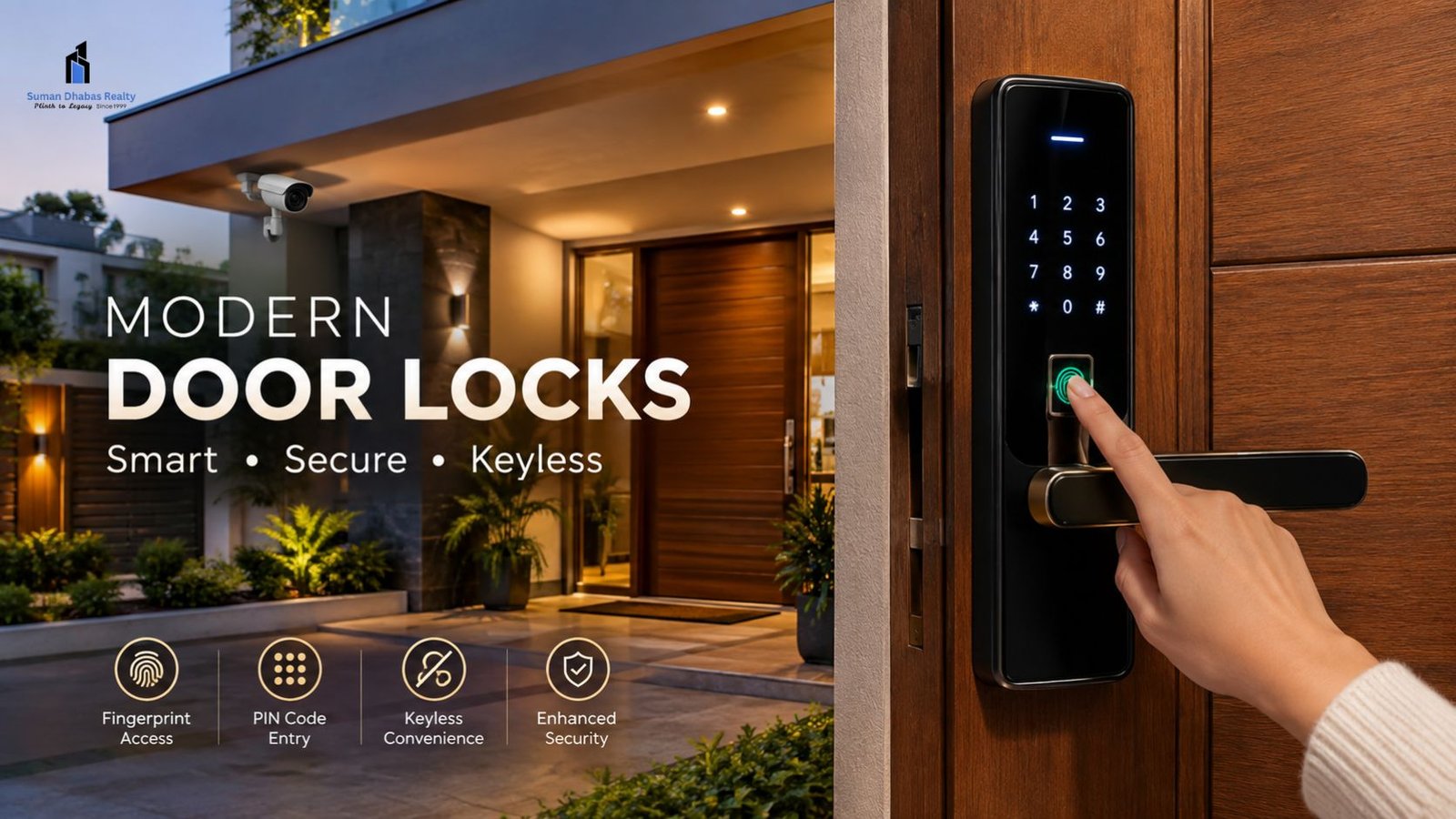
Modern Door Locks have changed the way homeowners think about security and convenience. Traditional locks still remain common, but today’s homes can use fingerprint sensors, PIN codes, RFID cards, mobile apps and other keyless entry methods. These options can make everyday access easier while also giving homeowners more control over who can enter their property.
However, choosing a door lock should not depend only on its appearance or the number of features it offers. The right lock should suit your door, lifestyle, security requirements and budget.
What Are Modern Door Locks?
Modern door locks are advanced locking systems designed to provide better convenience, access control and security than basic traditional locks.
Many models combine mechanical locking with electronic features. For example, one lock may allow you to open the door using a fingerprint, PIN, RFID card or physical key.
Smart locks can also connect with smartphones through Bluetooth or Wi-Fi. Depending on the model, this can allow homeowners to manage access and receive entry notifications remotely.
Types of Modern Door Locks
There are several types of locks available for contemporary homes. Understanding their differences can help you choose the right option.
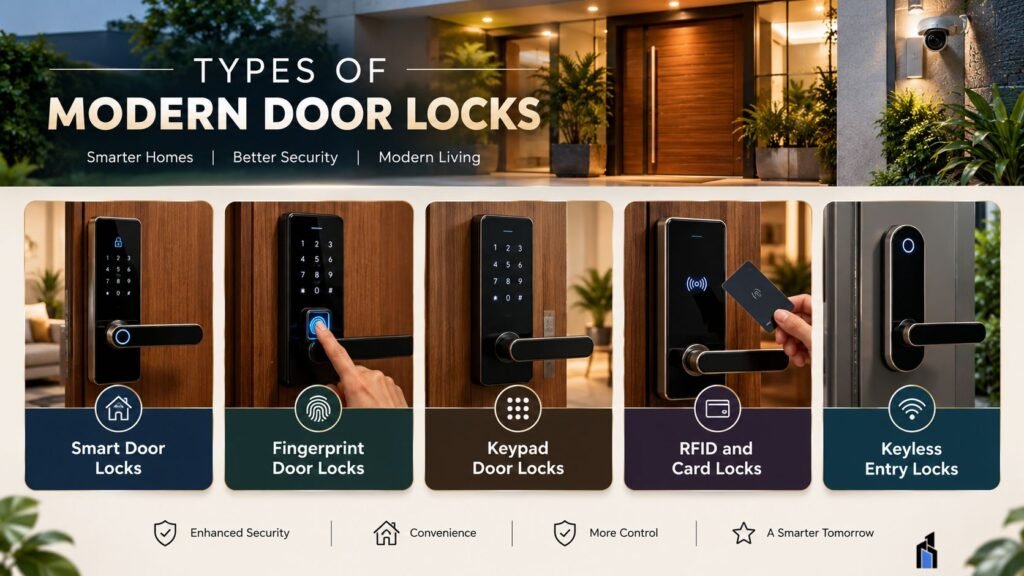
1. Smart Door Locks
Smart locks use electronic technology to control access to a door. Some models connect with a mobile application and can provide features such as remote access, access records and notifications.
They work particularly well in modern apartments, villas and smart homes.
2. Fingerprint Door Locks
Fingerprint locks use biometric technology to recognise registered fingerprints.
They are convenient because you do not need to carry a key or remember a PIN. However, fingerprint sensors can sometimes have difficulty reading wet, dirty or damaged fingers. Therefore, a backup access method is useful.
3. Keypad Door Locks
Keypad locks allow users to enter a PIN to unlock the door.
They are especially useful for homes with several users. Some smart models can also provide temporary codes for guests or service staff.
A keypad can also work as a useful alternative when a fingerprint sensor does not recognise a finger.
4. RFID and Card Locks
These locks use an RFID card or tag for entry. Simply tapping the authorised card against the lock can open the door.
This type of access can be useful for apartments, rental properties, offices and other spaces where multiple people need controlled access.
5. Keyless Entry Locks
Keyless locks reduce or eliminate the need for a traditional key. Depending on the model, users may unlock the door through a fingerprint, PIN, card, smartphone or another access method.
Many modern systems combine several methods instead of relying on only one.
Benefits of Modern Door Locks
Better Convenience
One of the biggest advantages is convenience. You do not always need to search for keys when entering your home.
A fingerprint or PIN can provide quick access, while an app can offer additional control on compatible models.
Multiple Access Options
Modern locks can support several ways to unlock a door.
For example, a single system may offer:
- Fingerprint access
- PIN access
- RFID card
- Mobile app
- Physical key
Having multiple options can be useful when one method is temporarily unavailable.
Better Access Control
Some smart locks allow homeowners to create or remove user access. This can be useful when family members, guests or household staff need entry.
Temporary or scheduled access can also be available on selected models.
Modern Appearance
Apart from security, Modern Door Locks can improve the appearance of an entrance.
Slim digital locks, minimalist handles and touchscreen keypads can complement contemporary wooden, metal or engineered doors.
Smart Home Integration
Some smart locks can work with connected home systems. Depending on the product, homeowners may control the lock through an app or connect it with other smart-home devices.
Modern Door Locks vs Traditional Locks
Traditional locks remain simple and dependable. They do not require batteries, internet connections or electronic components.
However, they usually depend entirely on a physical key.
Modern electronic locks provide more access options and convenience. At the same time, they introduce additional considerations such as battery life, electronic failure and installation requirements.
Therefore, the best choice depends on your priorities.
If you prefer simplicity, a quality mechanical lock may be suitable. If you want keyless access and additional control, a smart or biometric lock may be worth considering.
How to Choose the Right Door Lock
Before buying a lock, check the following factors.
1. Check Your Door Type
Not every lock fits every door.
Check the door’s material, thickness, existing lock mechanism and opening direction before purchasing. Some digital locks are designed specifically for particular door types.
2. Choose the Right Access Method
Think about who will use the door.
For a family home, fingerprint plus PIN access can be practical. For frequent guests, temporary PINs may be useful. For elderly family members, a simple PIN or physical key backup can provide another option.
3. Check Battery Backup
Electronic locks depend on power. Therefore, battery performance matters.
Look for low-battery warnings and an emergency power option. A physical key override can also provide useful backup if the battery becomes completely depleted.
4. Consider Installation
A good lock will only perform properly when installed correctly.
Before buying, confirm whether the lock can fit your existing door or whether modifications are required.
5. Check Warranty and Service
Do not look only at the lock’s features. Also consider warranty, installation support and after-sales service.
A reliable service network can make maintenance much easier in the long run.
Are Modern Door Locks Safe?
Modern locks can provide useful security features, but no lock should be treated as completely risk-free.
The overall security of an entrance depends on more than the lock itself. The door, frame, hinges, installation and surrounding security also matter.
For electronic locks, use strong PINs and keep connected devices updated where applicable. Also keep at least one reliable backup access method.
Most importantly, choose a lock from a reputable manufacturer rather than selecting a product only because it has many features.
Common Mistakes to Avoid
Avoid these mistakes when purchasing a new lock:
- Choosing a lock without checking door compatibility.
- Buying only because the design looks attractive.
- Ignoring battery backup.
- Selecting a system without emergency access.
- Using an easily guessed PIN.
- Ignoring installation quality.
- Forgetting to check warranty and service support.
A little research before installation can help you avoid unnecessary problems later.
Conclusion
Modern Door Locks offer a combination of security, convenience and contemporary design. From fingerprint and keypad locks to smart systems with mobile connectivity, homeowners now have several options for securing their entrances.
However, the most advanced lock is not automatically the best choice. First, understand your door and household requirements. Then compare access methods, battery backup, installation, security features and after-sales support.
For a modern Indian home, a lock that combines convenient everyday access with dependable backup options can offer a practical balance between technology and security.



Pingback: Homebuyer Preferences: What Modern Buyers Look for in a Home