
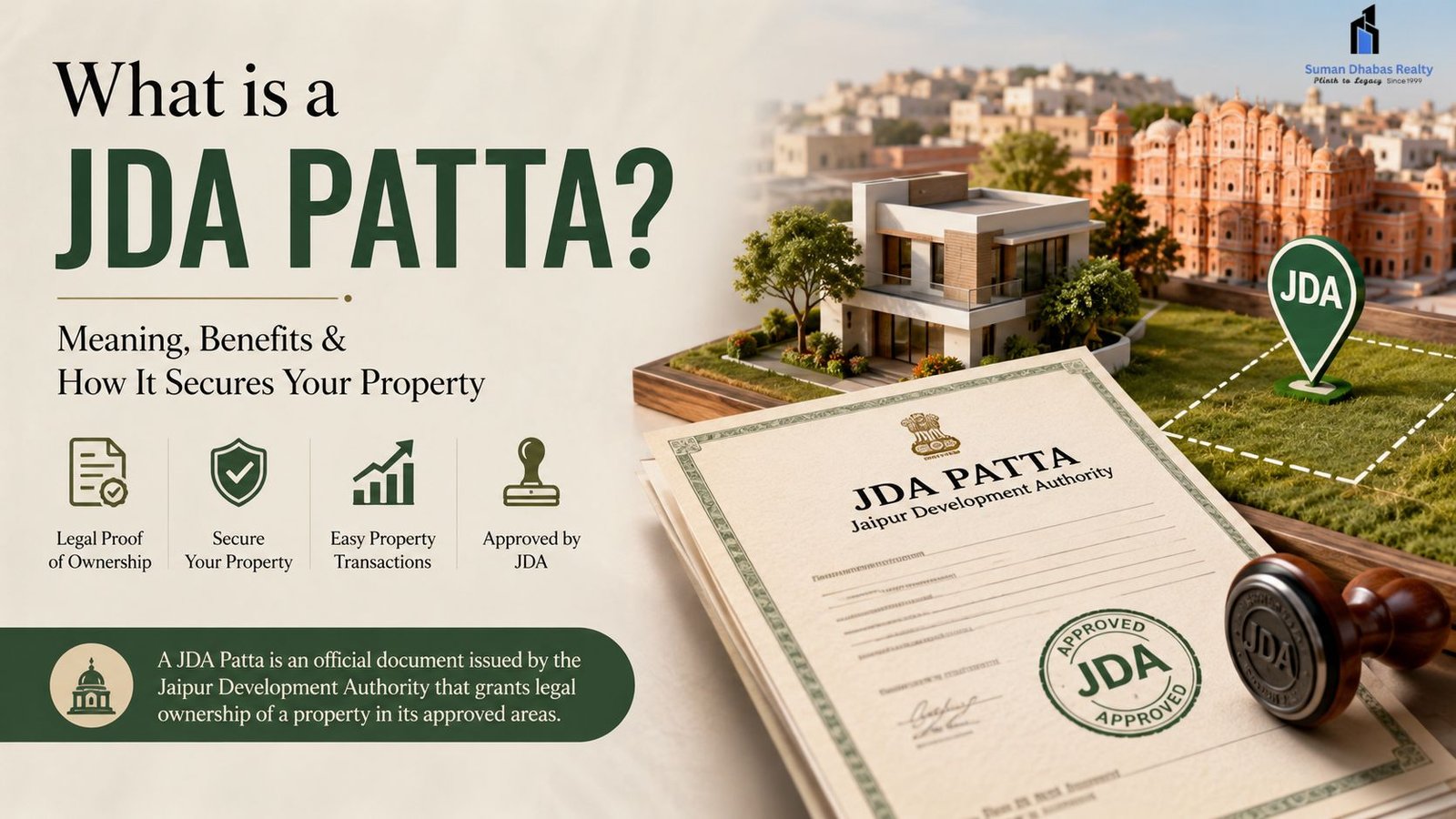
If you are considering purchasing a plot or property in Jaipur, understanding the documents connected with it is essential. One term you may encounter is JDA Patta. But what is JDA Patta, and why does it matter when buying property?
A JDA Patta generally refers to a lease deed or property document associated with the applicable authority, scheme, or allotment process. In Jaipur, the term is commonly linked with the Jaipur Development Authority (JDA). The document may contain important information about the property, the rights granted under the lease, and the conditions that apply.
However, the meaning and requirements can vary depending on the land category, scheme, allotment, and applicable rules. Therefore, buyers should examine the complete property documentation rather than relying on the name of a single document.
Understanding the Meaning of JDA Patta
The Jaipur Development Authority is the statutory authority responsible for planned urban development in Jaipur. Its official portal provides lease deed and patta-related services for different property categories.
These services include provisions for:
- JDA schemes
- Private developers or niji khatedars
- Prithviraj Nagar
- Cooperative societies
A JDA Patta generally records details connected with the lease or allotment of a plot or property. It may help establish the rights and obligations associated with that arrangement.
The exact terms, however, depend on the specific property and the rules applicable to it. Not every document called a “patta” necessarily carries identical conditions.
Why Does a JDA Patta Matter?
Property documentation can affect several important aspects of a transaction, including possession, transfer, construction, and future dealings. For this reason, buyers should understand the document before making a financial commitment.
A JDA-related patta may provide documentary evidence of the property’s allotment or lease arrangement. It can also help buyers identify questions that require further verification.
Before proceeding, consider asking:
- Who currently holds the property rights?
- Under which scheme or authority was the property allotted?
- What conditions apply to the lease?
- Are any dues outstanding?
- Is the property transferable?
- Are there restrictions on its use or construction?
Answering these questions can help reveal potential issues before a purchase is completed.
JDA Patta vs Registry: What Is the Difference?
A patta and a registry are not automatically the same document.
A patta or lease deed relates to the lease or allotment arrangement and the conditions attached to it. A registered sale deed, in contrast, is used to record a sale transaction through the registration process.
The documents required for a property transaction depend on the property and the nature of the transaction. Therefore, the presence of a JDA Patta does not mean that other legal checks can be skipped.
Buyers should review the complete chain of documents, including previous transactions and relevant registration records. Professional legal advice may also be appropriate when the documentation is complicated.
Does a JDA Patta Mean Complete Ownership?
One of the most common questions surrounding a JDA Patta is whether it automatically proves complete ownership.
The answer depends on the specific property documents. A patta can establish important rights under its applicable terms, but ownership and transfer rights should be assessed through the complete documentation.
Before relying on the document, buyers should examine:
- Original property papers
- Previous allotment or ownership records
- Applicable approvals
- Registration details
- Transfer and mutation records
- Lease conditions
A single document should not be treated as a complete guarantee that every legal or financial aspect of a property is clear.
Who Issues a JDA Patta?
The Jaipur Development Authority handles lease deed and patta-related services for applicable JDA properties and schemes.
Its online portal provides different options based on the property category. It also offers a lease calculator for JDA schemes and separate calculators for other categories.
This distinction is important because a property’s location within the wider Jaipur region does not automatically mean that it falls under a JDA scheme.
Before checking the patta, buyers should identify the property’s:
- Actual authority
- Scheme
- Land category
- Applicable documentation
Understanding these details helps ensure that the correct process and requirements are being considered.
How to Verify a JDA Patta Before Buying Property
A photocopy supplied by a seller should not be the only basis for purchasing a property. Buyers should follow a proper verification process and compare the patta with other available records.
1. Examine the Original Patta or Lease Deed
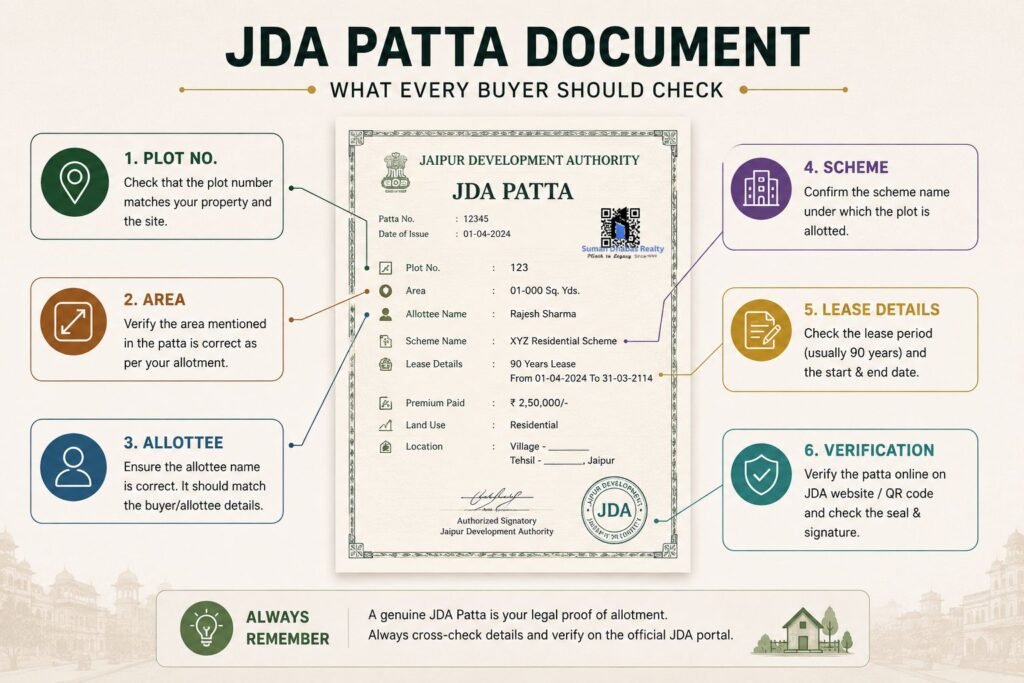
Ask to inspect the original document. Check whether the information matches the property being offered.
Important details may include:
- Plot number
- Property area
- Scheme name
- Allottee name
- Address
- Date of issue
- Lease conditions
- Signatures and official details
Any inconsistency should be clarified before moving forward.
2. Compare Other Property Records
The patta should be compared with the other documents available for the property.
Pay attention to whether the following details remain consistent:
- Name
- Plot number
- Area
- Boundaries
- Other property particulars
If the information does not match, ask for an explanation and supporting documents.
3. Check for Outstanding Dues
Unpaid property-related dues may create difficulties during transfer or other processes.
Where applicable, the JDA provides an online Lease Due Details service that can be used as part of the due-diligence process. However, online information should not replace a complete review of the property documents.
4. Review Transfer and Mutation Records
If the property has previously changed hands, buyers should check whether the relevant transfer or mutation has been completed.
The Rajasthan Urban Development and Housing system lists services related to:
- Name transfer
- Substitution
- Mutation
- Lease deed and patta matters
These records can help buyers understand whether the documented transaction history reflects the current position.
Benefits of Having a Properly Documented JDA Patta
A valid and properly documented JDA lease deed can make the property’s allotment and lease arrangement easier to understand. It may also support the broader verification process.
Clearer Property Documentation
The document provides a written record of the applicable allotment or lease terms.
More Effective Due Diligence
Buyers can compare the information in the patta with other property records to identify inconsistencies or missing details.
Better Understanding of Transfer Requirements
A properly documented property can make it easier to determine which transfer procedures and lease conditions may apply.
Greater Clarity About Rights and Obligations
The lease deed may describe important conditions and responsibilities connected with the property.
Even with these benefits, a patta should not be considered the only document required to establish that a property is safe to purchase.
Common Mistakes to Avoid When Buying a JDA Patta Property
Property decisions based only on verbal assurances can create problems later. Buyers should avoid the following mistakes:
Relying on a Photocopy
Always ask to inspect the original patta or lease deed.
Checking Only One Document
Review the complete chain of property documents instead of relying exclusively on the patta.
Ignoring Outstanding Dues
Ask for relevant dues and payment information before proceeding.
Skipping Legal Verification
A property lawyer may identify documentation issues that a buyer could miss.
Treating Online Records as Complete Proof
Government portals can help users access available records and services, but they do not replace complete legal due diligence.
Paying a Large Amount Too Early
Complete the basic verification process before making major financial commitments.
Final Takeaway: What Is JDA Patta?
So, what is JDA Patta? In simple terms, it is a lease deed or patta associated with the applicable authority, scheme, or property arrangement in Jaipur. It contains information about the property and the rights, conditions, and obligations connected with the lease.
Its importance depends on the specific property and the documentation supporting it. A JDA Patta should not be treated as a standalone guarantee that a property is free from every legal or financial issue.
Before buying, verify the patta alongside ownership records, registration documents, mutation details, dues, approvals, land-use permissions, and other relevant records.
For property buyers in Jaipur and nearby developing regions, understanding these documents can make the purchase process more transparent and help them ask the right questions before making a decision.



Pingback: Patta vs Registry: Key Differences
Pingback: JDA Patta vs Society Patta: Key Differences - Suman Dhabas Realty
Pingback: Sale Deed Transfer: Process, Documents & Important Steps - Suman Dhabas Realty
Pingback: How to Sell a Residential Plot: Process, Documents & Tips - Suman Dhabas Realty