
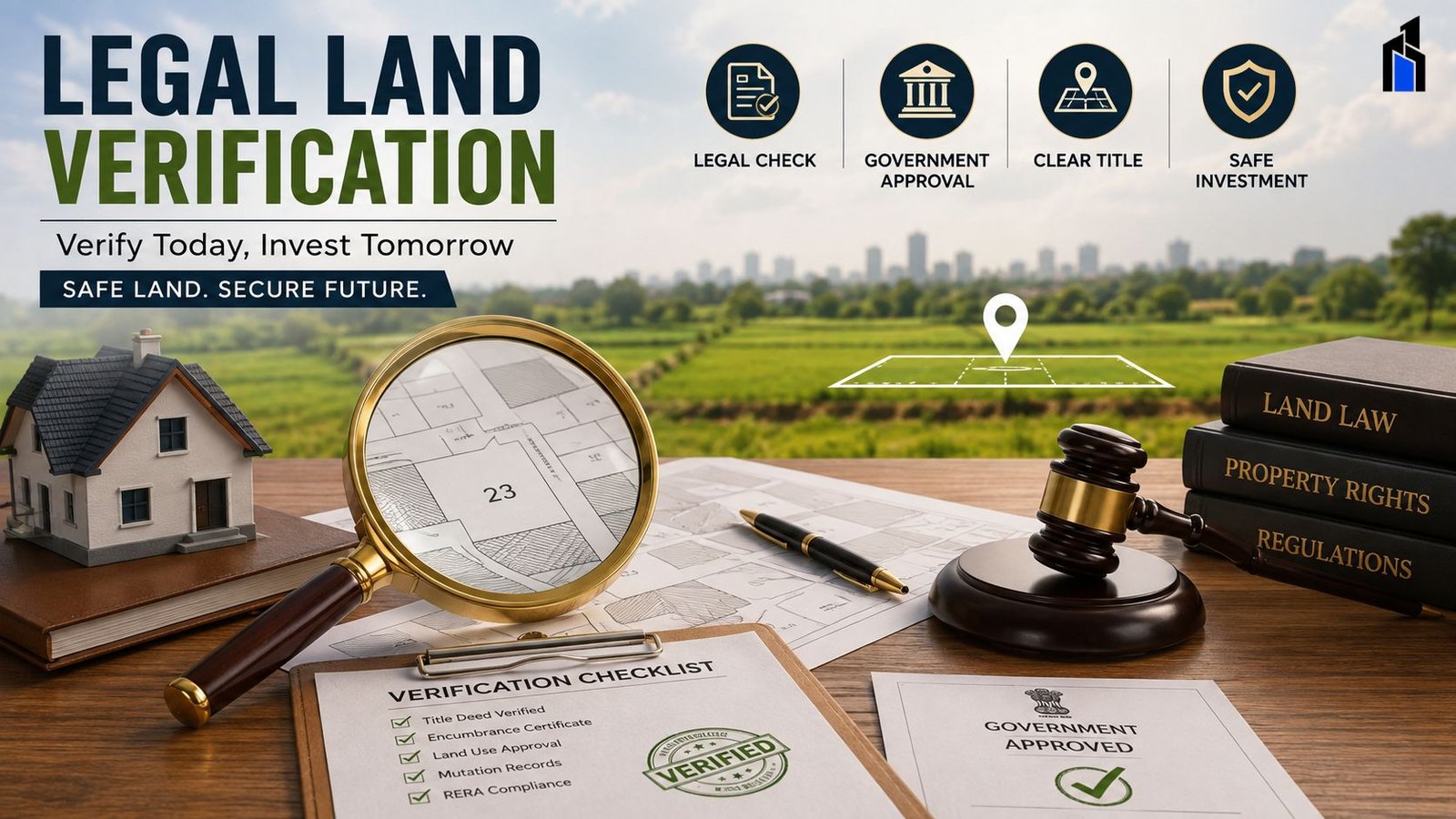
Purchasing land requires more than finding an attractive plot at a suitable price. A property may have a convenient location and appear ideal for your plans, yet hidden legal or documentation issues can create difficulties later. Before committing a substantial amount of money, buyers need to establish who owns the property, whether the seller can legally transfer it, and whether the available records support the transaction.
This is why Legal Land Verification is an important step before purchasing land. It involves examining ownership details, property records, approvals, liabilities, and other legal aspects that can affect the transaction. Whether the purpose is building a home, purchasing a residential plot, or making a land investment, proper verification can help buyers make a more informed decision.
Understanding the Purpose of Legal Land Verification
Legal Land Verification refers to the process of examining the legal status and documentation associated with a property. The objective is to understand whether the land has a clear ownership history and whether any legal or financial issues could affect the proposed purchase.
A proper verification process should help establish:
- The current legal owner of the property
- Whether the seller has the authority to sell the land
- Whether the property’s title is clear
- Whether another person or party has a claim
- Whether official records correspond with the property details
- Whether necessary permissions and approvals are available
- Whether a mortgage, loan, or other charge exists against the property
Government systems can also provide useful information during this process. In Rajasthan, Apna Khata provides access to land-record information. The state’s e-Panjiyan system also provides search facilities related to registered documents and land transactions.
However, these online resources should be viewed as part of the overall verification process rather than a complete replacement for professional legal assessment.
Why Land Verification Should Come Before Payment
Land purchases involve considerable financial commitments. If an ownership or documentation problem is discovered after the transaction, resolving it can become complicated.
For example, a property could have an unclear ownership history that is not obvious during a physical inspection. Similarly, a seller might present recent documents without providing sufficient information about earlier ownership. Examining the property’s history can help identify such gaps.
Legal checks can also help determine whether the land has been involved in litigation or whether another party has an existing claim.
In this way, Legal Land Verification gives buyers an opportunity to identify potential concerns before completing the purchase instead of discovering them after investing their money.
Documents That Deserve Careful Attention
There is no single document that can establish every aspect of a property’s legal status. The documents required can differ according to the property and its location. Still, several important records generally deserve attention.
1. Sale Deed and Earlier Ownership Records
A sale deed records the transfer of ownership from one party to another. However, examining only the latest sale deed may not provide the complete picture.
Buyers should also look at earlier ownership documents to understand how the property moved from one owner to the next. This sequence is commonly known as the chain of title.
A continuous chain of ownership can provide a clearer understanding of the property’s title history and help identify gaps that may require further examination.
2. Official Land Records and Record of Rights
Government land records can provide important details about ownership and the property.
For properties in Rajasthan, buyers can use the state’s land-record systems to access relevant information. The Rajasthan government also provides a comprehensive land information system containing information such as Record of Rights, land transaction deeds, revenue court cases, civil court cases, and cadastral maps.
These records can be useful when checking whether the information connected with the property matches the available documentation.
At the same time, online information should not be treated as a substitute for professional legal review, particularly when the transaction involves a significant investment.
3. Encumbrances and Financial Claims
Another important part of verification is determining whether someone has a legal or financial claim over the land.
An encumbrance can include a mortgage or another registered charge affecting the property. Therefore, buyers should establish whether outstanding obligations exist before moving ahead.
A property can look suitable during a site visit while still carrying a financial claim that may create complications in the future. Checking for such liabilities can therefore form an important part of the purchase process.
4. Land Use and Conversion Records
The permitted use of land is another factor buyers need to examine.
Agricultural, residential, and commercial properties may be subject to different rules and requirements. When land has been converted for a particular purpose, the related conversion documents and permissions should also be checked.
This is particularly relevant when the intended purchase involves residential construction or a plotted development. The buyer should ensure that the available records support the intended use of the land.
5. Approved Layouts and Development Permissions
When buying a plot within a larger development, checking the individual plot alone may not be sufficient.
The development’s approved layout and relevant permissions should also be examined. Buyers should check whether features such as roads, open spaces, amenities, and common areas correspond with the approved plan.
For registered projects in Rajasthan, the official RERA portal provides a project-search facility. Users can search using information including the district, tehsil, project name, promoter, registration number, project type, and project status.
These checks can provide additional information about a plotted development before a buyer proceeds.
Combining Documents With Physical Property Checks
Paperwork is an important part of property verification, but the physical property also needs attention.
The land visible on the ground should correspond with the information contained in the relevant documents. Therefore, buyers should consider both documentary checks and physical inspection rather than relying entirely on one or the other.
A comprehensive approach can bring together:
- Ownership and title records
- Previous property documents
- Official land information
- Encumbrance checks
- Land-use and conversion records
- Layout and development approvals
- Project information
- Physical inspection
- Professional legal review
Together, these checks can provide a more complete understanding of the property.
Legal Land Verification for Plotted Developments
The need for careful verification can become particularly relevant when buyers are considering plotted developments in areas experiencing increasing development activity.
For buyers exploring plotted developments around Jaipur and emerging destinations such as Khatu Shyam, examining ownership records, approvals, project information, and land-use details can help create a clearer picture before making a commitment.
Suman Dhabas Realty Pvt. Ltd. is a new-age real estate venture backed by the construction experience of SDCPL. For buyers considering a township or plotted development, information about documentation, transparency, location, amenities, and future plans can all be relevant factors while evaluating a property.
A Practical Approach Before Buying Land
A land purchase should be approached as a process rather than a decision based only on the property’s appearance.
Start by establishing ownership and reviewing the title history. Next, compare the relevant information with official land records. Buyers should then examine possible encumbrances, land-use requirements, conversion records, and applicable approvals.
If the property forms part of a development, the approved layout and project information should also be reviewed. Physical inspection can then help determine whether the property corresponds with the documentation.
Where the transaction is substantial or the documentation raises questions, professional legal advice can provide an additional level of review.
Final Takeaway
A property’s location, appearance, and price can make it attractive, but they do not establish that the land is legally safe to purchase.
Legal Land Verification helps buyers examine the factors that matter behind the visible property. Ownership, title history, official land records, encumbrances, land use, approvals, and project details can all contribute to a better understanding of what is being purchased.
Taking time to complete these checks before committing money can help buyers identify potential concerns earlier. When required, consulting a qualified property lawyer or legal professional can further support the verification process.
Ultimately, careful land verification is about knowing the legal and documentary position of a property before completing the transaction. A thorough review at the beginning can help reduce the possibility of facing major complications later.



Pingback: How to Perform a Legal Land Verification
Pingback: Bigha to Sq Ft: Convert Bigha into Square Feet - Suman Dhabas Realty
Pingback: Township vs Independent House: Which Is Better? - Suman Dhabas Realty