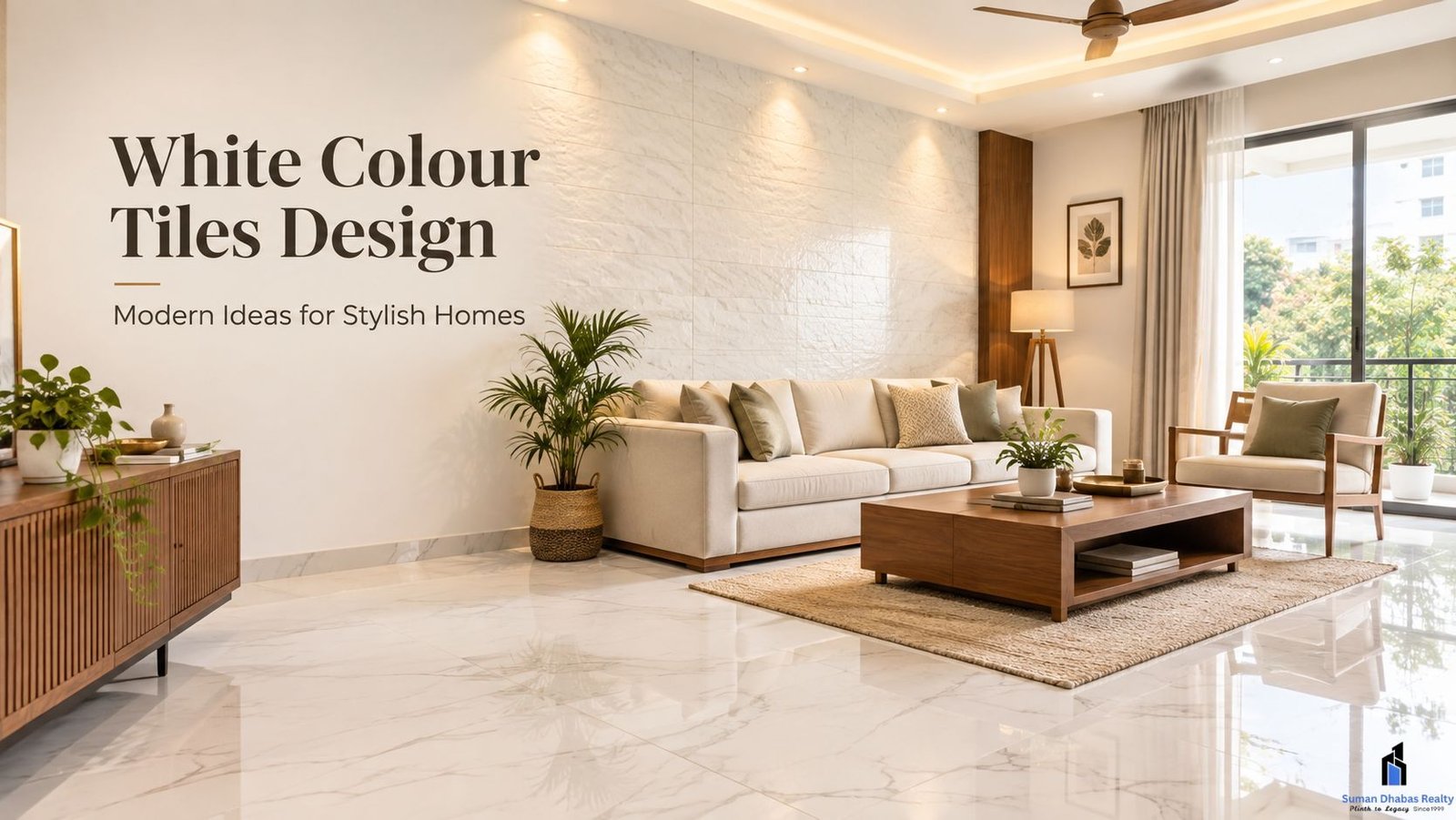
White tiles can make a room feel clean, bright, and visually spacious. With the right finish, size, and layout, white colour tiles design can suit both simple and luxurious interiors. They work well in living rooms, kitchens, bathrooms, bedrooms, entrances, and other areas of a home. Moreover, white creates a neutral base that allows furniture, lighting, wood, and decorative elements to stand out.
Why Choose White Colour Tiles Design?
White tiles are popular because they offer flexibility in interior styling. They can complement warm wooden furniture, dark accents, metallic details, or soft pastel shades. In addition, lighter surfaces can make a compact room appear more open.
The overall appearance also depends on the tile finish. Glossy tiles reflect more light, while matte tiles create a softer and understated look. Therefore, the choice should match both the room’s lighting and its practical requirements.
Ceramic and porcelain tiles are commonly used for residential surfaces. Porcelain is generally denser and less porous than conventional ceramic tile, while both materials are available in different finishes and formats.
Popular White Colour Tiles Design Ideas
1. Glossy White Wall Tiles
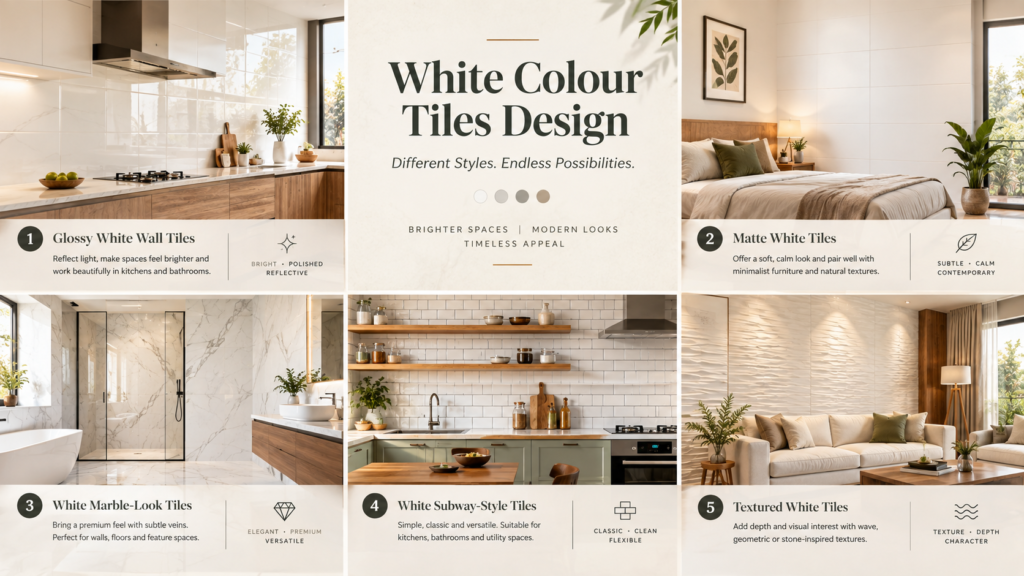
Glossy white tiles are suitable for spaces where you want a bright and polished appearance. They can work especially well on kitchen backsplashes and bathroom walls.
Their reflective surface can interact with natural and artificial light. As a result, the room may feel brighter during different times of the day.
Pair glossy white tiles with wooden cabinets, light-coloured countertops, or simple metallic fittings for a balanced appearance.
2. Matte White Tiles
For a subtle and contemporary interior, matte tiles can be a practical choice. They have a softer visual effect and can reduce the strong reflections associated with polished surfaces.
Matte white tiles can complement minimalist furniture, natural wood, beige fabrics, and neutral walls. They are also useful when you want the room to look calm rather than highly decorative.
3. White Marble-Look Tiles
Marble-look tiles combine the brightness of white with subtle veins and patterns. They can create a premium appearance without making the entire room heavily decorative.
Use them on a feature wall, bathroom wall, flooring, or selected sections of a living area. White marble-inspired porcelain surfaces are also used in contemporary interiors because they can combine a stone-like appearance with the practical properties of porcelain.
4. White Subway-Style Tiles
Subway-style tiles have a simple rectangular shape. Their clean geometry makes them suitable for kitchens, bathrooms, utility spaces, and selected feature walls.
You can install them in a traditional horizontal pattern or use a vertical arrangement for a different visual effect. A contrasting grout colour can also highlight the tile layout.
5. Textured White Tiles
If plain white feels too simple, textured tiles can add depth without introducing another strong colour.
Wave patterns, subtle geometric textures, stone-inspired surfaces, and three-dimensional designs can create visual interest. However, keep the surrounding décor simple so the texture remains the main feature.
How to Use White Colour Tiles Design in Different Rooms
The same tile can create different results depending on where you use it.
Living room: Use large white tiles for a clean floor or create a feature wall with marble-look or textured tiles.
Kitchen: White backsplash tiles can create a fresh background behind cabinets and countertops. Pair them with wood or darker cabinetry for contrast.
Bathroom: White tiles can create a clean visual base. Combine matte and glossy finishes to add variation without using many colours.
Bedroom: A subtle white feature wall can complement wooden furniture, neutral fabrics, and warm lighting.
Entrance: White or off-white floor tiles can create a welcoming first impression. Choose a suitable finish according to expected foot traffic and maintenance needs.
For flooring, also consider slip resistance, abrasion resistance, water absorption, and the amount of traffic the surface will receive. These factors matter because tile performance depends on the location and application, not just its appearance.
Tips for Choosing White Tiles
Before purchasing tiles, consider these simple points:
- Check the finish: Choose glossy, matte, satin, or textured surfaces according to the room.
- Select the right size: Large tiles can create fewer visible joints, while smaller tiles can work well for detailed layouts.
- Consider natural light: Glossy surfaces can reflect light, while matte surfaces provide a softer appearance.
- Think about maintenance: Very light surfaces can make dirt noticeable, so choose a practical finish for high-use areas.
- Check the batch: Tile shades can vary slightly between production batches, so buying from the same batch can help maintain visual consistency.
- Plan the grout: Grout colour can either blend with the tiles or highlight their pattern.
White Colour Tiles Design for Modern Township Homes
In a thoughtfully planned township, interior finishes can be selected according to the function and character of each space. White tiles can provide a flexible base for homeowners who want to personalise their interiors later.
Suman Dhabas Realty Pvt Ltd focuses on real estate development and township-related projects, where practical home planning can be considered alongside overall community design. In such homes, neutral surfaces like white tiles can make it easier to change furniture, lighting, and décor over time. This flexibility can be useful for homeowners who prefer interiors that can evolve with their needs.
Final Thoughts
A well-planned white colour tiles design can make an interior look bright, organised, and adaptable. The key is to select the right material, finish, size, and installation pattern for each space.
Glossy tiles can enhance brightness, matte tiles can create a softer look, and marble-look or textured options can add character. Therefore, instead of choosing tiles only by colour, consider how they will work with lighting, furniture, room size, maintenance, and everyday use.
With the right combination, white tiles can provide a timeless foundation for both modern and traditional home interiors.