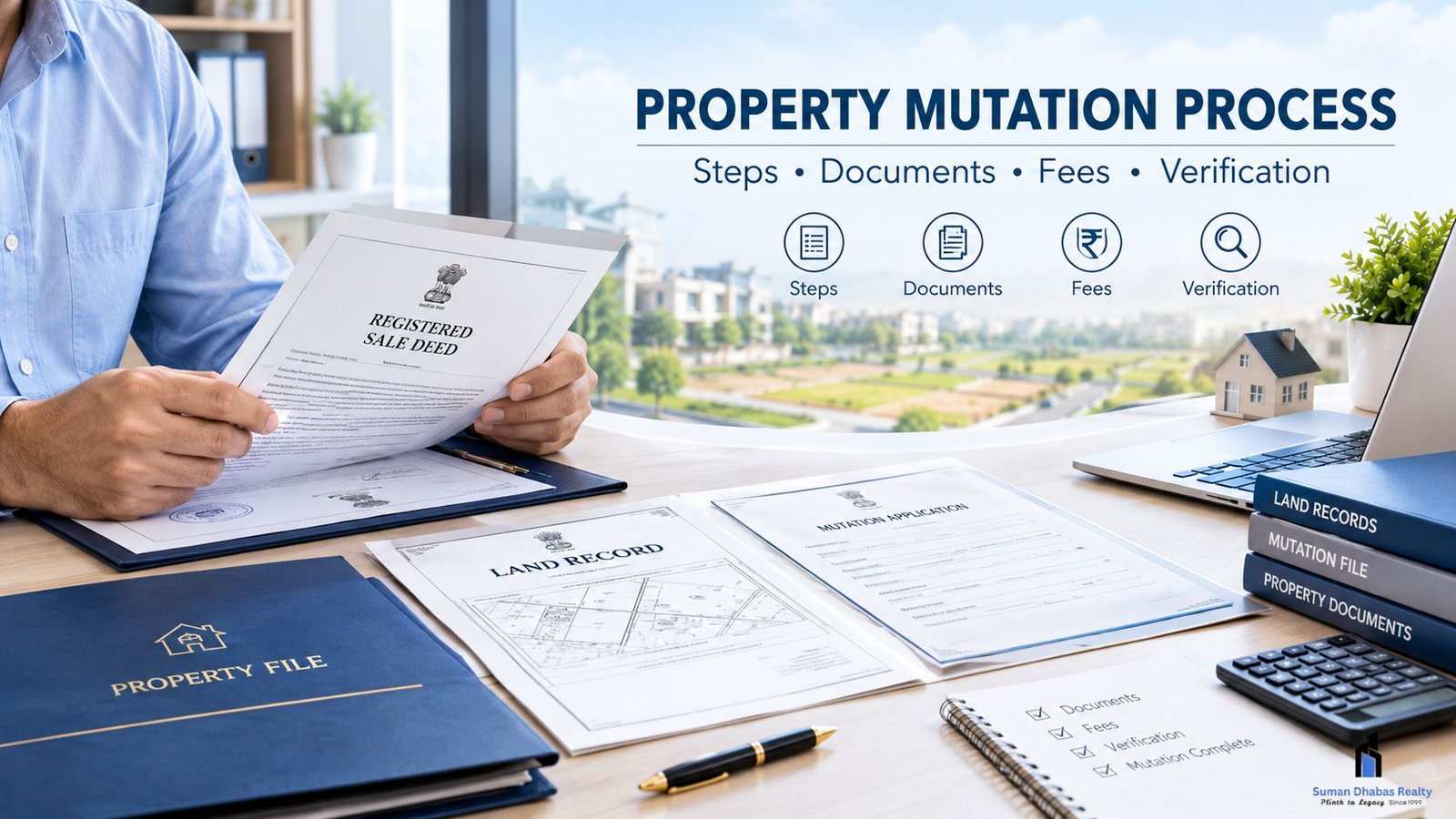
The Property Mutation Process is the procedure used to update government land or property records after a change in ownership. The change may happen because of a sale, inheritance, gift, partition or another legally recognised transfer.
Mutation helps keep revenue or municipal records aligned with the current owner. However, mutation itself does not usually create or transfer ownership rights. The underlying ownership document, such as a registered sale deed, remains important.
Therefore, buyers should treat mutation as an important record-update step after acquiring property.
The exact procedure can vary depending on the property type and the relevant local authority.
Why Is Property Mutation Important?
Property records should reflect the current ownership position.
After purchasing a property, the buyer may need to update the relevant records. This can help with future property transactions, tax records and other administrative matters.
For example, a mismatch between the registered sale deed and revenue records can create confusion later.
Moreover, updated records make it easier to track the property’s ownership history.
However, mutation should not replace proper title verification. Buyers should still check the ownership chain and supporting documents before completing a transaction.
When Is Property Mutation Required?
Mutation may become necessary after several types of property transfers.
Common situations include:
- Purchase through a registered sale deed
- Transfer through inheritance
- Gift of property
- Partition between co-owners
- Court-directed transfer
- Certain government or institutional transfers
The documents required can differ for each situation.
For instance, inheritance may require documents such as a death certificate and succession-related records.
A sale-based mutation usually relies on the registered transfer document.Therefore, check the requirements of the relevant authority before submitting an application.
Property Mutation Process: Step-by-Step Guide
The Property Mutation Process generally involves submitting an application and supporting documents to the relevant authority.
The exact steps can differ between states and local bodies. However, the broad process usually follows a similar pattern.
Property Mutation Process for a Purchased Property
1. Collect the ownership documents
Start by gathering the registered sale deed and other relevant property records.
Keep copies of identification documents and supporting papers ready as well.
2. Check the existing property records
Next, verify the current record details.
Check the owner’s name, plot or property number, area and other important information. If you notice a mismatch, clarify it before submitting the application.
3. Submit the mutation application
Then, submit the application through the applicable online portal or local office.
Some authorities provide online mutation facilities. Others may require submission through a designated revenue or municipal office.
4. Attach the required documents
Add the documents requested by the authority.
The list can vary according to the reason for mutation. A sale, inheritance and gift may each require different supporting documents.
5. Pay the applicable fee
If a mutation fee applies, pay it through the prescribed method.
Keep the payment receipt or transaction reference for future use.
6. Verification takes place
After submission, the concerned authority may check the application and supporting records.
Officials may review the transaction details and existing property records. Additional clarification may also be requested if something appears incomplete.
7. Record gets updated
Once the application is approved, the relevant property record can be updated.
Keep the mutation order, acknowledgement or updated record safely with your other property documents.
Documents Required for Property Mutation
The required documents depend on the reason for mutation and the local authority.
For a property purchased through sale, commonly requested documents may include:
- Registered sale deed
- Identity proof
- Address proof, where required
- Property or plot details
- Previous ownership records
- Application form
- Payment receipt
- Relevant tax documents
- Passport-size photographs, where required
For inherited property, additional documents may apply.
These can include a death certificate, legal heir or succession documents and other records requested by the authority.
Consequently, do not rely on a generic document list. Check the current requirements before filing your application.
Property Mutation Process in Rajasthan
In Rajasthan, mutation and land records involve the relevant revenue and local authorities. The exact process depends on the nature and location of the property.
The state’s land-record system provides services and information related to land records. Buyers can use official government resources to understand applicable procedures.
For properties in and around Jaipur, it is especially important to identify whether the property falls under the relevant urban, development or revenue authority before starting the process.
The authority matters because the record system and procedure can differ.
Property Mutation Process After Buying a Plot
For plotted developments, buyers should keep their registered documents, plot details and applicable approvals organised.
A mutation update should also match the property’s official details.
For example, check that the plot number, area and owner’s name remain consistent across the relevant records.
This is particularly useful when purchasing a plot in a planned township.
Suman Dhabas Realty Pvt. Ltd. works with plotted developments and residential projects as part of its broader real estate portfolio. Its approach includes planning and development across different project formats.
For buyers considering plotted communities around Jaipur and Khatu Shyam, keeping sale documents and ownership records organised can make future property-related processes easier.
How Long Does Mutation Take?
The processing time depends on the local authority, property type and application status.
Some applications may move quickly when all documents are complete. Others can take longer if officials require additional verification.
Therefore, keep the application acknowledgement after submission.
If the process is delayed, the acknowledgement or application number can help you track the status or contact the relevant office.
Does Mutation Prove Property Ownership?
This is an important distinction.
Mutation updates the relevant government record. It does not automatically establish ownership by itself.
Ownership generally depends on valid title documents and the applicable legal framework.
For example, a registered sale deed can establish the transfer under the relevant property laws, while mutation updates the corresponding revenue or municipal record.
As a result, buyers should never treat a mutation entry as a substitute for title verification.
Common Mistakes During Mutation
Several simple mistakes can delay the process.
First, check every property detail before submitting the application. A spelling difference in the owner’s name can create problems.
Next, make sure the sale deed and other records contain consistent information.
Also, submit all required documents in the prescribed format. Missing papers can lead to additional requests.
Finally, keep copies of the application, payment receipt and acknowledgement.
These small steps can make the process much easier to track.
Property Mutation Process Checklist
Before submitting your application, use this quick checklist:
- Confirm the reason for mutation.
- Check the current ownership record.
- Keep the registered transfer document ready.
- Verify the owner’s name and property details.
- Collect the required identity documents.
- Check the latest application requirements.
- Pay the applicable fee.
- Save the acknowledgement number.
- Track the application status.
- Collect the updated record or mutation order.
Final Thoughts
The Property Mutation Process helps keep government property records updated after an ownership change. It commonly follows a simple sequence: document collection, record checking, application, verification and record update.
However, the exact procedure depends on the property and the authority handling the record.
Most importantly, remember that mutation is only one part of property documentation. Buyers should also verify title, registration, land use and other applicable records.
A careful approach can prevent record mismatches and make future property transactions smoother.