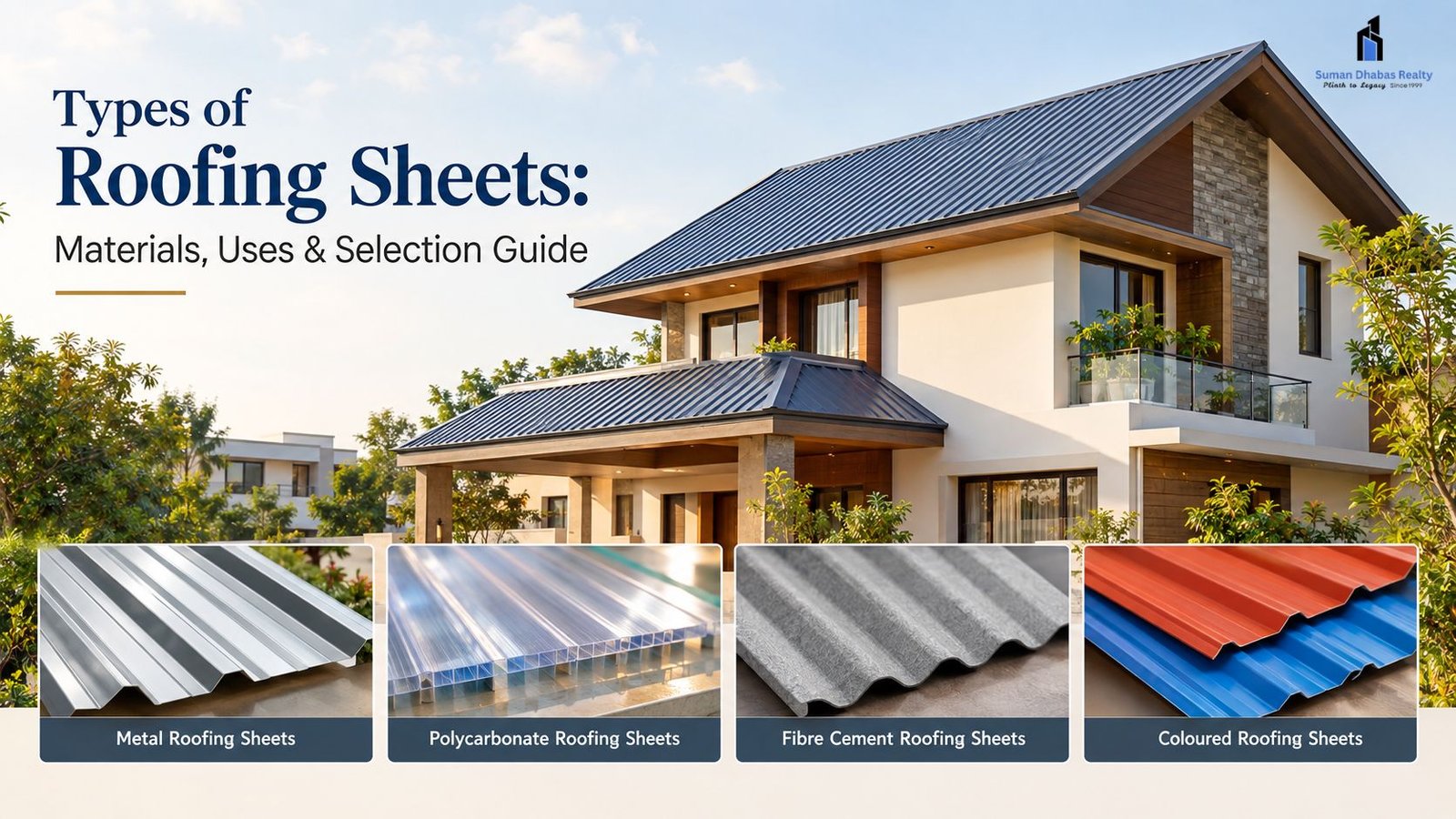
Choosing the right roof involves more than selecting a colour or design. The material, weather conditions, building use, maintenance needs, and budget all matter. Types of roofing sheets are available in several materials, including metal, polycarbonate, fibre cement, PVC, FRP, and bitumen. Each option has different properties and works better for certain applications.
Roofing sheets can cover homes, garages, workshops, warehouses, agricultural structures, balconies, and other spaces. Therefore, understanding the available materials can make the selection process easier.
Types of Roofing Sheets Based on Material
1. Metal Roofing Sheets
Metal sheets are among the most commonly used roofing options. They are generally made from steel or aluminium and can have different profiles, such as corrugated or trapezoidal designs.
Galvanised steel sheets have a zinc coating that helps protect the underlying steel from corrosion. Pre-painted sheets can also provide additional surface protection and colour options.
Metal roofing works well for warehouses, sheds, workshops, commercial buildings, and some residential applications. However, thin metal sheets can transfer considerable heat and sound unless the roof includes suitable insulation.
2. Polycarbonate Roofing Sheets
Polycarbonate sheets are lightweight plastic panels known for their impact resistance and ability to transmit natural light. They can be transparent, translucent, or tinted.
These sheets are useful for skylights, patios, covered walkways, balconies, and sections of roofs where daylight is desirable. Multiwall polycarbonate sheets contain internal air spaces that can improve thermal performance compared with a simple solid sheet.
When selecting polycarbonate, check whether the product includes UV protection. This feature can help the sheet perform better under prolonged sunlight.
3. Fibre Cement Roofing Sheets
Fibre cement sheets combine cement with reinforcing fibres. They are usually opaque and provide shade without allowing sunlight through the roof.
These sheets are commonly considered for utility buildings, sheds, agricultural structures, and some industrial applications. They do not face the same rust concerns as unprotected steel. However, fibre cement is heavier and can be brittle, so proper support and careful installation are important.
When buying cement-based sheets, check the product specification and ensure that it meets the relevant Indian standards for its intended use.
4. PVC and uPVC Roofing Sheets
PVC and uPVC roofing sheets are plastic-based options that can offer resistance to moisture and corrosion. They are available in different colours and profiles.
These sheets can suit areas such as verandas, parking spaces, sheds, utility areas, and lightweight structures. Their low maintenance can be useful in locations where regular painting or rust protection would be inconvenient.
However, performance varies between products. Therefore, buyers should check UV resistance, thickness, temperature tolerance, and manufacturer specifications before installation.
5. FRP Roofing Sheets
FRP stands for fibre-reinforced plastic. These sheets use a resin reinforced with glass fibres, giving them a combination of strength and relatively low weight.
FRP sheets can be translucent or opaque. Translucent versions are useful when a structure needs natural daylight without installing large glass panels. They are often considered for industrial, agricultural, and semi-open structures.
Their performance depends on resin quality, fibre content, thickness, and exposure conditions.
6. Bitumen Roofing Sheets
Bitumen sheets contain bitumen-based material reinforced with fibres. They are lightweight and can provide a practical covering for certain sheds, agricultural structures, and utility spaces.
They can be easier to handle than heavier roofing materials. Still, buyers should consider their expected service life, exposure to strong sunlight, installation method, and maintenance requirements before choosing them.
How to Choose the Right Roofing Sheet
Selecting from different types of roofing sheets becomes easier when you compare the actual requirements of the building.
First, consider the local climate. Areas with intense sunlight may require better thermal control, while humid or coastal environments need strong corrosion resistance.
Next, check the purpose of the structure. A warehouse roof may need different performance characteristics from a residential porch. Similarly, a skylight requires light transmission, while a storage shed may need complete shade.
Budget is another important factor. Do not compare only the purchase price. Installation, insulation, fasteners, maintenance, and possible replacement costs can also affect the overall expense.
Finally, check the sheet’s thickness, coating, profile, warranty, fixing system, and applicable standards. Correct installation is equally important because even a good material can perform poorly if the roof has improper slopes, joints, overlaps, or drainage.
Roofing Choices in Modern Residential Developments
Roofing also plays a role in the planning of modern residential communities. Developers increasingly consider practical construction, usable spaces, durability, and long-term maintenance while planning homes and supporting structures.
For example, Suman Dhabas Realty Pvt Ltd follows an in-house approach across areas such as planning, construction, and project execution. Its portfolio includes plotted developments, villas, farmhouses, and other property formats. Such an approach highlights why construction materials should be considered as part of the wider planning process rather than as an isolated design choice.
Conclusion
There is no single option that works for every building. Metal sheets can provide strength and versatility, while polycarbonate can introduce natural light. Fibre cement offers an opaque and practical solution, whereas PVC, FRP, and bitumen sheets serve different lightweight roofing requirements.
Before choosing among the types of roofing sheets, compare climate, building purpose, durability, maintenance, installation requirements, and total cost. A well-matched roofing material can improve the practical performance of a structure and reduce avoidable maintenance problems over time.