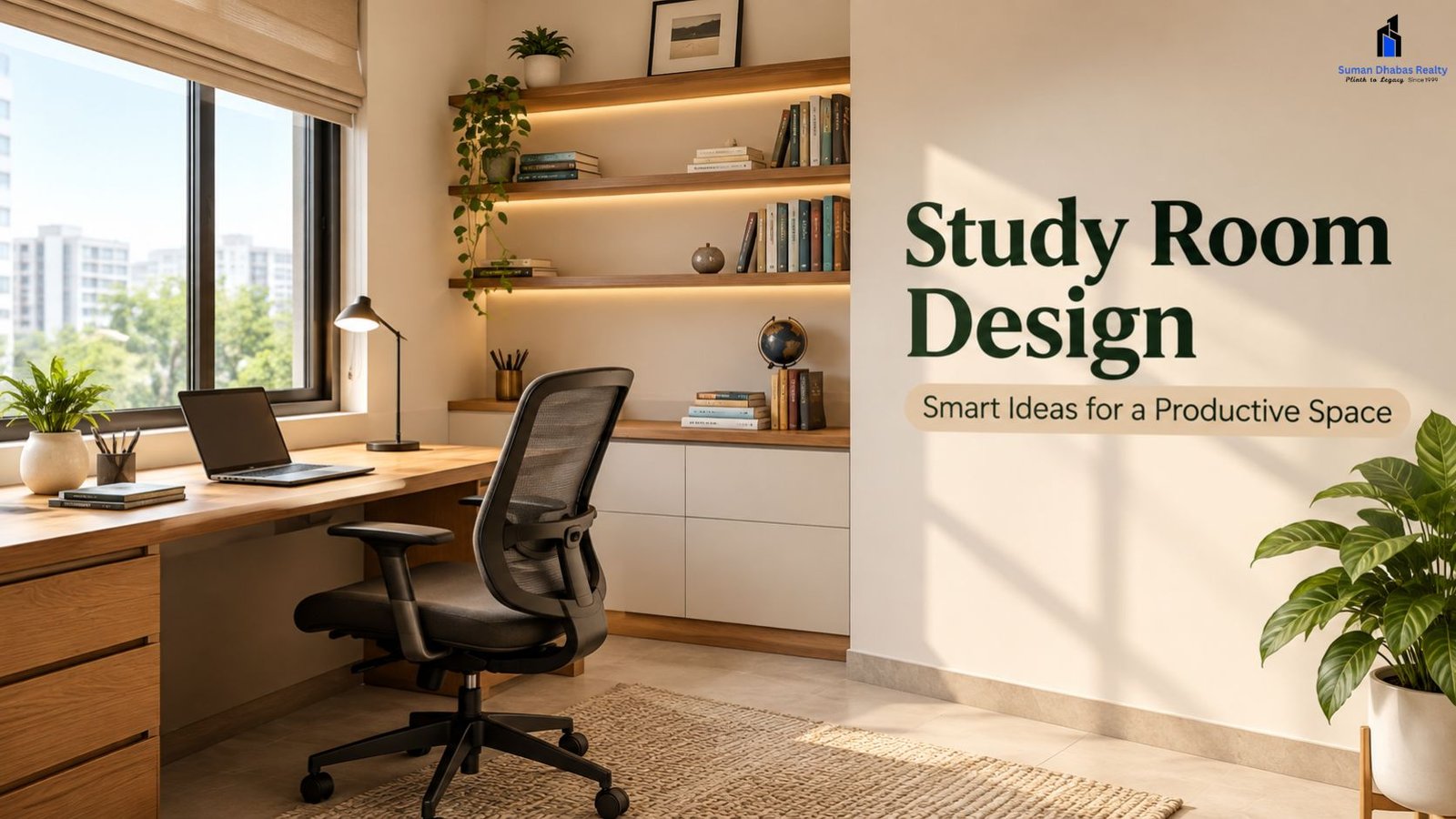
A well-planned study space can make reading, writing, working, and online learning more comfortable. Good Study Room Design focuses on practical furniture, suitable lighting, enough storage, and a calm atmosphere. Whether you have a separate room or a small corner, thoughtful planning can help you use the available space efficiently. Moreover, the right layout keeps essential items within easy reach and reduces unnecessary distractions.
What Makes a Good Study Room Design?
A good study room should support concentration without feeling uncomfortable. Start by measuring the room and identifying the available wall and floor space. Then, decide where the desk, chair, storage units, and lighting will go.
Natural light can make the room feel brighter during the day. However, you should also include artificial lighting for evenings and cloudy days. A comfortable chair and desk with an appropriate height are equally important.
In addition, keep frequently used books and stationery close to the desk. This simple approach can make the room easier to maintain and use every day.
Study Room Design Ideas to Try
1. Choose a Practical Study Desk
The desk is usually the main element of a study room. Select a size that provides enough space for a laptop, books, notebooks, and other essentials.
A compact desk works well in smaller rooms. For larger spaces, a wider desk can provide additional working area. Wall-mounted desks can also save floor space when the room has limited dimensions.
2. Add Comfortable and Adjustable Seating
A suitable chair supports better posture during long study sessions. Look for a chair that provides adequate back support and allows comfortable sitting.
If several family members use the room, an adjustable chair can provide greater flexibility. Also, leave enough space around the chair so that movement remains easy.
3. Use Layered Lighting
Lighting plays an important role in a productive study environment. Place the desk near a window when possible to benefit from daylight.
For evening use, add a focused desk lamp. Ceiling lighting can provide general illumination, while a task light can brighten the immediate work area. Avoid placing strong lights directly behind the screen because they can create distracting reflections.
4. Include Smart Storage
Books, files, stationery, and electronic accessories can quickly create clutter. Therefore, storage should form an important part of your Study Room Design.
Open shelves allow easy access to books and decorative objects. Closed cabinets can hide less attractive items and keep the room looking tidy. Drawers under the desk can also provide useful storage without occupying additional floor space.
5. Select Calm Wall Colours
Wall colour can influence the overall appearance of the room. Soft neutrals, white, beige, light grey, muted green, and subtle blue can create a relaxed visual setting.
You can also introduce colour through one accent wall, artwork, a rug, or furniture. However, avoid using too many strong colours in a small study room because they may make the space feel visually busy.
Small Study Room Design Tips
A small room does not need to compromise functionality. Use vertical walls for shelves instead of filling the floor with storage units. A slim desk can provide a dedicated workspace without taking up excessive space.
You can also choose furniture with built-in drawers or shelves. Foldable furniture is another practical option for rooms that serve multiple purposes.
Mirrors can make a compact room appear more open. At the same time, keeping the desk surface clear helps maintain a cleaner appearance.
Technology and Cable Management
Modern study rooms often include laptops, monitors, chargers, printers, and other devices. Plan electrical points before finalising the furniture arrangement.
Cable clips, cable trays, and small organisers can prevent wires from spreading across the desk or floor. Keep chargers grouped together so they remain easy to find.
If you use a computer regularly, position the screen at a comfortable viewing height and keep sufficient distance between your eyes and the display.
Personalise the Study Space
A study room can remain functional while reflecting your personal style. Add a small plant, framed artwork, a notice board, or a simple desk organiser.
For children, educational charts and accessible storage can make the space more useful. For adults, a minimal arrangement with fewer decorative elements may provide a cleaner working environment.
The key is to avoid unnecessary clutter. Every item should have a purpose or contribute positively to the room.
Study Room Design for Modern Homes
In contemporary homes, the study area often shares space with a bedroom, living room, or hallway. In such cases, use furniture and colours that complement the surrounding interiors.
A built-in desk can create a dedicated workspace within a bedroom. Similarly, a study nook under a staircase or beside a window can make productive use of otherwise unused space.
Planned residential communities and townships can also provide homes with layouts that accommodate dedicated work or study areas. For example, Suman Dhabas Realty Pvt Ltd focuses on residential development where practical planning and community-oriented spaces can form part of modern living. Such layouts can help homeowners adapt rooms according to changing family needs without making the interiors feel disconnected.
Final Thoughts
Effective Study Room Design does not depend on expensive furniture or elaborate decoration. Instead, focus on a practical layout, comfortable seating, suitable lighting, useful storage, and a distraction-free environment.
Whether you are designing a large study room or a compact study corner, begin with the available space and your daily requirements. With thoughtful choices, even a simple room can become a comfortable place for studying, reading, working, and learning.
Quick Checklist
- Choose a suitable desk and chair.
- Provide adequate natural and artificial lighting.
- Use shelves and cabinets for organised storage.
- Keep colours calm and visually balanced.
- Manage cables neatly.
- Maintain a clutter-free desk.
- Add a few purposeful decorative elements.
- Plan electrical points according to your technology needs.