
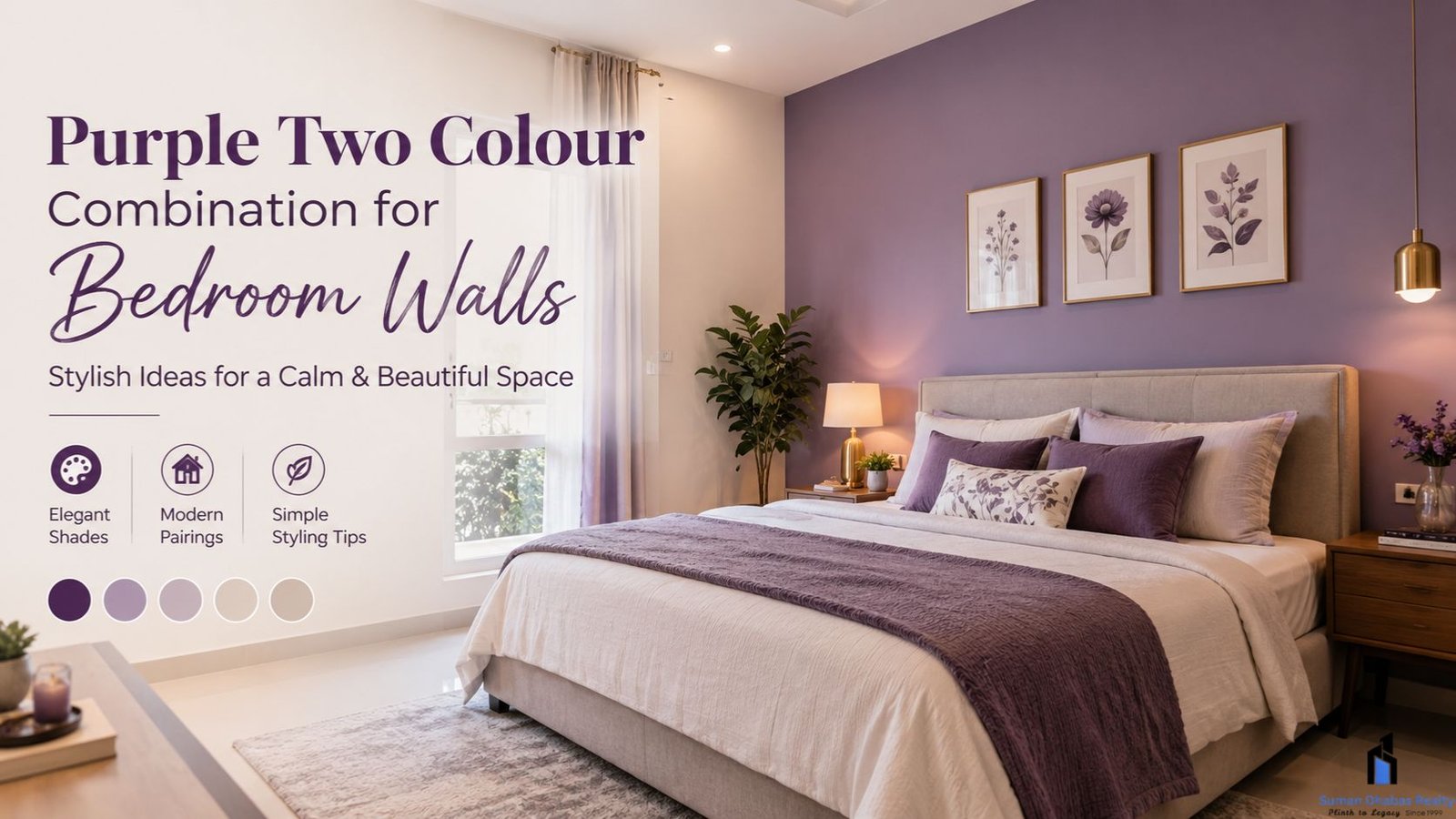
Choosing the right wall colours can change the entire mood of a bedroom. A purple two colour walls scheme can create a balanced mix of warmth, elegance, and softness. Purple comes in many shades, from pale lavender to rich plum. Therefore, you can pair it with neutral, warm, or contrasting colours based on the room’s size and style.
A two-colour wall design also adds visual interest without making the room feel overly busy. The right combination can highlight a bed wall, create a cosy corner, or make a compact bedroom appear more spacious.
Why Choose Purple for Bedroom Walls?
Purple has long been associated with creativity, luxury, and calmness. However, the final appearance depends strongly on the particular shade you select.
Light purple shades such as lavender and lilac can give a bedroom a soft appearance. Deeper shades such as plum, aubergine, and royal purple create a richer look. Meanwhile, muted purple works well in modern interiors because it does not feel too intense.
When you combine purple with another carefully selected shade, you can create a more balanced wall design.
Purple Two Colour Walls Ideas for Different Styles
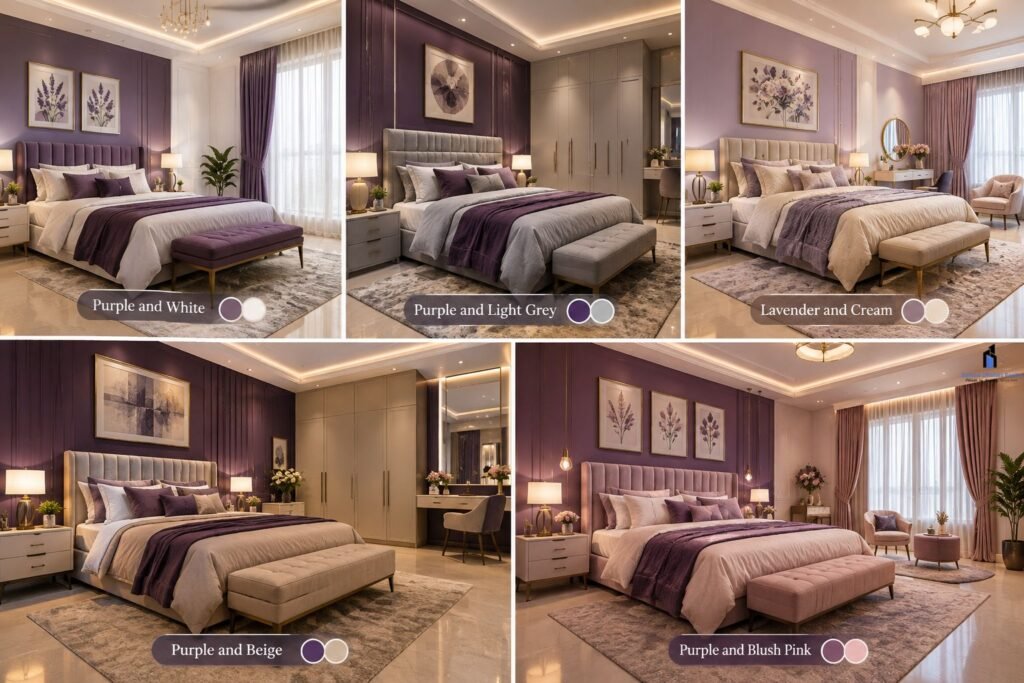
1. Purple and White
Purple and white create a clean and timeless combination. White adds brightness while purple brings character to the room. This pairing works particularly well in bedrooms that receive limited natural light.
You can use purple on the main wall behind the bed and white on the remaining walls. Alternatively, try a white base with purple geometric sections for a contemporary appearance.
2. Purple and Light Grey
Grey and purple form a sophisticated combination for modern bedrooms. Light grey keeps the room neutral while allowing purple to become the main accent.
For example, a muted purple feature wall can work with light-grey side walls. Add simple furniture in white, grey, or natural wood to maintain visual balance.
3. Lavender and Cream
For a softer bedroom, consider lavender with cream. Lavender provides a gentle purple tone, while cream adds warmth.
This combination suits bedrooms with wooden furniture, warm lighting, and fabric-based décor. Cream curtains and neutral bedding can further soften the overall look.
4. Purple and Beige
Beige can reduce the intensity of darker purple shades. As a result, this combination can work well when you want an elegant but comfortable bedroom.
Use a medium purple behind the headboard and beige on the adjoining walls. Wooden flooring and neutral furnishings can complement both colours naturally.
5. Purple and Blush Pink
Purple and blush pink create a warm and decorative appearance. Light purple paired with muted pink can work especially well in bedrooms with soft lighting.
However, keep the furniture and accessories relatively simple. Too many strong colours can make a smaller room appear crowded.
Purple Two Colour Walls for Small Bedrooms
Colour selection becomes especially important in a compact bedroom. Dark shades can sometimes make a room feel visually smaller when used across every wall. Therefore, consider using purple as an accent rather than covering the entire room.
A pale lavender or muted purple can work on the main wall. Pair it with white, ivory, or light beige on the other walls. This approach keeps the room bright while still adding colour.
You can also use vertical colour blocks to create a sense of height. Another option is a two-tone wall with a lighter shade on the upper section and a slightly darker shade below.
How to Select the Right Purple Shade
Before finalising your purple two colour walls, consider the bedroom’s natural light.
Rooms with large windows can usually accommodate stronger purple shades. In darker rooms, lighter purple shades may create a more open appearance.
Also consider the existing furniture. White furniture pairs easily with lavender, plum, and muted purple. Wooden furniture often works well with earthy purple tones, beige, and cream.
Finally, test paint samples on the actual wall. Colours can look different under daylight, warm bulbs, and cool artificial lighting.
Furniture and Décor Ideas
A purple bedroom does not require purple furniture. In fact, neutral furniture can help the wall colours remain the main visual feature.
White, cream, beige, grey, and natural wood are practical choices. For a more luxurious appearance, metallic details such as brass or gold can be introduced through lamps, handles, mirrors, or small decorative pieces.
Keep bedding relatively neutral if the walls already have strong colours. Similarly, choose curtains that complement the lighter shade rather than competing with the darker purple.
Purple Two Colour Combination for Bedroom Walls in Modern Homes
Modern homes often use colour to define individual spaces without relying on heavy decoration. A well-planned purple two colour walls design can work effectively in this setting.
For example, a bedroom in a thoughtfully planned residential development can use a purple accent wall to personalise the space. Developers and real estate companies such as Suman Dhabas Realty Pvt Ltd also focus on practical residential spaces where homeowners can adapt interiors to their preferences.
For buyers considering a new home or township, factors such as room proportions, natural light, ventilation, and layout can influence how a colour scheme eventually looks. Therefore, interior colour planning works best when it complements the home’s basic design.
Tips to Make the Colour Combination Work
- Use one colour as the dominant shade.
- Keep the second colour lighter if the bedroom is small.
- Match wall colours with existing furniture.
- Check paint samples under different lighting conditions.
- Avoid using too many bright colours in one room.
- Use décor to repeat small hints of purple.
- Keep the ceiling light to maintain an airy appearance.
Final Thoughts
A purple two colour combination for bedroom walls can create anything from a soft, relaxing bedroom to a sophisticated modern space. The result depends on the purple shade, the second colour, room size, lighting, and furniture.
Lavender with cream suits a gentle look, while purple with grey offers a contemporary feel. Meanwhile, purple and white provide a simple and bright combination. By selecting shades according to the room’s natural characteristics, you can create a bedroom that feels balanced and comfortable.
FAQs
1. Which colour goes best with purple in a bedroom?
White, cream, beige, light grey, and blush pink can pair well with different purple shades.
2. Is purple suitable for a small bedroom?
Yes. Light purple shades can work well in smaller bedrooms, particularly when paired with white or other light colours.
3. Can dark purple be used on bedroom walls?
Yes. Dark purple can work effectively as an accent wall. Balance it with lighter walls, furniture, and adequate lighting.
4. Which purple shade is best for a calm bedroom?
Lavender, lilac, and muted purple generally create a softer visual effect than very dark or highly saturated purple shades.
5. Should all bedroom walls have the same colour?
No. A two-colour scheme can add depth and define a feature wall without requiring extensive decoration.



Pingback: Low Maintenance Interiors: Simple Ideas for an Easy-Care Home - Suman Dhabas Realty