
Tourism can play an important role in the growth of a city or region. When more people visit a destination, the demand for hotels, restaurants, shops, transport, and other services can increase.
This growth can also influence the real estate market.
Areas that attract regular tourist footfall may see greater interest in residential and commercial properties. Better infrastructure can follow. New businesses can emerge. Land and property may become more attractive to investors.
Jaipur is a good example of a city where tourism and real estate can influence each other. Its heritage, architecture, cultural attractions, and nearby religious destinations bring visitors throughout the year.
Understanding how tourism impacts real estate can help property buyers and investors make more informed decisions.
Why Tourism Matters for Real Estate
Tourism brings people and businesses into an area. This creates demand for different types of properties.
Hotels need suitable locations. Restaurants need commercial spaces. Shops need areas with regular visitors. Service businesses may also look for properties close to busy tourist routes.
As these activities grow, the surrounding area can become more active.
This does not mean every tourist destination will automatically experience high property appreciation. Location, infrastructure, demand, development quality, and market conditions still matter.
However, consistent tourism can become an important factor when evaluating a property’s long-term potential.
How Tourist Footfall Drives Property Demand
A steady flow of visitors can increase the need for accommodation and commercial spaces.
Tourists need places to stay, eat, shop, and explore. Businesses respond to this demand by opening or expanding their operations.
This can increase interest in properties located near popular attractions and well-connected routes.
Residential properties may also benefit indirectly. As businesses grow, employees and service providers may need housing nearby.
Over time, this can create a wider property ecosystem around a popular tourist destination.
Impact on Residential Property
Tourism does not only affect hotels and commercial buildings. It can also influence residential real estate.
When an area becomes more developed, people may become more interested in living nearby. Better roads, improved services, and new businesses can make the area more convenient.
For families, the availability of everyday facilities is especially important. Schools, healthcare, markets, transport, and recreational spaces can make a location more suitable for long-term living.
This is why buyers should look at the complete development of an area rather than tourism alone.
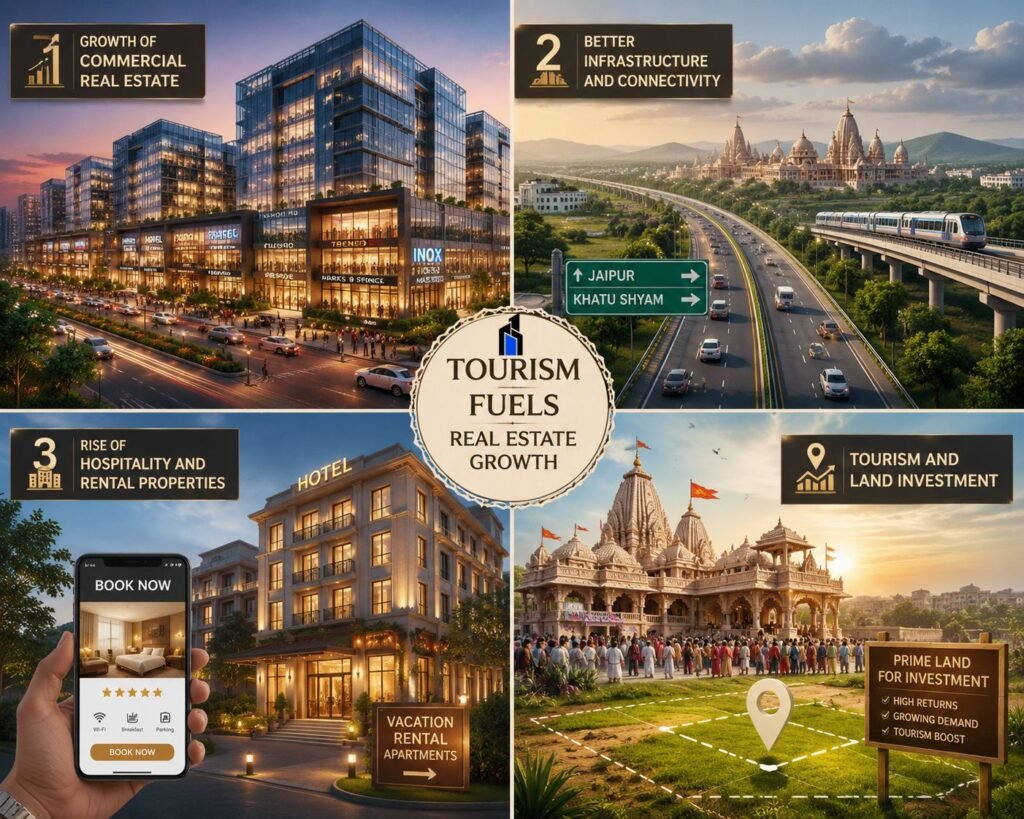
Growth of Commercial Real Estate
Commercial real estate can see direct benefits from tourism.
Tourists often spend money on food, shopping, transportation, entertainment, and local experiences. This creates opportunities for businesses.
As commercial activity increases, demand for shops, offices, restaurants, and other spaces may also grow.
The location of a commercial property is particularly important. A property near a busy tourist route may have different potential from one located far from major activity.
Investors should therefore study footfall, accessibility, competition, and the surrounding development before making a decision.
Better Infrastructure and Connectivity
Tourism can encourage improvements in infrastructure.
Popular destinations often need better roads, transportation, parking, public facilities, signage, and other services to handle visitors.
Improved infrastructure can benefit both tourists and local residents.
Better roads can reduce travel time. Improved connectivity can make nearby areas easier to access. New facilities can also encourage businesses and residents to consider locations that were previously less developed.
For real estate buyers, infrastructure is an important factor because it can influence the usability and attractiveness of a property.
Rise of Hospitality and Rental Properties
Tourism can create opportunities in the hospitality and rental sectors.
Hotels, guest houses, holiday accommodation, and short-term rental properties may become more common in areas with strong visitor demand.
However, rental demand can change with seasons and tourism trends. Investors should not assume that a tourist location will always generate the same level of income.
Before buying a property for rental purposes, study visitor patterns, local regulations, operating costs, and actual rental demand.
A realistic assessment is better than relying on estimated returns.
Tourism and Land Investment
Tourism can also influence interest in land.
When a destination experiences growing visitor activity, nearby areas may attract new development. Roads, businesses, accommodation, and residential projects may gradually expand around established tourist zones.
This can make surrounding land interesting to some investors.
Still, distance from a tourist attraction matters. Being close to a popular destination is not enough on its own.
Buyers should consider road access, surrounding development, infrastructure, land use, and future plans before purchasing land.
Good land research can also help buyers understand the factors that may affect a property’s future potential.
How Tourism Can Influence Property Value
Tourism can contribute to property demand, but property values depend on many factors.
These ay include:
- Location
- Connectivity
- Infrastructure
- Tourist footfall
- Local development
- Property type
- Demand and supply
- Availability of amenities
- Overall market conditions
A property in a tourist-friendly area may attract more attention, but that does not guarantee appreciation.
Investors should consider both the benefits and limitations of the location before making a purchase.
The Role of Planned Development
Tourism-led growth can create opportunities for new residential and commercial development.
Planned developments can help organise this growth by providing proper roads, open spaces, infrastructure, and designated areas for different uses.
For buyers interested in residential plots, planned surroundings can be useful. They provide an opportunity to build a home while remaining part of a structured development.
Suman Dhabas Realty Pvt. Ltd. is active in the plotted-development space and has a broader real estate portfolio. For buyers exploring its projects, factors such as location, infrastructure, layout, and surrounding development should remain important parts of the decision.
Tourism Growth Around Khatu Shyam
Religious tourism can have a strong connection with local real estate.
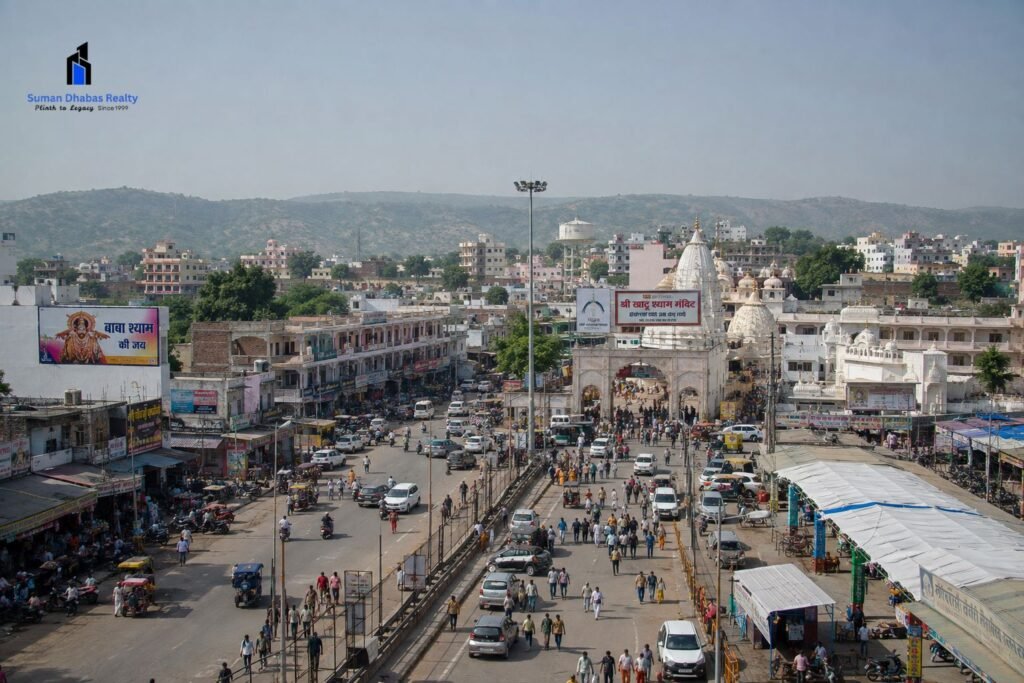
Khatu Shyam is an important pilgrimage destination in Rajasthan and attracts visitors from different parts of the country. Regular visitor activity supports local businesses and services.
As visitor movement increases, nearby areas can experience greater demand for accommodation, food outlets, retail services, and other facilities.
This can also increase interest in surrounding residential and plotted developments.
For property buyers, the important point is to look beyond tourist footfall. Study the area’s roads, infrastructure, development pattern, and everyday facilities before making an investment.
Final Thoughts
Understanding how tourism impacts real estate can help buyers see the bigger picture.
Tourism can increase property demand, support commercial growth, encourage infrastructure development, and create opportunities for hospitality and rental properties.
However, tourism alone does not determine property value.
Location, connectivity, infrastructure, development, demand, and affordability all matter. Buyers should research these factors before making a decision.
For growing destinations such as Jaipur and areas around Khatu Shyam, tourism can be one part of a larger development story.
If you are considering a residential plot or other property, look beyond today’s tourist activity. Think about how the entire area is developing and whether the location fits your long-term plans.
A thoughtful approach can help you turn tourism-related growth into a better-informed real estate decision.



Pingback: Tourism and Real Estate: Impact on Property Growth - Suman Dhabas Realty