Buying real estate is a huge financial step. Too often, people only look at the price tag, location, or how nice a house looks. They forget to check the legal papers and financial details. Learning what errors to avoid can help you make a smart, safe choice. Whether you are buying a piece of land, an apartment, or a house in a planned community, always do your homework before paying any money.
A place might look great when you visit it, but hidden problems can show up later. These might involve who actually owns the land, missing papers, unapproved plans, or boundary disputes. Taking your time and following a careful checklist will save you from major trouble.
Why Should Buyers Avoid Mistakes When Buying Property?
Real estate costs a lot of money. Even a tiny mistake can lead to big legal battles and lost savings down the road.
For example, if you do not check who owned the land in the past, someone else might show up later claiming it belongs to them. Or, you might assume a builder has all the right permissions just because the site looks finished.
That is why you must look beyond price tags. Always double-check the seller, official documents, legal permissions, and the actual physical site before signing anything.
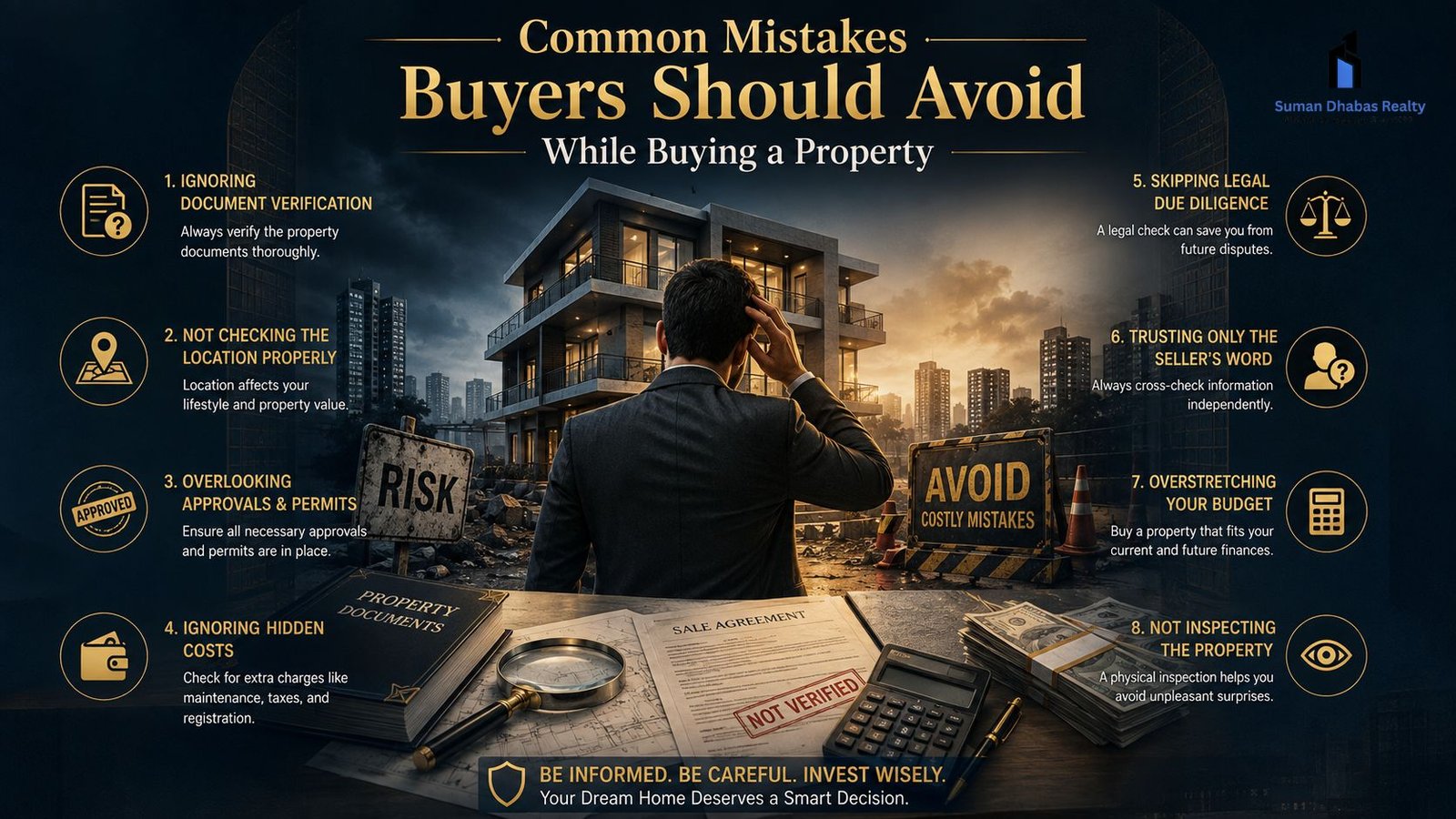
Common Mistakes Buyers Should Avoid While Buying a Property
Many people make the same errors when shopping for land or homes. Luckily, you can avoid these problems with a little extra planning.
1. Not Checking the Property Title
The title is the official document that proves who owns the land. Skipping this check is a huge risk. Always review the ownership history to make sure the seller has the legal right to hand over the property. If multiple family members own it together, make sure everyone agrees to the sale.
2. Relying Only on the Seller’s Documents
Never assume the paperwork given to you by a seller is complete or accurate. You need to check those documents against official government records yourself.
For example, buyers in Rajasthan can look up farm land records on the Apna Khata website. However, keep in mind that online portals might not have the most up-to-date information. They are great for quick checks, but you still need certified copies for legal proof.
3. Ignoring Land Records
Government land records show essential facts like the owner’s name, plot number (khasra number), and exact size of the land. Always match these records with the seller’s paperwork. If the names or numbers do not match, stop and ask questions before moving forward.
Common Mistakes Buyers Should Avoid While Buying a Property Online
Searching for homes online is fast and easy, but relying only on the internet can lead to big traps.
4. Trusting Property Listings Without Verification
An online ad can promise amazing features, beautiful views, and upcoming roads, but an ad is not legal proof. Treat online listings as a starting point. Always ask to see official permits and title deeds.
If a project claims to be registered with RERA (Real Estate Regulatory Authority), look it up on the official state portal to verify their registration number and project status.
5. Not Checking RERA Details
RERA rules exist to protect buyers from unfair builders. Always search the official RERA database instead of trusting sales brochures or smooth talk. Check whether the planned construction timeline, layout, and building details match what the developer promised you.
6. Ignoring Encumbrances and Existing Loans
An encumbrance means a property has an unpaid loan or legal claim against it. If the seller owes money to a bank, the bank could take the property back—even after you buy it! Always ask for an official certificate that proves the property is completely free of debt.
7. Not Checking Property Approvals
A building can look beautiful and still be built illegally. Always verify that local government authorities have approved the land-use plans, layout, and building design. This is especially important when buying open plots in newly developing areas.
8. Ignoring the Physical Property
Paperwork is essential, but you must visit the land in person. Walk around the boundaries, check the access roads, and look at the surrounding neighborhood. Make sure the actual size matches the measurements listed in your paperwork.
9. Focusing Only on the Property Price
The price tag is not the only thing you will pay. Always budget for extra costs, including:
Government stamp duty and registration fees
Legal fees for lawyers
Brokerage or agent fees
Maintenance and utility setup costs
Bank loan processing fees
These extra expenses can quickly add up, making a “cheap” deal much more expensive than expected.
10. Skipping Legal Advice
Trying to handle all the paperwork yourself to save money is a risky move. Property law can be very complicated, especially if the land was inherited or has multiple owners. Hiring a real estate lawyer to review the contracts can protect you from costly legal traps.
Common Mistakes Buyers Should Avoid While Buying a Property in a Township
Buying a plot inside a large planned community (township) requires extra attention because you are buying into a shared development.
11. Checking Only the Plot and Not the Township
Look at the big picture. Check the plans for community roads, parks, water lines, and security. Make sure the builder has all the required approvals for the entire development, not just your single plot.
For example, if you are looking at projects around fast-growing areas like Jaipur or Khatu Shyam—including developments by companies like Suman Dhabas Realty Pvt Ltd—always double-check the overall layout plans and master approvals before making a payment.
12. Rushing Because of a Limited-Time Offer
Sales agents often use pressure tactics like “Prices go up tomorrow!” or “This is the last available plot!” Do not let pushy sales pitches rush your decision. A safe purchase requires enough time to check every document thoroughly.
13. Not Reading the Agreement Carefully
Never sign a legal contract without reading every single line. Check the payment schedule, completion dates, penalty clauses, and cancellation rules. If any part of the text is confusing, ask your lawyer to explain it before signing.
14. Assuming Registration Solves Every Problem
Registering your property with government systems (like Rajasthan’s ePanjiyan portal) is an important final step, but registration alone does not guarantee that the seller was honest. You still need to verify titles, approvals, and land boundaries before you reach the registration stage.
15. Not Keeping Copies of Important Documents
Once the purchase is complete, keep your papers organized in a safe folder. Always hold on to original copies of your sale deed, payment receipts, tax receipts, and building approvals. It is also a smart idea to save scanned digital copies on your computer.
Township properties require broader research.
You are not only buying a plot or home. You are also considering the development around it.
11. Checking Only the Plot and Not the Township
Before buying, study the overall project.
Check the planned roads, open areas, amenities, access, infrastructure, and development status.
Also review the documents and approvals relevant to the project.
For buyers exploring developing areas around Jaipur and Khatu Shyam, this approach can be particularly useful. A township should be evaluated for both its individual property and the wider development plan.
Projects associated with Suman Dhabas Realty Pvt Ltd can similarly be evaluated through the same buyer-first approach. Instead of relying only on location or lifestyle claims, buyers should look at the property’s documentation, applicable approvals, development details, and other relevant records before making a decision.
This keeps the research practical and helps buyers make decisions based on verified information.
12. Rushing Because of a Limited-Time Offer
“Book today.”
“Only a few plots left.”
“Price increases next week.”
These statements can create pressure.
However, property decisions should not depend only on urgency.
Take enough time to check the documents and understand the agreement. If an important document is missing, ask why.
A genuine purchase decision should allow reasonable time for verification.
13. Not Reading the Agreement Carefully
Some buyers sign agreements without reading every important clause.
Do not make this mistake.
Check the property description, plot or unit number, area, payment schedule, possession terms, cancellation conditions, penalties, and other important clauses.
If you do not understand a clause, ask for clarification before signing.
14. Assuming Registration Solves Every Problem
Registration is an important part of a property transaction. However, buyers should not assume that registration alone replaces due diligence.
Rajasthan’s official ePanjiyan system provides services related to valuation, registration, payments, document searches, and other registration processes.
However, buyers should still verify ownership, title, approvals, land records, and other relevant details before completing the transaction.
15. Not Keeping Copies of Important Documents
Finally, keep an organised record of your property documents.
Maintain copies of important papers such as:
- Sale agreement
- Sale deed
- Previous title documents
- Property records
- Payment receipts
- Approval documents
- RERA details, where applicable
- Registration documents
- Identity and transaction records
Digital copies can also make future access easier.
How to Avoid Property Buying Mistakes
You can keep your purchase simple and safe by following this basic checklist:
Research: Look into the location and local market prices.
Verify: Check ownership titles, land records, debt status, and official government approvals.
Inspect: Visit the site in person to measure boundaries and check roads.
Review: Read the legal contract carefully with a lawyer and calculate all hidden costs.
Finalize: Complete the official registration only after every check passes.
Final Thoughts
Avoiding common property mistakes comes down to one basic rule: verify first, pay later. Never judge a home or plot solely by its appearance, price, or flashy advertisements.
By carefully checking the legal titles, land records, physical boundaries, and hidden costs, you can protect your hard-earned money and enjoy your new investment with complete peace of mind.