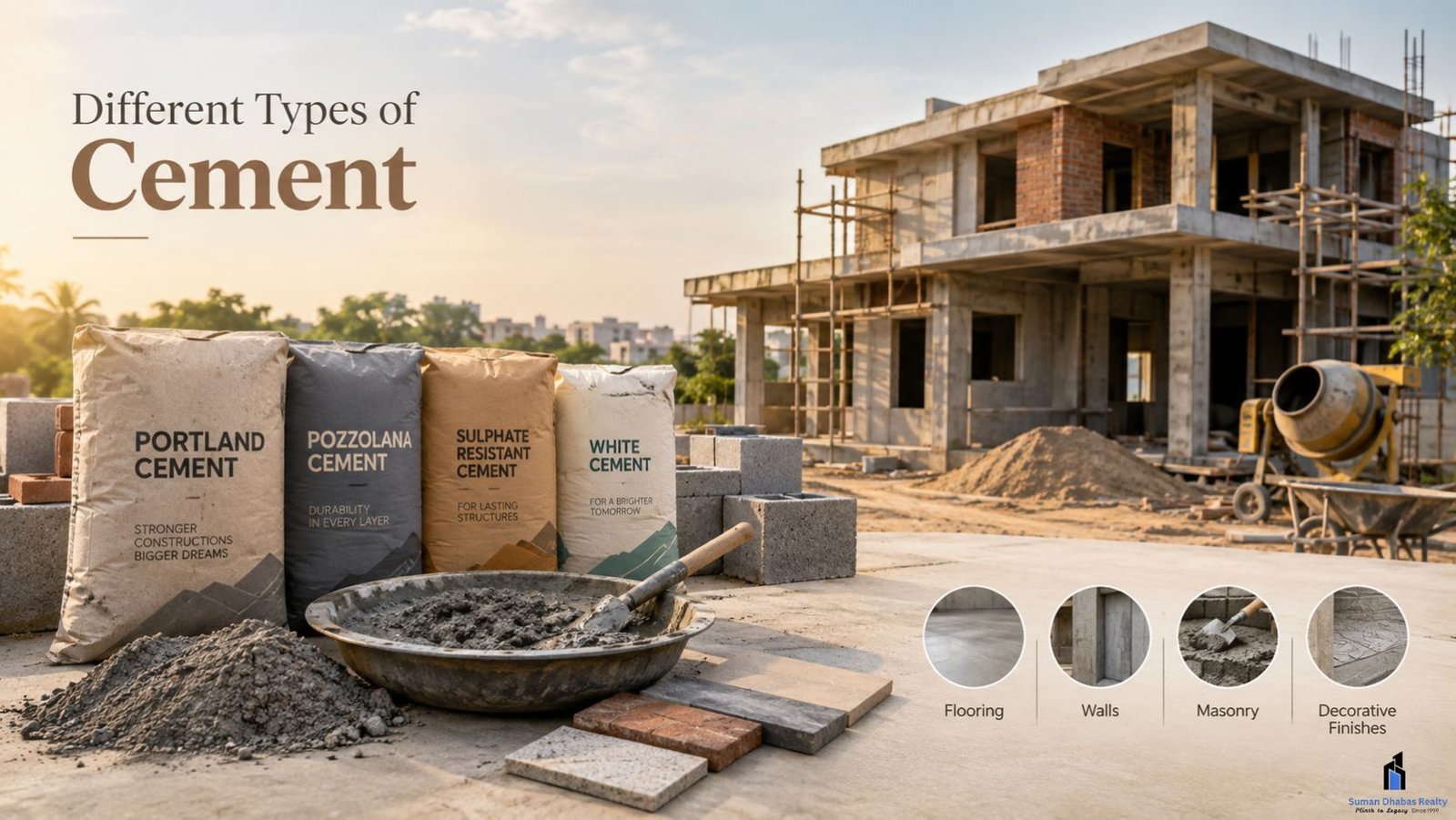
Cement is one of the most important materials used in construction. It acts as a binding material and helps hold concrete, mortar, blocks, and other building components together. However, cement is not available in only one form. There are different types of cement, and each type has specific properties and suitable applications.
The right cement depends on factors such as strength requirements, setting time, exposure to water, environmental conditions, and the type of construction work. Understanding these differences can help homeowners, contractors, and builders select a suitable material for their projects.
What Is Cement?
Cement is a finely powdered binding material made mainly from clinker and other mineral components. When mixed with water, it undergoes a chemical reaction called hydration. This process allows the cement paste to harden and develop strength.
Cement is commonly used with sand and aggregates to make mortar and concrete. Its performance can vary depending on its composition and manufacturing process.
Different Types of Cement Used in Construction
There are several different types of cement available for construction. Their characteristics make them suitable for particular conditions and applications.
1. Ordinary Portland Cement
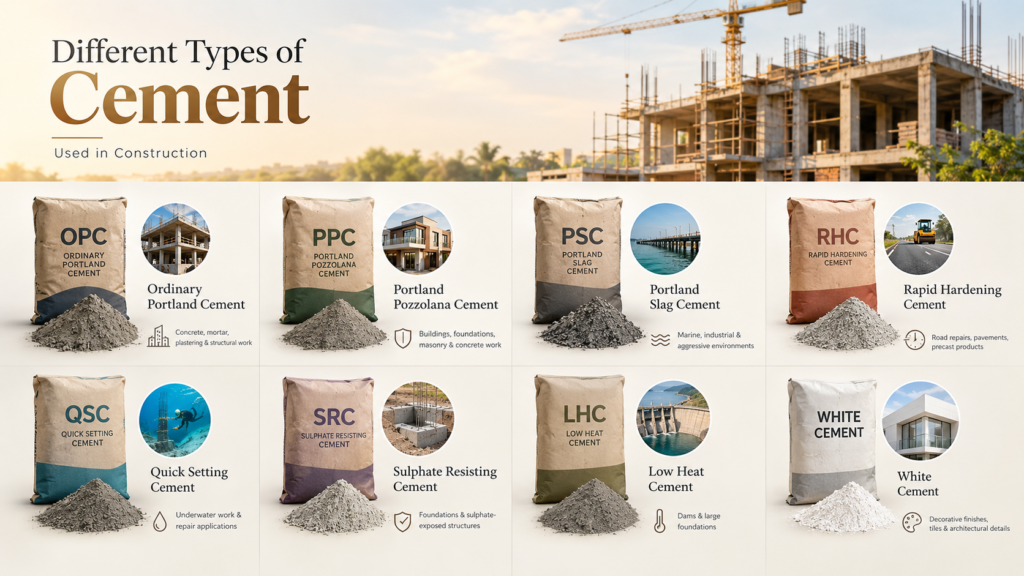
Ordinary Portland Cement, commonly called OPC, is widely used for general construction. It is available in different strength grades and is commonly used for concrete, mortar, plastering, and structural work.
OPC develops strength at a relatively predictable rate. Therefore, it remains a common choice for many residential and commercial projects.
2. Portland Pozzolana Cement
Portland Pozzolana Cement, or PPC, contains pozzolanic materials along with cement clinker. It generally provides good durability and can offer better resistance to certain aggressive environmental conditions.
PPC is commonly used in buildings, foundations, masonry, plastering, and concrete work. Its slower early strength development can also contribute to useful long-term performance.
3. Portland Slag Cement
Portland Slag Cement, known as PSC, contains granulated blast furnace slag. It is valued for its durability and resistance to certain chemical environments.
This cement can be suitable for foundations, marine structures, industrial projects, and other construction exposed to aggressive conditions. Its use can also make productive use of an industrial by-product.
4. Rapid Hardening Cement
Rapid hardening cement gains strength faster than ordinary Portland cement during the early stages. It can be useful when construction work needs to progress quickly.
It may be used for road repairs, pavements, precast products, and situations where early strength is important. Proper curing remains necessary even when rapid strength development is expected.
5. Quick Setting Cement
Quick setting cement is designed to set faster than ordinary cement. It can be useful when construction needs a short setting period.
This type can be considered for underwater work and certain repair applications. However, workers need to handle and place it efficiently because the available working time is limited.
6. Sulphate Resisting Cement
Sulphate resisting cement is designed to provide improved resistance against sulphate attack. Sulphates can occur in certain soils and groundwater and may affect concrete over time.
This cement can therefore be useful for foundations and structures exposed to sulphate-containing soil or water. The actual cement selection should depend on site conditions and project specifications.
7. Low Heat Cement
Low heat cement produces less heat during hydration compared with ordinary cement. This property can help reduce the risk of thermal cracking in large concrete structures.
It is mainly associated with mass concrete applications such as dams and large foundations. Such projects require careful control of concrete temperature and curing.
8. White Cement
White cement has a low iron content, which gives it a lighter colour. It is often selected for decorative and architectural applications.
Common uses include wall finishes, decorative concrete, tile-related work, and architectural details. It is chosen mainly for appearance rather than as a universal replacement for ordinary structural cement.
How to Choose the Right Cement
Choosing among the different types of cement depends on the project requirements. Consider the following factors before making a decision:
- Type of work: Structural concrete, plastering, masonry, and decorative work may require different cement properties.
- Strength requirement: Check the required strength and relevant project specifications.
- Exposure conditions: Soil, groundwater, moisture, and chemical exposure can affect cement selection.
- Setting time: Projects with tight schedules may require cement with specific setting characteristics.
- Durability: Select a cement type that suits the expected service conditions.
- Professional guidance: For structural applications, follow the project design and advice from qualified professionals.
Cement should also be stored in a dry place. Moisture can cause premature reactions and reduce the material’s quality.
Cement Selection for Residential Construction
For residential construction, the choice often depends on the specific application rather than simply selecting the strongest cement. Concrete used for structural elements should follow the project’s design specifications.
For example, cement used in foundations may need to account for local soil and groundwater conditions. Similarly, plastering and masonry work can have different material requirements.
For people planning homes or plots in developing areas such as Khatu Shyam and Jaipur, understanding basic construction materials can make discussions with contractors and professionals easier. Suman Dhabas Realty Pvt Ltd, which works around real-estate and township development, provides a broader context for people exploring residential property and development opportunities in the region. Buyers can also review project-specific construction information before making property-related decisions.
Why Cement Selection Matters
Selecting suitable cement can influence the strength, durability, workability, and service life of a construction project. Using a cement type without considering the site’s conditions may create avoidable problems.
At the same time, cement alone does not determine the quality of concrete. The quality of aggregates, water, mix proportions, workmanship, curing, and site practices also have an important role.
Conclusion
Understanding the different types of cement makes it easier to identify materials suited to specific construction requirements. OPC is commonly used for general applications, while PPC and PSC are often selected for durability-related requirements. Other varieties, such as rapid hardening, quick setting, sulphate resisting, low heat, and white cement, serve more specific purposes.
Before selecting cement, consider the project type, environmental exposure, required performance, and technical specifications. For structural construction, professional guidance should always take priority over general recommendations.