
Selling a property that you already own involves more than finding a buyer and receiving payment. The Property Resale Process includes document verification, property valuation, buyer checks, agreement preparation, payment, sale deed execution, and registration. Each step helps create a smoother and safer transaction.
Whether you are reselling a residential plot, house, apartment, or other immovable property, proper preparation can reduce delays and avoid unnecessary disputes. Sellers should understand the process before putting their property on the market.
What Is the Property Resale Process?
The Property Resale Process refers to the steps involved when an existing property owner sells the property to a new buyer.
Unlike a new property purchase from a developer, a resale transaction usually involves an existing owner and buyer. Therefore, the buyer may want to examine previous ownership documents, transaction history, approvals, taxes, and other property records.
The exact requirements can vary depending on the property, location, state rules, and type of transaction.
Step 1: Collect Your Property Documents
Start by gathering all relevant property documents.
Depending on the property, these may include:
- Sale deed or title document
- Previous ownership documents
- Property tax receipts
- Possession-related documents
- Approved building or layout plans, where applicable
- NOC or clearance documents, where applicable
- Loan closure documents, if the property was financed
- Mutation or revenue records, where relevant
- Utility and maintenance records
Organising these documents early can make the resale process easier.
Step 2: Verify Your Ownership Details
Before approaching buyers, check whether your ownership details are properly reflected in the relevant records.
Make sure the property description, owner’s name, area, boundaries, and other important details are consistent.
If there is an existing loan, legal dispute, unpaid tax, or documentation issue, address it before moving ahead with the sale whenever possible.
A mismatch between documents can create questions during the buyer’s due diligence.
Step 3: Determine the Property’s Market Value
Pricing plays an important role in resale.
Research similar properties in the same locality and compare factors such as:
- Location
- Property size
- Road access
- Development
- Nearby infrastructure
- Property condition
- Demand in the area
- Recent comparable transactions
Avoid setting the price only according to your original purchase price. Market conditions may have changed since you bought the property.
At the same time, an unrealistic asking price can reduce genuine buyer interest.
Step 4: Find and Screen Potential Buyers
Once you have decided on a suitable asking price, start looking for potential buyers.
During initial discussions, clarify:
- Expected purchase price
- Payment schedule
- Preferred transaction timeline
- Financing requirements
- Possession expectations
- Any specific conditions
Sellers should also be careful with payment-related claims. Do not hand over important original documents or property possession without following the agreed legal and financial process.
Step 5: Allow Buyer Due Diligence
A serious buyer will usually want to verify the property before completing the transaction.
They may examine ownership documents, previous sale deeds, property records, approvals, tax payments, encumbrances, and other relevant information.
This stage is important for both parties.
If the seller has maintained clear records, the verification process can move more smoothly. Any issue discovered during this stage should be addressed transparently rather than ignored.
Property Resale Process and Document Verification
Document verification is one of the most important parts of the Property Resale Process.
The buyer may compare the physical property with its documents. For land or plots, details such as area, boundaries, survey or Khasra information, and permitted use may also need attention.
For built properties, construction approvals and other applicable records may also matter.
Step 6: Finalise the Deal
Once both parties are satisfied with the property and its documents, they can finalise the commercial terms.
Discuss the following clearly:
- Final sale price
- Advance amount
- Payment schedule
- Registration date
- Possession date
- Responsibility for taxes and charges
- Existing liabilities
- Conditions for cancellation
Depending on the transaction, the parties may execute an agreement to sell before the final sale deed.
The agreement should clearly record the terms accepted by both sides.
Step 7: Execute the Sale Deed
The sale deed is the document that records the transfer of ownership from the seller to the buyer.
It should accurately describe the property and transaction. Both parties should carefully review the document before signing.
The sale deed should contain the relevant details required under applicable law and should be executed and registered according to the applicable registration process.
Step 8: Complete Registration and Payment
Registration is a crucial stage of the Property Resale Process.
The parties generally need to complete the applicable registration formalities and pay the required stamp duty and registration charges according to the relevant state rules.
The seller should ensure that the agreed payment is received through proper channels and according to the transaction terms.
Keep copies of the executed documents and payment records for future reference.
Step 9: Complete the Final Handover
After completion of the transaction, the seller should hand over possession and relevant documents according to the agreed terms.
For a house or apartment, this may include keys and applicable property-related records.
For a plot, possession-related records and other relevant documents may need to be handed over according to the agreement.
The parties should also document the handover to avoid confusion later.
Common Mistakes During Property Resale
Sellers can face unnecessary problems when they rush the transaction. Common mistakes include:
- Setting an unrealistic price
- Ignoring document discrepancies
- Not checking outstanding dues
- Accepting unclear payment arrangements
- Giving possession too early
- Skipping legal verification
- Failing to record important terms in writing
- Not keeping copies of transaction documents
A structured process can make the transaction more predictable.
Property Resale Process: A Simple Checklist
Before completing the sale, sellers should review this basic checklist:
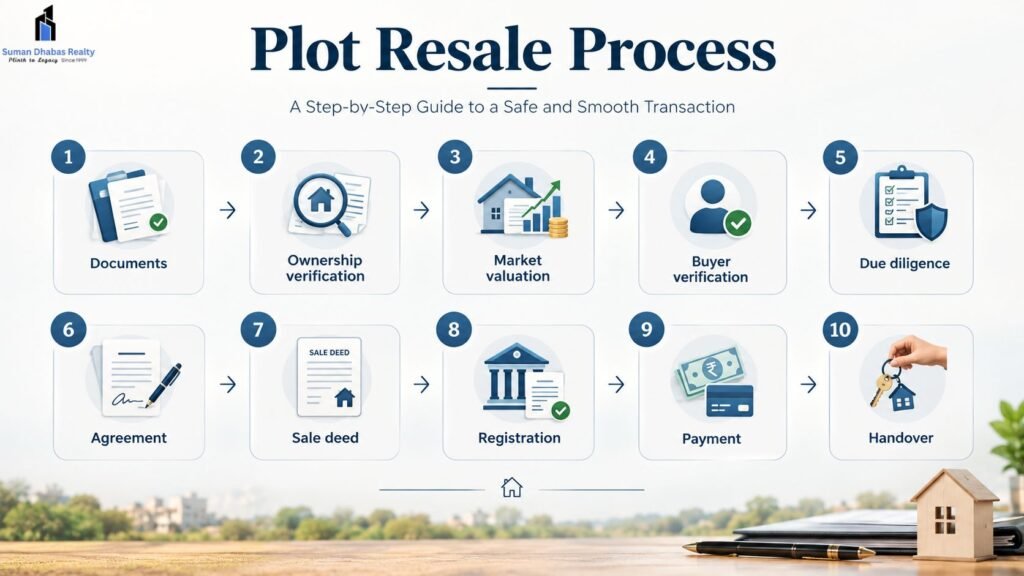
This sequence provides a simple framework for understanding the Property Resale Process.
Final Thoughts
The Property Resale Process requires careful planning at every stage. A successful resale is not simply about finding someone willing to pay the asking price. The seller must also ensure that the property’s documents, ownership records, financial obligations, and transaction terms are properly handled.
Preparing documents in advance, setting a realistic price, allowing proper due diligence, and completing the sale deed and registration correctly can help reduce complications.
For significant transactions, consider getting advice from a qualified property lawyer or other relevant professional, especially when the property has complex ownership, loan, inheritance, or documentation issues.