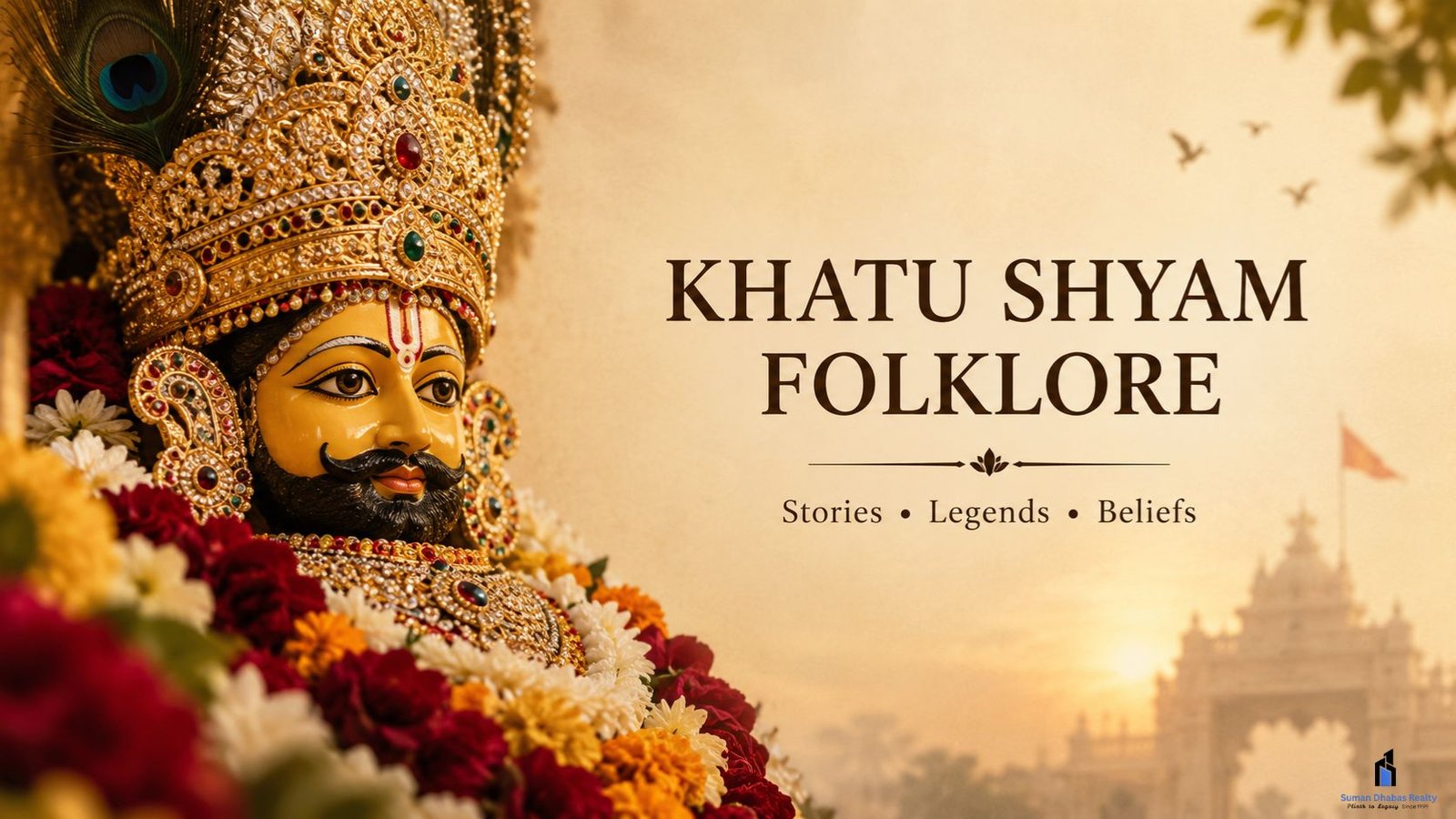
Khatu Shyam Folklore is deeply connected with the stories, beliefs, and traditions surrounding Khatu Shyam Ji. For devotees, Khatu Shyam is not only a famous religious destination. It is also a place filled with stories passed from one generation to another. These stories are closely connected with Barbarika, the Mahabharata, Lord Krishna, and the origin of Khatu Dham.
The Khatu Shyam Temple is located in Rajasthan and has become an important pilgrimage destination. Rajasthan Tourism also connects Khatu Shyam Ji with Barbarika, the son of Ghatotkacha and grandson of Bhima.
What Is Khatu Shyam Folklore?
Khatu Shyam Folklore refers to the traditional stories and beliefs associated with Khatu Shyam Ji. Much of this folklore comes from religious traditions and local storytelling.
The most popular story begins with Barbarika. According to Hindu tradition, Barbarika was a powerful warrior. He was known for his courage and his special three arrows.
His story later became closely connected with Lord Krishna. The events surrounding the Mahabharata are believed to explain why Barbarika became known as Khatu Shyam Ji.
It is important to understand that these stories belong to religious tradition and folklore. They should not be treated as modern historical records.
Barbarika and the Mahabharata
One of the most important parts of Khatu Shyam Folklore is the story of Barbarika.
According to tradition, Barbarika was the son of Ghatotkacha and grandson of Bhima. He inherited great strength and developed remarkable skills as a warrior.
However, Barbarika was different from many other warriors. He wanted to support the weaker side in the great battle of the Mahabharata.
This created an unusual situation.
As the battle changed, the weaker side could also change. Therefore, Barbarika’s promise could potentially affect the entire war.
Lord Krishna is said to have tested Barbarika before the battle.
The Legend of the Three Arrows
The three arrows are an important symbol in Khatu Shyam Folklore.
According to the traditional story, Barbarika possessed three powerful arrows. These arrows were believed to be capable of identifying and destroying targets with extraordinary precision.
The first arrow could mark the targets.
The second arrow could identify the targets that needed protection.
The third arrow could destroy the marked targets.
Barbarika’s abilities were therefore considered extremely powerful.
The story says that Lord Krishna understood the possible consequences of Barbarika entering the war.
This led to one of the most famous episodes in the folklore surrounding Khatu Shyam Ji.
Khatu Shyam Folklore and Sheesh Ke Daani
The term Sheesh Ke Daani is strongly associated with Khatu Shyam Ji.
According to tradition, Lord Krishna asked Barbarika for his head as a donation before the battle began.
Barbarika agreed.
Because he willingly offered his head, devotees later came to know him as Sheesh Ke Daani, meaning someone who donated his head.
The story is often remembered as an example of sacrifice, devotion, and keeping one’s promise.
Lord Krishna is traditionally believed to have blessed Barbarika after this sacrifice.
Krishna's Blessing
According to the legend, Krishna promised that Barbarika would be worshipped in the future by the name Shyam.
Devotees believe that worshipping Khatu Shyam Ji brings strength, hope, and spiritual support.
This belief became an important part of the religious identity of Khatu Dham.
The story also explains why Khatu Shyam Ji is often associated with devotion, sacrifice, and faith.
How Did the Sacred Head Reach Khatu?
Another popular part of Khatu Shyam Folklore concerns the journey of Barbarika’s sacred head.
According to local tradition, his head was placed in a location connected with present-day Khatu.
The exact details vary between different versions of the story.
One popular belief says that the sacred head eventually became connected with the land of Khatu, where the temple and pilgrimage tradition later developed.
These variations are common in folklore. Stories often change slightly as they pass through generations and different communities.
The Discovery of Khatu Shyam Ji
Local tradition also includes a story about the discovery of the sacred image associated with Khatu Shyam Ji.
According to popular belief, the idol was discovered in the Khatu region and later became the centre of worship.
Over time, Khatu developed into an important pilgrimage destination.
The temple and surrounding religious activities helped establish a strong cultural identity for the area.
Today, devotees visit Khatu throughout the year, with particularly large gatherings during important religious occasions.
Khatu Shyam Folklore and Local Traditions
Khatu Shyam Folklore is not limited to one story.
It also includes many local beliefs and traditions.
Devotees often travel to Khatu as part of a spiritual journey. Many people walk long distances, participate in devotional singing, and visit the temple with family members.
The atmosphere around Khatu Dham also reflects this religious culture.
You can find devotional shops, food stalls, accommodation, transport services, and other businesses serving pilgrims.
As a result, the religious importance of the area has influenced the development of the surrounding region.
Why Is Khatu Shyam Folklore Still Popular?
There are several reasons why these stories continue to attract people.
First, the stories are easy to remember and pass on.
Second, they contain themes such as courage, sacrifice, faith, and devotion.
Third, the stories create a strong emotional connection between devotees and Khatu Shyam Ji.
Finally, the traditions have become part of the cultural identity of Khatu.
For many visitors, understanding these stories makes a visit to the temple more meaningful.
Khatu Shyam and Regional Development
Religious tourism can influence the growth of an area. Increased visitor movement can create demand for roads, hotels, shops, restaurants, housing, and other facilities.
This has also made areas around major pilgrimage destinations interesting from a broader development perspective.
Companies such as Suman Dhabas Realty Pvt Ltd are working in the wider real-estate and development space, with an emphasis on planned projects and modern infrastructure. A township approach can combine residential planning with roads, green spaces, and community facilities.
For buyers exploring property around Khatu Shyam, however, development should always be considered alongside factors such as land ownership, approvals, location, infrastructure, and future connectivity.
Khatu Shyam Folklore and the Modern Visitor
Today, people visit Khatu for many different reasons.
Some come because of their faith.
Others want to learn about the traditions and stories connected with the place.
Many visitors also explore the surrounding town and nearby areas during their trip.
Understanding the folklore can therefore add another layer to the travel experience.
Instead of seeing Khatu only as a temple destination, visitors can understand it as a place where religion, local culture, tourism, and regional development have grown together.
Frequently Asked Questions
What is Khatu Shyam Folklore?
Khatu Shyam Folklore refers to traditional stories, legends, and beliefs associated with Khatu Shyam Ji, especially the stories connected with Barbarika and Lord Krishna.
Who was Barbarika?
According to Hindu tradition, Barbarika was the son of Ghatotkacha and grandson of Bhima. He is traditionally regarded as the person who later became worshipped as Khatu Shyam Ji.
Why is Khatu Shyam called Sheesh Ke Daani?
According to the traditional story, Barbarika willingly offered his head to Lord Krishna before the Mahabharata battle. This is why devotees associate him with the title Sheesh Ke Daani.
What are the three arrows of Barbarika?
The three arrows are described in traditional stories as extremely powerful weapons that could identify, protect, and destroy targets during battle.
Why is Khatu Shyam important in Rajasthan?
Khatu Shyam is important because of its religious significance, long-standing traditions, and popularity as a pilgrimage destination in Rajasthan.
Conclusion
Khatu Shyam Folklore brings together stories of Barbarika, Lord Krishna, sacrifice, courage, and devotion. These traditional stories have helped shape the cultural and religious identity of Khatu Dham.
For visitors, learning about the legends before travelling can make the experience more meaningful. It also provides a better understanding of why thousands of devotees are drawn to Khatu Shyam throughout the year.
Beyond religion, Khatu has also developed as a destination where tourism, local businesses, infrastructure, and real estate continue to interact. As the region grows, responsible planning and proper property research remain important for anyone exploring its future potential.