
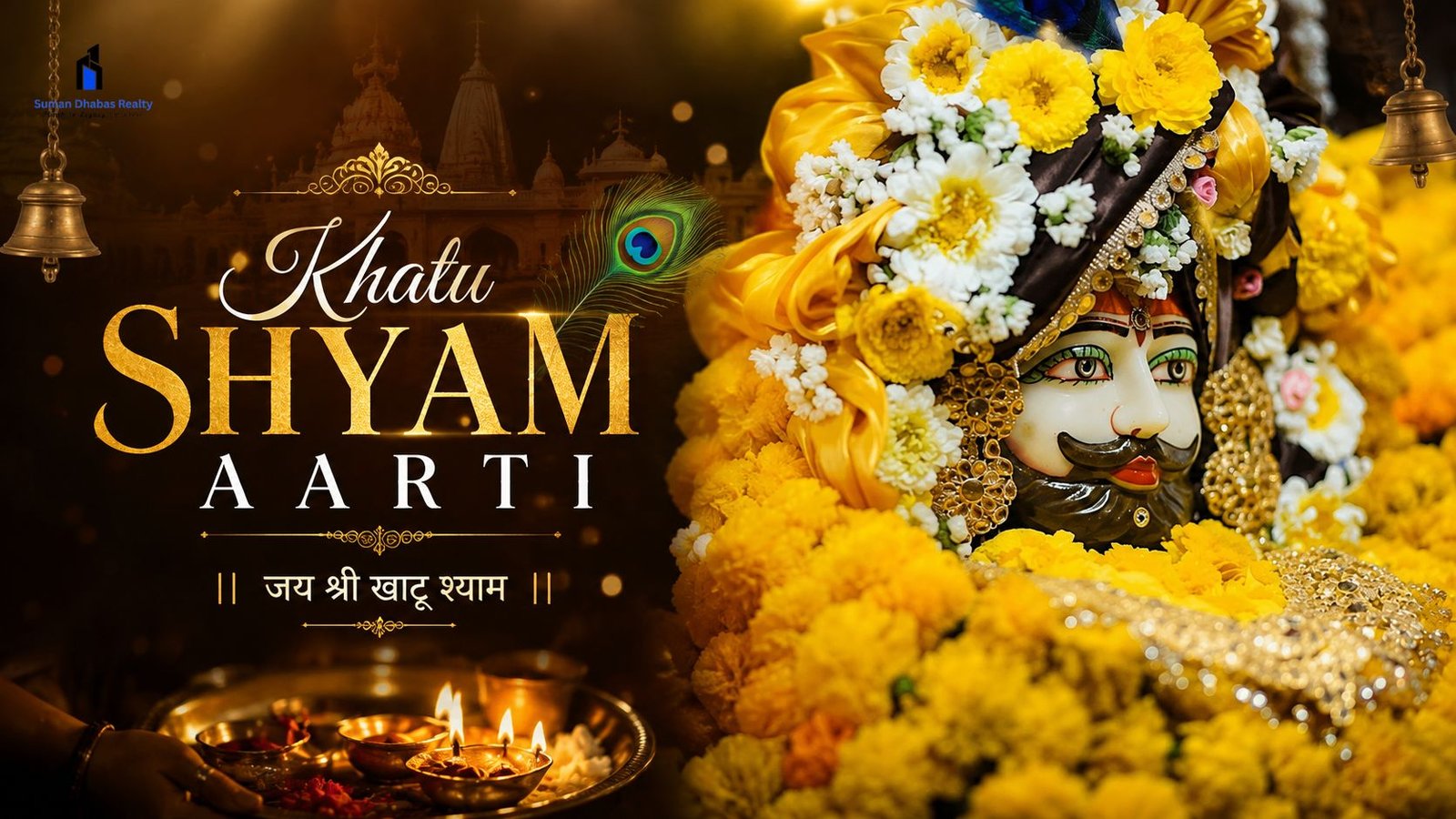
Khatu Shyam Ji Temple in Khatu, Sikar district, is one of Rajasthan’s important pilgrimage destinations. Devotees travel to Khatu Dham throughout the year to seek blessings and take part in its devotional traditions.
Among the most significant parts of the temple’s daily worship is Khatu Shyam Aarti. Performed at different times of the day, the aarti brings together lamps, prayers, bells and devotional chants. For visitors, attending an aarti provides an opportunity to experience the spiritual side of Khatu Dham beyond regular darshan.
Rajasthan Tourism identifies the temple with Barbarika, who is worshipped as Khatu Shyam Ji. According to the traditional story, Barbarika was the son of Ghatotkacha, and Lord Krishna granted him a boon that he would be worshipped as Shyam in the Kali Yuga.
Understanding Khatu Shyam Aarti
Aarti is a traditional Hindu worship ritual in which a lit lamp or flame is offered before a deity. Devotees participate by praying and singing devotional verses.
At Khatu Shyam Ji Temple, worship continues through several aartis spread across the day. Rajasthan Tourism identifies five principal aartis:
- Mangala Aarti
- Shringar Aarti
- Bhog Aarti
- Sandhya Aarti
- Sayana Aarti
Each one represents a different stage in the temple’s daily devotional routine. Shri Shyam Aarti and Shri Shyam Vinati are also chanted during these worship periods.
Khatu Shyam Aarti Timings
The timing of the aarti is not necessarily fixed throughout the year. Seasonal temple schedules, festivals and special arrangements can affect the timings. Rajasthan Tourism also provides different temple opening hours for summer and winter.
A general understanding of the daily sequence is:
| Aarti | General Timing |
|---|---|
| Mangala Aarti | Early morning |
| Shringar Aarti | Morning |
| Bhog Aarti | Around midday |
| Sandhya Aarti | Evening |
| Sayana Aarti | Night |
These timings should be treated as general guidance rather than a fixed timetable. Visitors planning their journey around an aarti should verify the latest temple schedule before travelling.
Why Is Khatu Shyam Aarti Significant?
For devotees, Khatu Shyam Aarti is more than a ritual observed inside the temple. It is a time for prayer, reflection and expressing faith in Baba Shyam.
The sounds of devotional chanting and temple bells, together with the glow of the aarti lamps, contribute to the spiritual atmosphere of Khatu Dham. Attending an aarti can therefore offer visitors a deeper experience of the temple’s religious traditions.
The devotion surrounding Khatu Shyam Ji is also connected with the traditional story of Barbarika. His exceptional strength and devotion form an important part of the beliefs associated with Baba Shyam. The story of Lord Krishna’s boon further explains the religious significance attached to Khatu Shyam Ji.
The Five Aartis at Khatu Shyam Temple
The five daily aartis correspond to different parts of the day. Knowing what each represents can help visitors understand the temple routine and plan their darshan.
Mangala Aarti: Beginning the Day With Worship
Mangala Aarti takes place in the early morning and marks the beginning of the day’s worship.
The quieter atmosphere of the morning can make this a particularly peaceful time for devotees. Those hoping to experience Khatu Dham away from some of the daytime activity may prefer an early visit.
Shringar Aarti: The Adorned Form of Baba Shyam
Shringar Aarti follows the decoration and adornment of the deity. The term “Shringar” refers to decoration and ornamentation.
During this part of the daily worship, devotees can experience Baba Shyam’s beautifully adorned form while prayers and devotional practices continue.
Bhog Aarti: Midday Offering
Bhog Aarti is connected with the offering of food, or bhog, to the deity. It is performed around midday.
Visitors intending to attend this aarti should consider the temple’s current daytime schedule, particularly because opening hours and worship timings can vary according to the season.
Sandhya Aarti: Evening Devotion
Sandhya Aarti is the evening worship and takes place around sunset.
The combination of lamps, prayers, bells and chants creates a distinctive devotional atmosphere. For many visitors, the evening setting provides a memorable part of the Khatu Dham experience.
Sayana Aarti: Closing the Daily Worship
Sayana Aarti takes place at night before the temple closes. It marks the conclusion of the day’s regular worship routine.
Visitors who remain at Khatu Dham into the evening can include this aarti as part of their temple itinerary.
Khatu Dham During the Annual Fair
The annual Khatu Shyamji Fair is one of the periods when pilgrimage activity around Khatu increases significantly. Rajasthan Tourism states that the fair takes place during February and March.
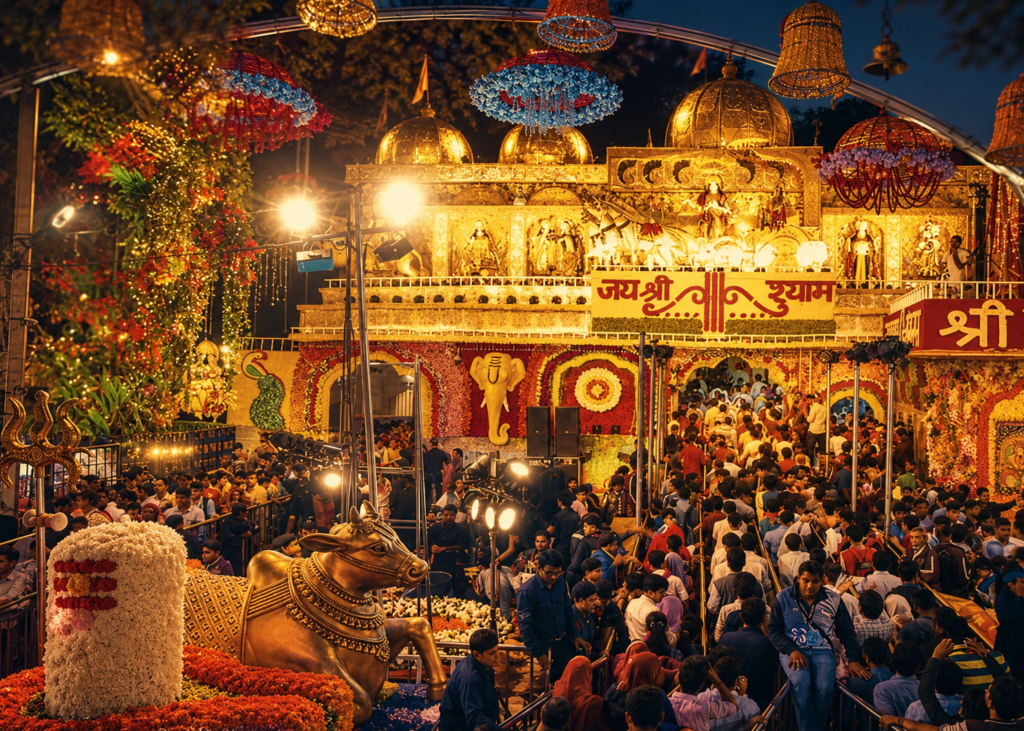
Because of the larger crowds during this period, visitors should plan their travel carefully. Accommodation and other arrangements may require advance planning, while longer queues and waiting periods should also be expected.
If your primary purpose is to attend Khatu Shyam Aarti, checking the schedule before travelling becomes even more important during such busy periods.
When Should You Attend the Aarti?
There is no single best aarti for every visitor. The ideal choice depends on the type of experience you prefer.
An early morning aarti can provide a calmer beginning to the temple visit, while the evening Sandhya Aarti offers the atmosphere of worship as the day comes to an end.
Regardless of the preferred time, checking the current schedule is important. Timings may change during festivals, special occasions and different seasons.
Visitors travelling during the annual Khatu Shyamji Fair should take particular care when planning. Rajasthan Tourism notes that the fair is held during February and March and attracts a particularly large number of pilgrims.
Tips for Planning a Khatu Shyam Temple Visit
A little preparation can make a visit centered around Khatu Shyam Aarti more comfortable.
Check the Schedule Before Leaving
Confirm the latest temple and aarti timings before beginning your journey. Do not rely entirely on a general timetable, especially if you are travelling during a festival or special event.
Arrive With Enough Time
Allow additional time for reaching the temple, darshan and queues. Khatu Shyam attracts devotees throughout the year, and visitor numbers can become considerably higher during important occasions.
Plan for Longer Visits
If you expect to spend several hours at Khatu Dham, consider meals, rest breaks and local travel arrangements in advance. Carrying drinking water and basic essentials can also be helpful.
Dress Comfortably and Respectfully
Comfortable and respectful clothing is appropriate for a temple visit, particularly when you expect to spend considerable time at the site.
Follow Temple Instructions
During crowded periods, patience is important. Following the temple’s rules and instructions and being considerate of other devotees can help maintain a peaceful pilgrimage experience.
Khatu Shyam Aarti and the Spiritual Atmosphere of Khatu Dham
Khatu Dham has a strong spiritual identity. Devotees arrive from different parts of India throughout the year. Many visit the temple with family members, while others travel with friends or pilgrimage groups.
During important occasions, the number of visitors can increase significantly. Therefore, visitors should prepare for larger crowds and longer waiting times.
Even with the crowds, the devotional atmosphere remains an important part of the experience. The temple surroundings, prayers, bells, and chants create a memorable setting for devotees.
Experiencing Khatu Shyam Beyond Darshan
A visit to Khatu Shyam Ji Temple is not limited to simply having darshan. The daily aarti routine offers visitors another way to experience the traditions of Khatu Dham.
The five aartis create a rhythm throughout the day, from the early-morning Mangala Aarti to the nighttime Sayana Aarti. Morning worship can feel calm and devotional, while evening worship brings together temple lights, prayers and chants in a different setting.
For first-time visitors, attending one of these worship periods can provide a closer understanding of the religious atmosphere that draws devotees to Khatu throughout the year.
Tourism and Development Around Khatu Shyam
Khatu Shyam’s popularity as a pilgrimage destination has also contributed to activity in the surrounding region. Regular visitors support local businesses, hospitality services and other facilities required by pilgrims.
As tourism develops, infrastructure and connectivity become increasingly important. Accommodation, roads, shops and other visitor services all play a role in supporting the growing movement of people to the area.
The wider growth of the region has also generated interest in real estate. Anyone considering property in or around the Khatu Shyam region should evaluate more than its location. Connectivity, infrastructure, planning, development potential and legal verification are important factors to examine before making a property decision.
For those exploring planned developments near Jaipur and Khatu Shyam, Suman Dhabas Realty Pvt. Ltd. offers projects involving plots, villas, farmhouses, resorts and other lifestyle-oriented developments. The company highlights an in-house approach covering land acquisition, planning, construction and interiors.
However, prospective buyers should conduct their own research and carefully evaluate any property before making a purchase.
Conclusion
Khatu Shyam Aarti forms an important part of the daily spiritual routine at Khatu Shyam Ji Temple. With five principal aartis taking place at different stages of the day, devotees can experience the temple’s traditions from morning through night.
For a smooth visit, check the latest schedule, allow extra time for queues and prepare for larger crowds during festivals and the annual Khatu Shyamji Fair.
Whether you choose the peaceful atmosphere of an early morning aarti or the devotional setting of an evening aarti, participating in the worship can make a visit to Khatu Dham more meaningful. At the same time, the growing popularity of the pilgrimage destination continues to influence activity and development in the surrounding region.



Pingback: Khatu Shyam Mela: Dates, History & Travel Guide - Suman Dhabas Realty
Pingback: Khatu Shyam Darshan Timings, Aarti & Visit Guide - Suman Dhabas Realty
Pingback: Khatu Shyam Ji Registration: Darshan Guide & Travel Tips - Suman Dhabas Realty
Pingback: Khatu Shyam Mandir Rajasthan Near Railway Station: Travel Guide - Suman Dhabas Realty
Pingback: Khatu Shyam Divine Powers: Meaning & Spiritual Significance - Suman Dhabas Realty