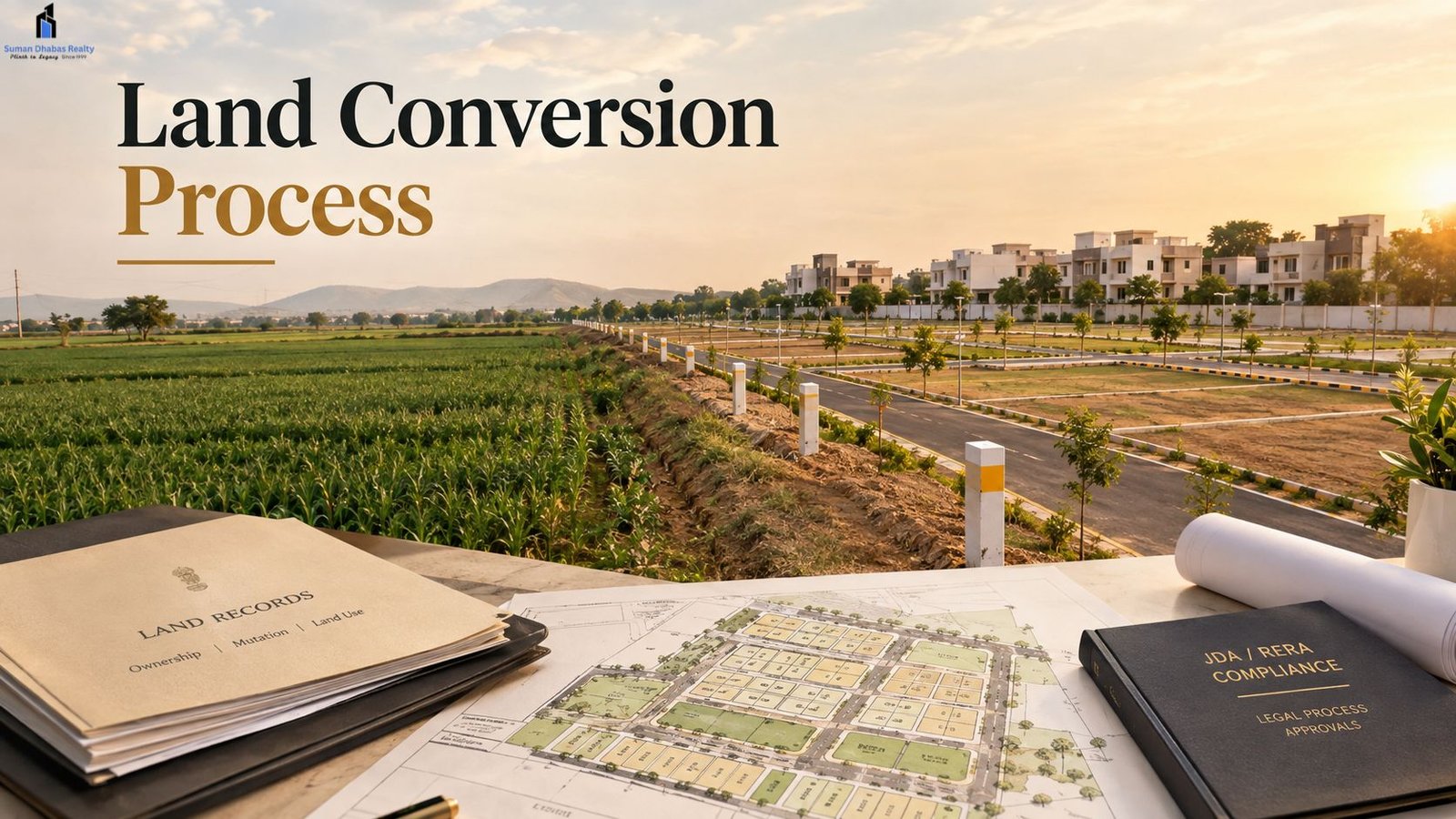
The Land Conversion Process is an important legal step when agricultural land is proposed for a non-agricultural use such as residential, commercial, industrial, or other permitted purposes. In Rajasthan, land conversion is governed by the applicable Rajasthan Land Revenue rules. The process helps establish that the proposed use of the land matches the permissions and conditions prescribed by the authorities.
For property buyers, understanding this process is useful before purchasing a plot or investing in a development project. It can also help buyers identify whether the land has the required approvals for its intended use.
What Is the Land Conversion Process?
Land conversion means changing the permitted use of land from one purpose to another. A common example is converting agricultural land for a residential or commercial purpose.
In Rajasthan, the Revenue Department provides a specific service for conversion of agricultural land to non-agricultural use in rural areas under the Rajasthan Land Revenue (Conversion of Agricultural land for Non-Agricultural Purposes in Rural Areas) Rules, 2007. The rules cover several purposes, including residential units, residential projects, commercial purposes, industrial purposes, institutional uses, medical facilities, and others.
Therefore, land conversion is more than a simple change in records. It involves an application, supporting documents, applicable charges, scrutiny, and an official conversion order.
Why Is Land Conversion Important?
The intended use of a property should match its legal land-use status. If agricultural land is proposed for residential or commercial development, buyers should check whether the required conversion or other applicable permission has been obtained.
A proper Land Conversion Process can provide clarity about the permitted purpose of the land. It also helps authorities regulate development and collect applicable conversion charges.
However, conversion approval should not be treated as the only property check. Ownership records, title documents, land-use plans, layout approvals, access roads, encumbrances, and other permissions may also require verification.
Land Conversion Process: Main Steps
1. Check the Existing Land Status
The first step is to identify the current classification and ownership details of the land. Revenue records can help establish information about the property.
Rajasthan’s official Apna Khata portal provides access to land-record services, including Jamabandi copies and other revenue-related facilities.
2. Identify the Proposed Land Use
Next, determine why the land needs to be converted. Residential, commercial, industrial, institutional, medical, and other purposes can have different requirements and charges.
The proposed use should therefore be clearly defined before submitting the application.
3. Prepare the Required Documents
Applicants need to provide the documents prescribed for the relevant conversion service. These may include land records, ownership-related documents, site information, maps, identification documents, and other supporting papers depending on the case.
The Rajasthan Revenue Department publishes separate details for required documents, fees, and application timelines.
4. Submit the Application
The application can be submitted through the applicable government service system. Rajasthan’s RAJNIVESH portal lists conversion of land use from agriculture to non-agriculture in rural areas as a Revenue Department service.
Applicants should enter the land details carefully and upload the documents in the prescribed format.
5. Pay Applicable Conversion Charges
Conversion charges depend on the proposed use and the applicable rules. The official fee information lists different categories and charge structures for residential, commercial, industrial, institutional, medical, and other purposes.
Because government notifications can amend these charges, applicants should verify the current amount before making payment.
6. Verification and Approval
After submission, the relevant authority examines the application and supporting information. If the requirements are satisfied, the competent authority can issue the applicable conversion order or permission.
The current RAJNIVESH service listing shows a 30-day timeline for the rural agricultural-to-non-agricultural land-use conversion service. Actual cases can still depend on document completeness and other circumstances.
Documents to Check Before Buying Converted Land
A buyer should not rely only on a seller’s statement that land has been converted. Instead, ask for documentary evidence and compare it with the property’s revenue records.
Important checks can include:
- Current Jamabandi or relevant land record
- Conversion order or applicable permission
- Ownership and title documents
- Site or location plan
- Approved layout, where applicable
- Encumbrance or outstanding liability checks
- Access and road-related records
- Applicable development permissions
These checks can help identify inconsistencies before money is committed.
Land Conversion and Property Development
Land conversion can be particularly relevant when agricultural land becomes part of a residential development. A planned township may involve several layers of approvals beyond the basic conversion of land use.
For buyers exploring property around emerging destinations such as Khatu Shyam, it is useful to review the legal and planning documents before making a purchase. Developers such as Suman Dhabas Realty Pvt Ltd can also be evaluated through the documents and approvals associated with their individual projects.
This document-first approach allows buyers to understand the land status, proposed use, and relevant development information. It also makes property research more systematic instead of relying only on promotional claims.
Common Mistakes to Avoid
One common mistake is assuming that every agricultural plot can automatically be used for construction. Land-use restrictions and applicable permissions must be checked first.
Another mistake is checking only the conversion document while ignoring ownership records. Conversion does not replace a complete title and property due-diligence process.
Buyers should also avoid relying on outdated fee information. Rajasthan’s Revenue Department continues to publish amendments and notifications relating to the conversion rules. For example, the department lists amendments issued in 2025.
Final Thoughts
The Land Conversion Process provides a legal framework for changing agricultural land use to an approved non-agricultural purpose. In Rajasthan, the process involves identifying the proposed use, preparing documents, submitting an application, paying applicable charges, and obtaining the required approval.
For buyers, however, conversion is only one part of property due diligence. Ownership, title, land records, layout approvals, access, and other applicable permissions should also be examined. Checking these details before purchasing can make property transactions more transparent and help buyers make informed decisions.