
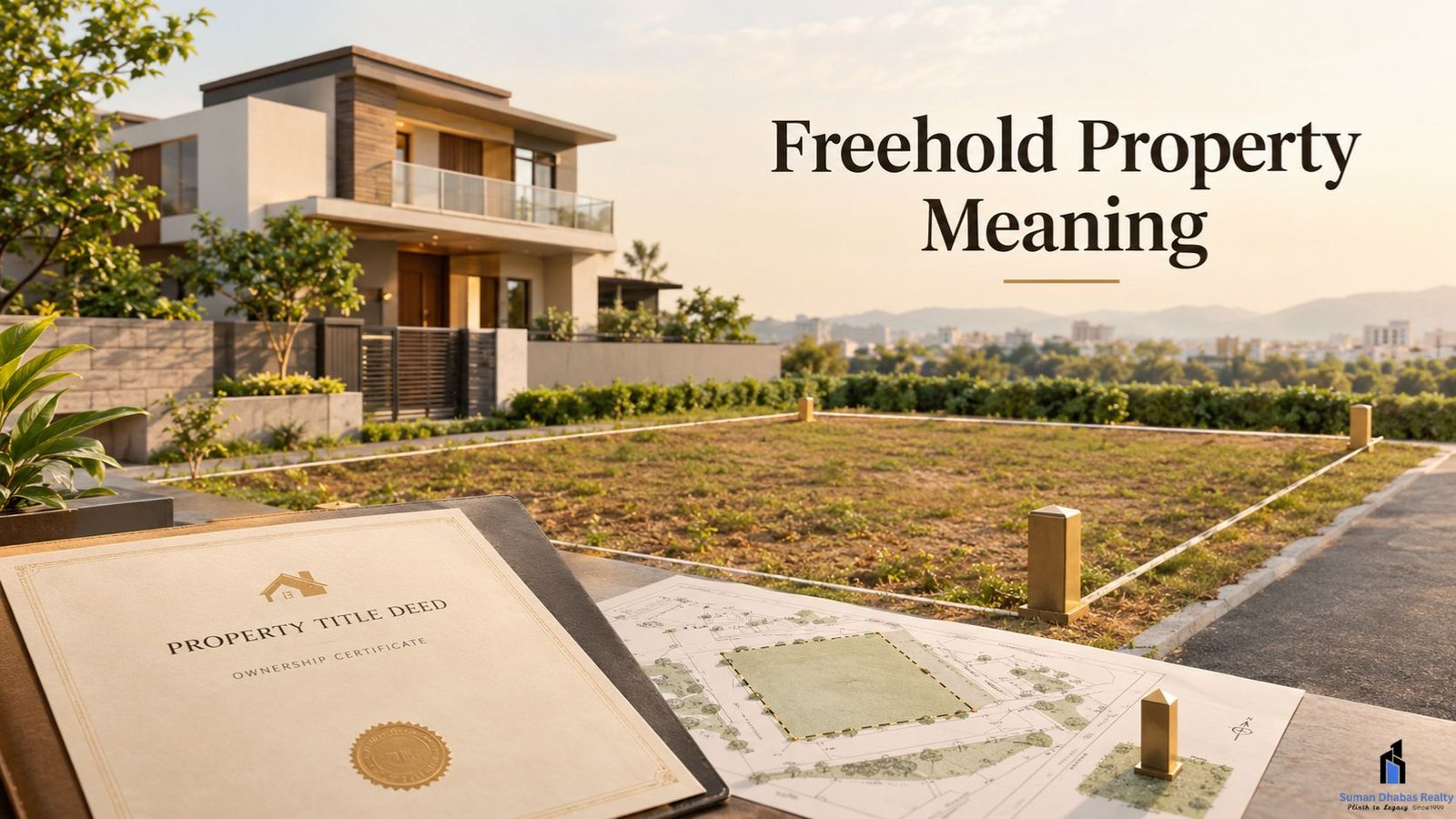
Understanding Freehold Property Meaning is important when buying land, a house, or another type of real estate. A freehold property generally gives the owner ownership of the property and the land associated with it for an indefinite period. This differs from leasehold ownership, where the right to use the property exists for a specified lease period. Therefore, knowing the ownership structure can help buyers understand their legal rights and responsibilities before completing a purchase.
What Is Freehold Property?
A freehold property is a property where ownership is not limited to a fixed lease period. In a typical freehold arrangement, the owner holds rights over the land and the structure standing on it, subject to applicable laws and regulations.
For example, if a person owns a freehold residential plot with a house, the ownership generally covers both the plot and the building. The owner can usually sell, transfer, inherit, or otherwise deal with the property according to the law.
However, freehold ownership does not mean that the owner can use the property without restrictions. Local zoning rules, building regulations, environmental requirements, property taxes, and other applicable laws still apply.
Freehold Property Meaning and Ownership Rights
The main point behind Freehold Property Meaning is the nature of ownership. Unlike a leasehold arrangement, freehold ownership does not normally expire after a predetermined number of years.
A freehold owner may generally have the right to:
- Occupy or use the property according to permitted land use.
- Sell or transfer the property.
- Pass the property to legal heirs.
- Make permitted improvements or modifications.
- Mortgage the property, subject to lender requirements.
- Earn rental income where applicable.
These rights depend on the property’s documents and local regulations. For instance, structural changes may require approval from the relevant authority even when the property is freehold.
Is Freehold Ownership Permanent?
Freehold ownership is generally treated as indefinite rather than time-bound. This means there is no fixed lease expiry date attached to the ownership.
Still, indefinite ownership does not remove legal obligations. Owners must follow applicable development rules, pay property taxes and comply with restrictions connected to the location and type of property.
Freehold vs Leasehold Property
The difference between freehold and leasehold ownership mainly concerns the nature and duration of the rights.
| Feature | Freehold Property | Leasehold Property |
|---|---|---|
| Ownership | Generally indefinite | Usually for a fixed lease period |
| Land ownership | Owner generally owns the land | Land remains with the lessor |
| Lease expiry | No fixed lease expiry | Lease has a defined term |
| Transfer | Usually transferable subject to law | May involve lease conditions |
| Restrictions | Local laws still apply | Lease terms may add restrictions |
In a leasehold arrangement, the buyer receives rights to use the property for the period specified in the lease. Once that period ends, renewal or other action may be required according to the agreement and applicable rules.
Benefits of Freehold Property
There are several practical reasons buyers consider freehold ownership.
Long-term ownership:
The absence of a fixed lease period can make ownership easier to plan over the long term.
Greater control:
Owners generally have more control over the property, subject to municipal rules, development regulations and other legal requirements.
Transferability:
A freehold property can generally be sold, inherited or transferred through legally valid documents.
No lease renewal:
Since freehold ownership is not based on a fixed lease term, owners do not normally need to renew the land tenure periodically.
Potential financing options:
Lenders assess properties based on several factors, including title, documentation, location and value. Clear ownership documents can support the financing process.
Documents to Check Before Buying
Understanding Freehold Property Meaning is only the first step. Buyers should also examine the property’s ownership documents before making a financial commitment.
Important documents may include:
- Sale deed or title deed
- Previous ownership records
- Encumbrance-related records
- Property tax receipts
- Approved layout or building plans, where applicable
- Mutation or revenue records, where relevant
- Identity and ownership documents of the seller
A title deed can provide information about the owner, property description and the rights associated with the property. Buyers should verify whether the seller has the legal right to transfer the property.
Because documentation requirements can vary between states and property types, buyers should also verify records with the appropriate local authority.
What to Check in a Freehold Property
Before purchasing a freehold property, do not rely only on the seller’s description. Instead, check the title, boundaries, land use and applicable approvals.
Also verify whether the property has any outstanding dues, disputes, mortgages, encumbrances or restrictions. If the property is part of a plotted development or township, buyers should examine the approved layout and relevant project documents as well.
For buyers exploring developing areas around Jaipur and Khatu Shyam, projects such as those associated with Suman Dhabas Realty Pvt Ltd can also make property documentation and land-use details an important part of the research process. A buyer should review the relevant project documents independently before making a decision.
Is Freehold Property Always Better?
Freehold and leasehold properties serve different ownership structures. A freehold property can provide indefinite ownership, but its value and suitability still depend on factors such as location, title clarity, legal status, infrastructure and permitted land use.
Therefore, buyers should not choose a property only because it is labelled freehold. Instead, they should examine the complete documentation and understand the rights attached to that particular property.
Frequently Asked Questions
What is the simple Freehold Property Meaning?
It generally means property ownership that is not limited to a fixed lease period. The owner usually holds rights over the land and property, subject to applicable laws.
Can a freehold property be sold?
Yes, a freehold property can generally be sold or transferred through legally valid documentation, provided there are no restrictions preventing the transfer.
Can freehold property be inherited?
Yes. Freehold property can generally pass to legal heirs through succession or a valid will, subject to applicable laws.
Does freehold mean there are no restrictions?
No. Owners must still follow zoning regulations, building rules, tax requirements and other laws applicable to the property.
Why should buyers verify the title?
Title verification helps establish whether the seller has valid ownership and the legal ability to transfer the property. It can also help identify potential issues before purchase.


Pingback: Property Ownership Types: Freehold, Leasehold & Joint Ownership - Suman Dhabas Realty