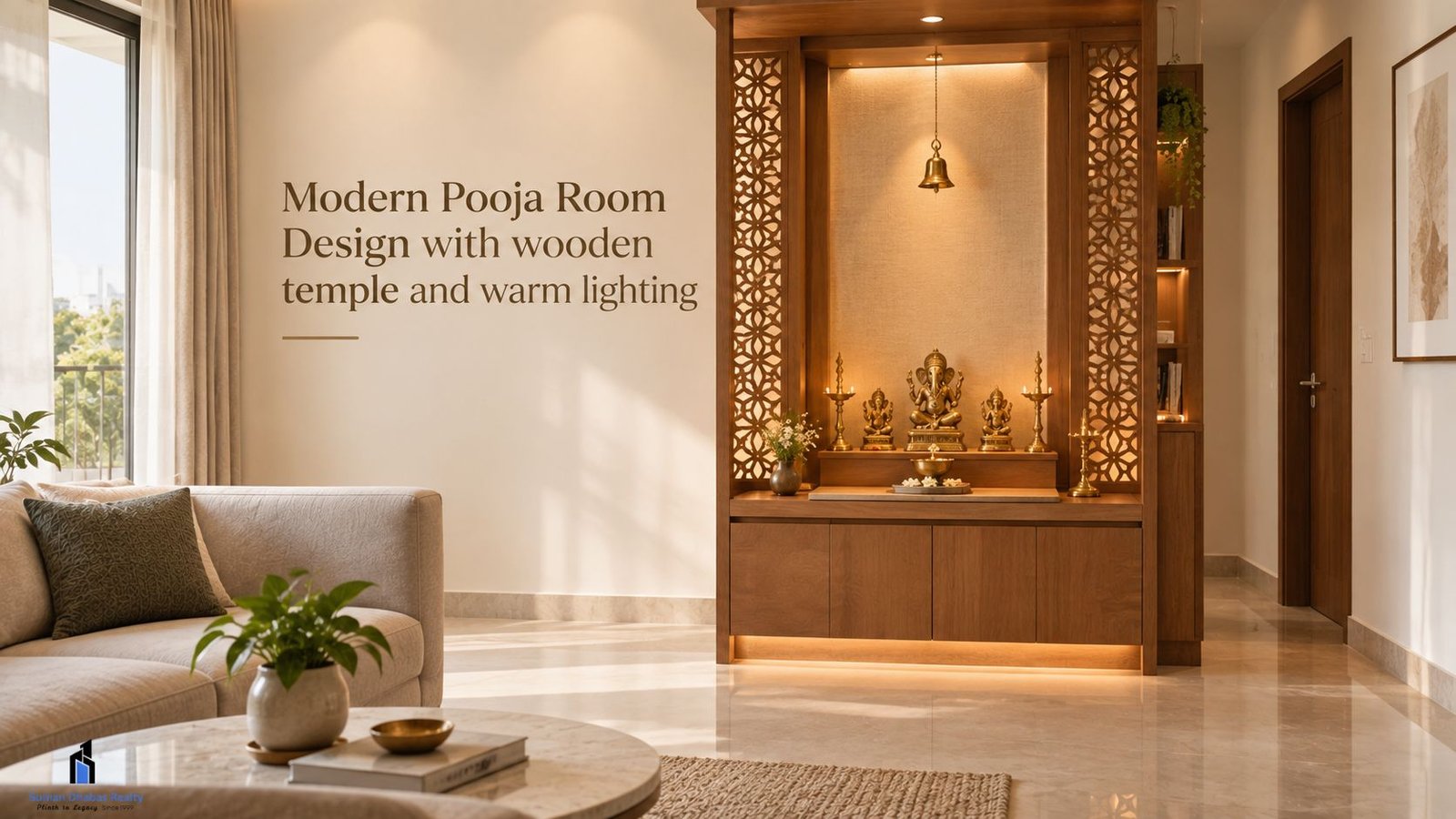
A well-planned Pooja Room Design can create a peaceful and organised space for daily prayers and rituals. Indian homes often have different layouts, so the prayer area does not always need a separate large room. A compact corner, wall unit, or dedicated niche can also work well. The key is to create a clean, comfortable, and practical space that fits naturally into the home.
How to Plan a Pooja Room Design
Start by considering the available space and the way your family uses the prayer area. A separate room works well in larger homes. However, apartments and compact houses may benefit from a small dedicated corner.
Measure the area before selecting furniture or storage units. This helps prevent overcrowding. Also, leave enough space to sit comfortably and move around the prayer area.
A simple layout often works better than filling the room with decorative elements. Keep frequently used items within easy reach. At the same time, store less-used objects in closed cabinets to maintain a tidy appearance.
Choose the Right Location
The location of the prayer space can affect its convenience and appearance. Choose an area that remains relatively quiet and receives enough natural or artificial light.
A living room corner can accommodate a compact wooden temple or wall-mounted unit. A hallway niche can also become a useful prayer area when designed carefully. In larger houses, a small dedicated room provides more privacy.
Avoid placing too many household objects around the prayer space. A clear surrounding area creates a more organised setting and makes regular cleaning easier.
Compact Pooja Room Design for Apartments
Small homes require careful space planning. A wall-mounted temple can save floor space while still creating a clearly defined prayer area. Another option is a cabinet-style unit with doors that can close when the space is not in use.
Floating shelves can hold small idols, lamps, books, and other essentials. However, shelves should not become overcrowded. Use a limited number of decorative elements to keep the area visually balanced.
A compact wooden partition can also separate the prayer space from the living area without making the room feel smaller. Slatted panels, jaali patterns, or simple screens can provide a subtle visual boundary.
Lighting Ideas for a Pooja Space
Lighting plays an important role in the appearance and usability of a prayer area. Natural daylight can make the space feel bright during the day. If natural light is limited, use warm artificial lighting for a softer atmosphere.
LED strip lights can highlight the back panel of a temple unit. Small recessed lights can provide focused illumination without taking up much space. Wall lights can also add visual interest when their design matches the rest of the interior.
Make sure electrical points and wiring are planned safely. The Bureau of Indian Standards lists electrical wiring and building safety provisions within its relevant standards and the National Building Code framework.
Select Practical Materials
Material selection should consider both appearance and maintenance. Wood remains a popular choice because it can add warmth to the interior. However, engineered wood, laminates, stone, and other easy-to-clean surfaces can also suit modern homes.
For the floor, choose a surface that can be cleaned easily. Smooth tiles or stone can simplify regular maintenance. Avoid materials that stain easily if oil lamps, incense, or other items are used frequently.
The backdrop can remain simple. Neutral shades, natural wood finishes, subtle patterns, and stone textures can create a calm appearance without making the area look heavy.
Storage Matters in Pooja Room Design
A prayer area can quickly become cluttered without proper storage. Small drawers and cabinets can hold prayer books, cotton wicks, incense, matchboxes, cleaning supplies, and other everyday items.
Closed storage works especially well in compact homes because it keeps smaller objects out of sight. Open shelves can display selected decorative pieces, but they need regular dusting.
If you have limited space, consider using the area below the temple platform. A few drawers can provide useful storage without increasing the overall footprint of the unit.
Keep the Design Easy to Maintain
A beautiful prayer space should also be easy to clean. Avoid excessive layers of decoration, complicated carvings, or hard-to-reach corners if maintenance is a concern.
Use washable surfaces wherever possible. Keep the floor clear so that it can be swept and cleaned quickly. You can also use removable mats or trays beneath frequently used items.
Good ventilation is useful when incense or lamps are used regularly. A nearby window or suitable ventilation arrangement can help maintain comfortable indoor conditions.
Modern and Traditional Styles
A Pooja Room Design does not have to follow only one interior style. Traditional homes may feature carved wooden doors, brass elements, decorative panels, and classic colours. Modern interiors can use clean lines, neutral finishes, glass partitions, and minimal decoration.
A balanced design can combine both approaches. For example, a simple wooden temple with brass accessories can bring traditional details into a contemporary living space.
The surrounding interior should also be considered. Matching the temple unit with the home’s flooring, furniture, wall colours, or wood finishes can make the prayer area feel integrated rather than added later.
Pooja Spaces in New Residential Communities
Homebuyers today often consider how different parts of a home will support everyday routines. A dedicated prayer corner can be included during the planning stage instead of being added after construction.
Residential developments such as those associated with Suman Dhabas Realty pvt ltd can also consider practical home layouts where spaces serve everyday family needs. In a township setting, thoughtful planning can make it easier for homeowners to personalise areas such as prayer corners, living rooms, and storage spaces.
For buyers exploring homes around Khatu Shyam, these small interior considerations can become part of the broader home-planning process. The final choice, however, depends on the home’s size, layout, family requirements, and personal preferences.
Final Thoughts
A practical Pooja Room Design should combine comfort, cleanliness, storage, lighting, and visual balance. It does not need to be large or expensive. Even a small corner can become a useful prayer space when planned carefully.
Start with the available area, decide how much storage you need, and choose materials that are easy to maintain. Then add lighting and decorative elements according to the overall style of your home. With thoughtful planning, a prayer area can remain functional while fitting naturally into both traditional and modern Indian interiors.