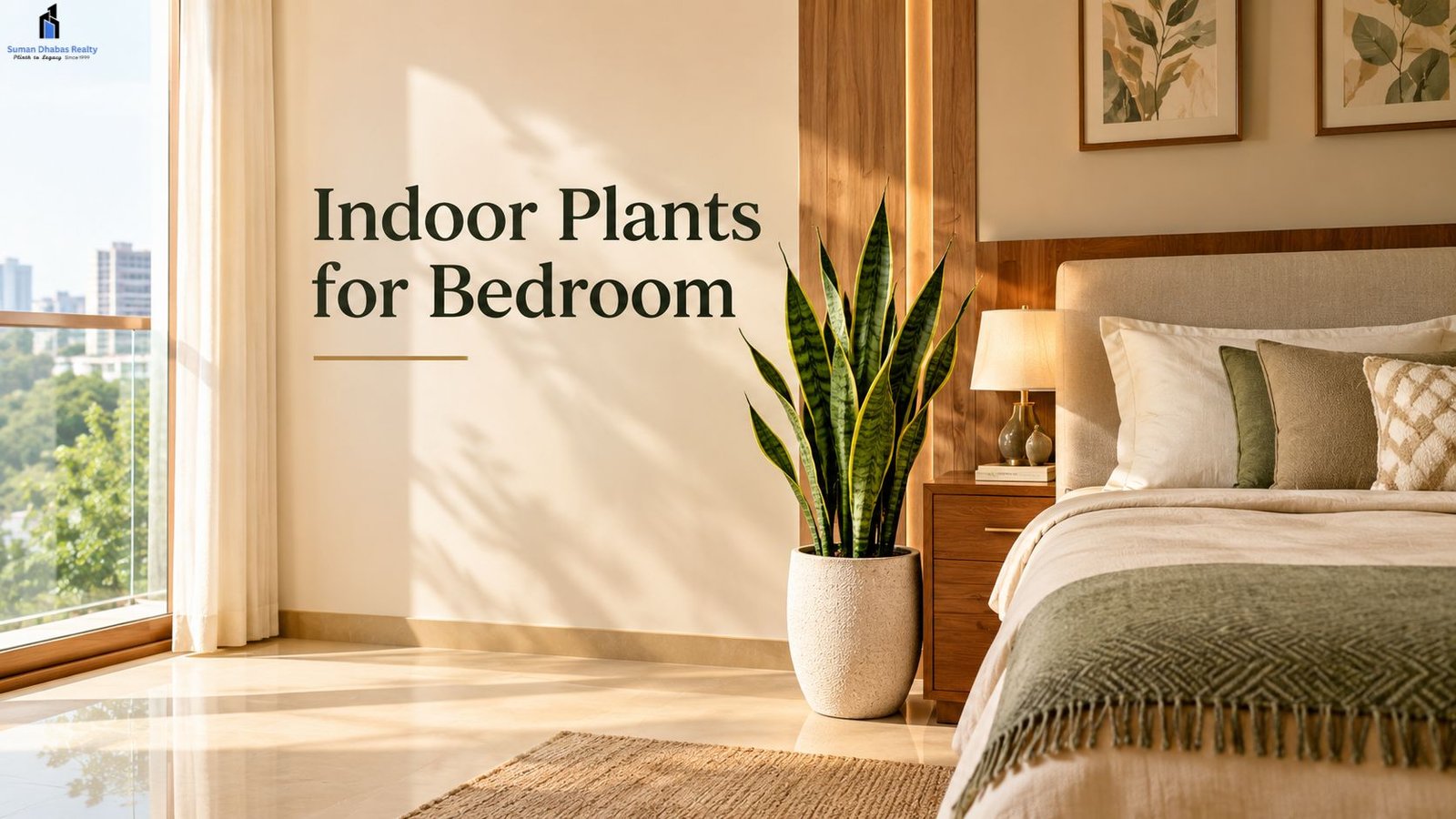
Adding Indoor Plants for Bedroom spaces can make the room feel fresher, greener, and more inviting. Plants also bring natural texture to modern interiors without taking up much space. However, choosing a plant for the bedroom is not only about appearance. Light, watering needs, room temperature, available space, and maintenance should also guide your choice.
Why Choose Indoor Plants for Bedroom Spaces?
Bedrooms usually have limited floor space, so compact and easy-care plants can work particularly well. A plant can add colour and soften furniture, walls, and other hard surfaces.
Moreover, greenery can complement several interior styles. It works equally well with neutral bedrooms, wooden furniture, modern décor, and simple minimalist spaces.
It is important to keep expectations realistic, though. Houseplants should not replace proper ventilation or regular cleaning. Research reviewed by the Royal Horticultural Society also notes that achieving significant indoor-air improvements through plants may require large numbers of plants under specific conditions.
Best Indoor Plants for Bedroom
Different plants suit different lighting and care conditions. Consider these popular options before selecting one.
1. Snake Plant
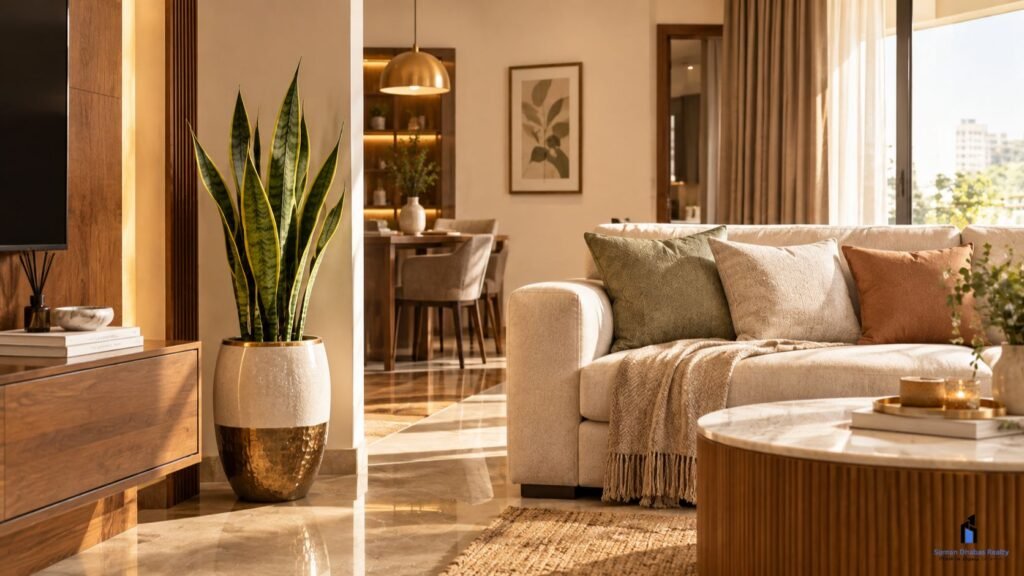
Snake plants are a practical choice for bedrooms because they tolerate a wide range of indoor conditions. They can grow in bright light as well as lighter shade and are drought tolerant.
Their upright leaves also make them useful where floor space is limited. Place one beside a wardrobe, near a window, or in an empty corner. Avoid keeping the soil constantly wet because these plants prefer well-drained conditions.
2. Spider Plant
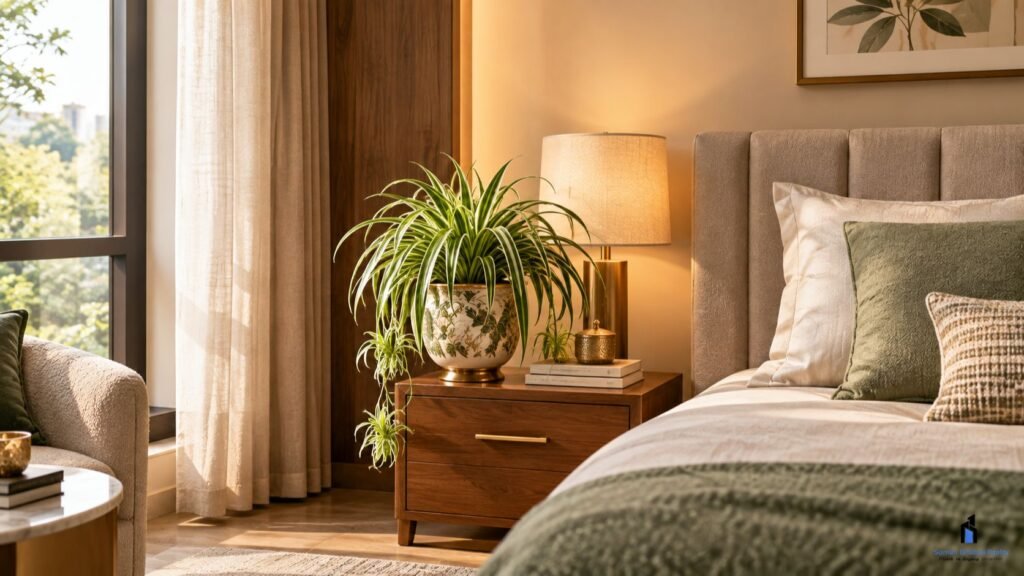
Spider plants have narrow, arching leaves that add a soft, flowing appearance to a bedroom. They can tolerate lower light, although bright indirect light supports better growth and leaf colour.
They also work well on shelves, bedside tables, or hanging planters. Water regularly, but allow excess water to drain away rather than leaving the plant in soggy compost.
3. Peace Lily
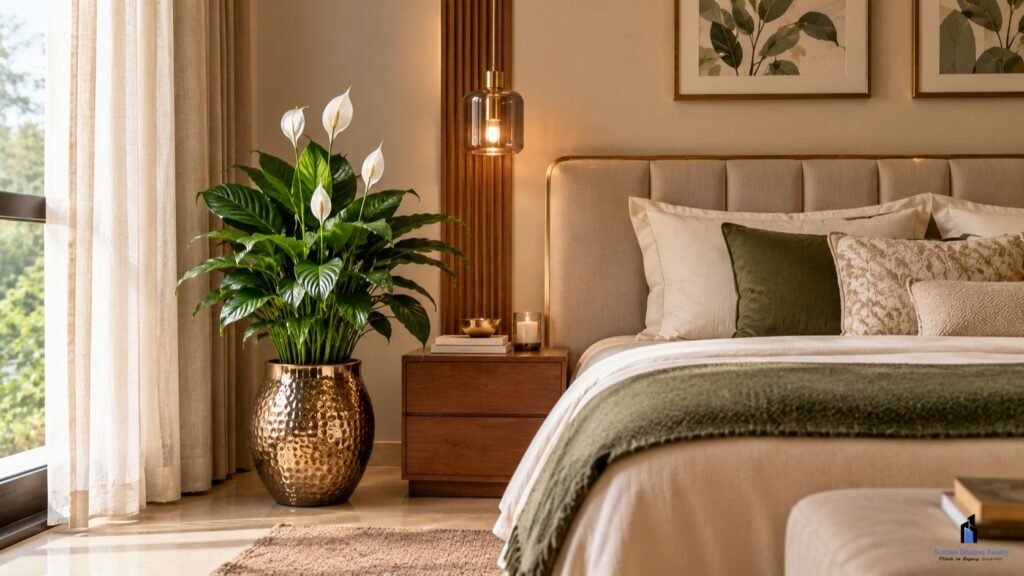
A peace lily can add both greenery and white flower-like blooms to an indoor space. It prefers indirect light, warmth, and moderate humidity.
However, it needs more attention than some drought-tolerant plants. Keep the soil from staying waterlogged, and protect the plant from strong direct sunlight. Peace lilies are also poisonous if eaten, so households with children or pets should place them somewhere inaccessible.
How to Place Indoor Plants for Bedroom Décor
Placement can change how a plant looks and how well it grows. Start by checking the natural light available in your room.
A bright bedroom with filtered sunlight can accommodate plants that prefer indirect light. A darker room may suit low-light-tolerant varieties, but remember that no houseplant can thrive in complete darkness because plants need light to produce food.
For small bedrooms, use vertical space. A hanging planter, wall shelf, or narrow plant stand can add greenery without crowding the floor.
You can also group two or three plants at different heights. This creates visual variety while keeping the arrangement organised.
Simple Care Tips for Bedroom Plants
Good plant care does not have to be complicated. Follow a few basic habits:
- Check the soil before watering.
- Use pots with drainage holes.
- Give each plant the light it needs.
- Keep plants away from extreme heat or cold drafts.
- Remove yellow or damaged leaves.
- Clean dusty leaves gently when needed.
- Repot plants when their roots become crowded.
Most importantly, avoid following a fixed watering schedule without checking the plant. Room temperature, sunlight, season, and soil conditions can all affect how frequently a plant needs water. The RHS recommends containers with drainage holes and advises watering according to plant and growing conditions.
Creating a Greener Bedroom in a Modern Home
A well-designed bedroom is not only about furniture and colours. Small details such as natural textures, indoor greenery, soft lighting, and thoughtful storage can make the space more comfortable.
This approach also fits the broader idea of planned modern living. Suman Dhabas Realty, for example, focuses on planned property development involving plots, villas, farmhouses, and resorts, with its projects including plotted township development. Thoughtful home planning can create spaces where residents can combine functional interiors with simple elements such as balcony greenery and indoor plants.
Ultimately, Indoor Plants for Bedroom spaces should be selected according to the actual conditions of the room. Choose a plant that matches your available light, maintenance routine, and available space. With the right placement and basic care, even one well-chosen plant can bring a natural touch to a modern bedroom.