
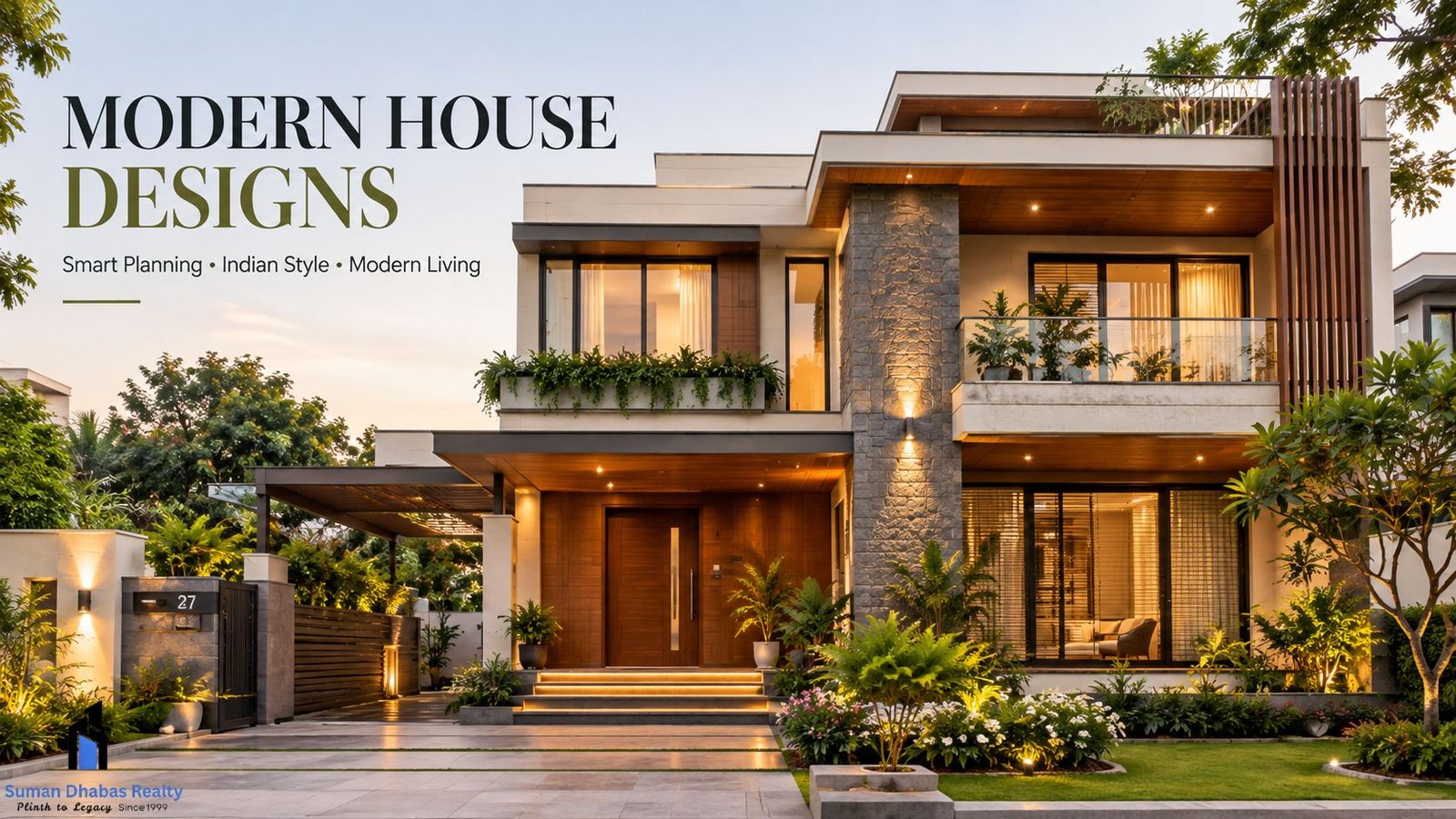
Modern House Designs focus on clean architecture, practical layouts and a contemporary appearance. Instead of excessive decoration, modern homes use simple forms, balanced proportions, large openings and carefully selected materials to create a stylish look.
For Indian homeowners, a modern house also needs to work well for everyday living. The design should provide comfortable rooms, enough storage, natural light, ventilation, parking and privacy. Therefore, modern architecture is not only about how a house looks from the outside. It is also about how efficiently the entire home works.
What Are Modern House Designs?
Modern house designs use a simple and organised architectural approach. Straight lines, geometric shapes, open spaces and minimal detailing are common features.
A modern house may have a flat roof, large windows, a simple entrance, a clean boundary wall and a combination of materials such as concrete, glass, stone, metal and wood finishes.
The overall design usually avoids unnecessary ornamentation. Instead, the architect creates visual interest through proportions, textures, materials, lighting and architectural volumes.
Modern Indian homes often use this approach to create houses that look contemporary without making the design overly complicated. Examples of contemporary Indian homes commonly feature clean lines, open layouts, natural light and restrained material palettes.
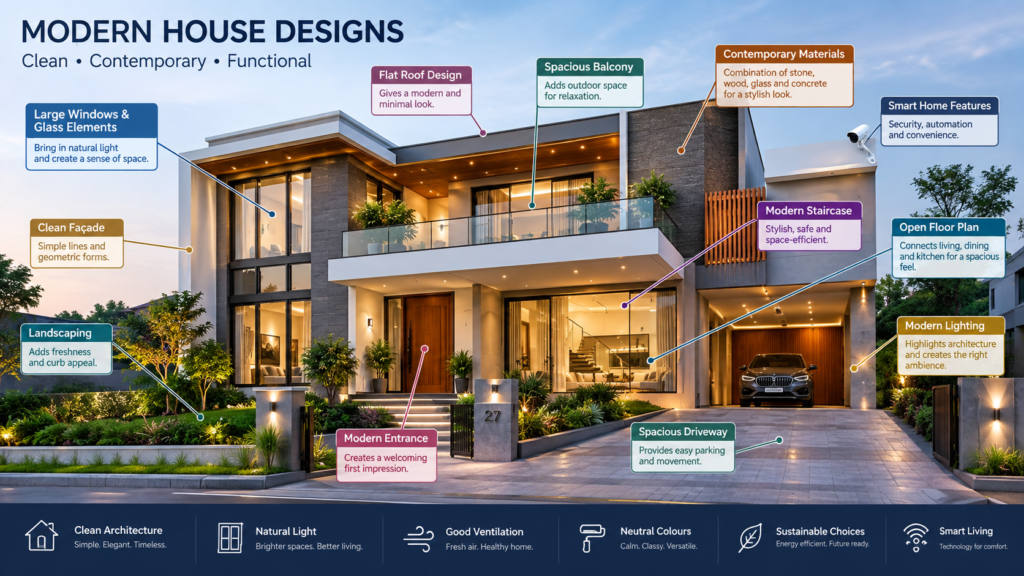
Clean and Minimal Exterior Design
The exterior is one of the most noticeable aspects of a modern home.
A modern façade often uses straight horizontal and vertical lines. Different sections of the building can be arranged in simple geometric volumes to create depth.
For example, the main structure may use a light exterior finish while a projecting section uses a darker material. Large windows can then break up the solid surfaces.
The key is balance. A modern façade does not need many decorative elements to look attractive.
Large Windows and Glass Elements
Large windows are commonly used in contemporary homes because they bring more natural light into the interiors and create a stronger connection with the outside.
Floor-to-ceiling windows can make living rooms feel larger and more open. Large sliding glass doors can also connect indoor spaces with balconies, gardens or terraces.
However, window placement should suit the local climate. In hot areas, excessive unshaded glass can increase heat inside the house. Therefore, architects should consider orientation, shading and ventilation when planning large openings.
Contemporary Indian homes frequently use large windows and carefully planned openings to improve light and airflow.
Open and Functional Floor Plans
Modern architecture often gives importance to efficient movement between spaces.
For example, the living room, dining area and kitchen can be connected without unnecessary walls. This creates a more spacious appearance and makes common areas easier to use.
However, an open floor plan does not mean every room needs to be completely open.
Bedrooms, bathrooms, utility areas and other private spaces can remain separate. The goal is to create a layout that feels spacious while still providing privacy where needed.
Modern Materials for House Exteriors
Materials play a major role in modern architecture.
Common choices include:
- Concrete
- Glass
- Natural stone
- Wood finishes
- Metal
- Brick
- Textured plaster
- Large-format tiles
Modern homes often combine two or three materials instead of using too many finishes.
For example, a white or neutral exterior can be combined with natural stone around the entrance. Dark metal frames can then add contrast around windows and balconies.
This creates a sophisticated appearance without making the façade visually crowded.
Neutral Colours With Strong Accents
Modern homes generally work well with neutral colours.
White, beige, grey, cream, charcoal and earthy shades can create a clean architectural background.
However, using only one colour can make a façade look flat. Therefore, designers often introduce contrast through darker window frames, wooden finishes, stone surfaces or architectural lighting.
The colour scheme should complement the materials and surroundings rather than compete with them.
Modern Balconies and Terraces
Balconies can become an important architectural feature in a contemporary house.
Glass railings, slim metal railings and simple concrete edges can create a clean appearance. Large balconies can also provide additional outdoor space for seating, plants or relaxation.
Similarly, a rooftop terrace can provide an extra usable area without adding another enclosed room.
The design should still consider privacy, drainage, waterproofing and safety before construction.
Double-Height Spaces
A double-height living room can give a modern home a dramatic sense of scale.
Instead of stopping the ceiling at the usual floor height, the space extends vertically across two levels. Large windows can further emphasise the height and bring more daylight inside.
However, double-height spaces require careful planning. They can affect air-conditioning requirements, acoustics, maintenance and the placement of lighting.
Therefore, they work best when they serve a clear architectural or functional purpose.
Modern Staircase Designs
The staircase can become a major design feature in a contemporary home.
Floating-style steps, glass railings, metal elements and simple wooden finishes can create a modern appearance.
The staircase should not only look attractive. Its width, lighting, handrail, safety and connection between floors also need careful planning.
A well-designed staircase can become one of the strongest visual elements inside the house without requiring excessive decoration.
Lighting in Modern Homes
Lighting can completely change the appearance of modern architecture.
At the exterior, wall lights, recessed lighting and concealed LED strips can highlight architectural forms after sunset.
Inside the home, layered lighting can combine:
- General lighting
- Task lighting
- Accent lighting
- Cove lighting
- Decorative fixtures
Instead of installing bright lights everywhere, the design can use different lighting levels for different areas.
This approach creates a more comfortable and sophisticated environment.
Smart Features in Modern Homes
Technology has also become part of contemporary residential design.
Homeowners can integrate features such as:
- Smart door locks
- Video doorbells
- Security cameras
- Automated lights
- Smart switches
- Motion sensors
- Smart thermostats
- Home automation systems
These features can improve convenience and security.
However, technology should be planned during construction. Electrical points, internet connections and wiring routes should be considered early so that homeowners do not need major modifications later.
Modern House Designs for Different Plot Sizes
Modern architecture can work on both small and large residential plots.
On a smaller plot, the design can focus on efficient space planning, vertical construction, compact furniture and large openings.
A larger plot provides more freedom for features such as spacious living areas, bigger bedrooms, balconies, terraces, parking and landscaped outdoor areas.
Therefore, there is no single modern house plan that works for every property.
The plot’s dimensions, road position, surrounding buildings and local building regulations should all influence the final design.
How to Make a Modern House Look Spacious
A house does not need to be extremely large to feel spacious.
Several design choices can help create a sense of openness:
- Use fewer unnecessary partitions.
- Choose appropriately sized furniture.
- Allow natural light into common areas.
- Use large windows where suitable.
- Keep the colour palette coordinated.
- Add built-in storage.
- Maintain clear circulation paths.
- Use consistent flooring across connected spaces.
Good planning can make even a compact home feel comfortable and uncluttered.
Modern House Designs Should Be Practical
A beautiful façade should not come at the expense of functionality.
Before finalising a design, homeowners should consider parking, storage, kitchen workflow, bedroom sizes, bathroom placement, maintenance access and future requirements.
For example, a large glass façade may look impressive but can require more attention to heat control and cleaning. Similarly, a huge open living space may look luxurious but may not suit every family’s lifestyle.
Therefore, modern architecture should balance appearance, comfort and practicality.
How to Choose a Modern House Design
Start with your plot rather than choosing a design from a photograph.
Consider its:
- Size
- Shape
- Road width
- Orientation
- Surrounding construction
- Required setbacks
- Parking requirements
- Number of floors
- Family requirements
Next, decide how much space you actually need.
Think about the number of bedrooms, bathrooms, living areas, kitchen, storage spaces and other rooms before discussing the exterior design.
Finally, work with a qualified architect or designer who can adapt the concept to your specific plot and applicable building requirements.
Conclusion
Modern House Designs are about more than creating a stylish exterior. They combine clean architectural forms with practical layouts, contemporary materials, natural light and comfortable living spaces.
Large windows, simple façades, modern balconies, functional interiors, carefully selected materials and smart-home technology can all contribute to a contemporary home.
At the same time, every modern house should respond to its plot, climate, budget and family’s needs. A design that looks impressive online may not necessarily work for every property.
The best modern home is therefore one that looks contemporary while remaining comfortable, practical and easy to live in for years to come.



Pingback: Glossy Sunmica Colour Ideas for Modern Home Interiors - Suman Dhabas Realty
Pingback: Front Wall Tiles: Ideas, Types, Colours & Design Tips - Suman Dhabas Realty