
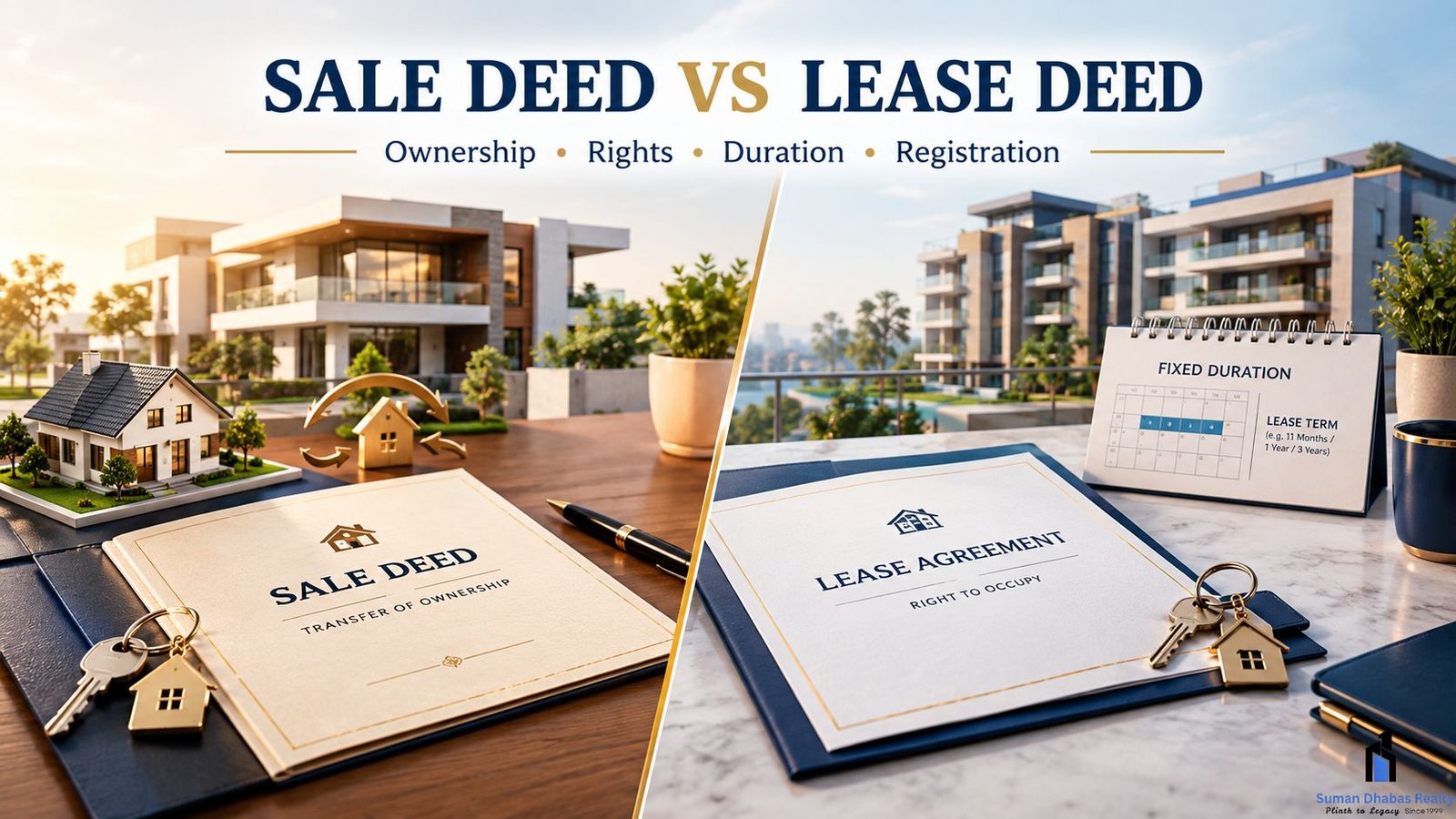
Understanding the difference between property documents is important before entering any real estate transaction. Sale Deed vs Lease Deed is one comparison that often creates confusion. Both documents deal with property rights, but they serve very different purposes. A sale deed transfers ownership from one person to another, while a lease deed generally gives someone the right to use or occupy a property for a specific period.
Knowing this difference can help buyers, sellers, landlords, and tenants make better property decisions. It can also prevent confusion about ownership, possession, duration, and legal rights.
What Is a Sale Deed?
A sale deed is a legal document used to transfer ownership of an immovable property from the seller to the buyer.
For example, suppose a person owns a residential plot and decides to sell it. Once the transaction is completed according to applicable legal requirements, the sale deed records the transfer between the parties.
The document generally contains important details such as:
- Names and details of the buyer and seller
- Property description
- Sale consideration
- Payment details
- Property boundaries
- Rights transferred to the buyer
- Terms and conditions of the transaction
A properly executed and registered sale deed becomes an important record of ownership.
Sale Deed and Ownership
The biggest feature of a sale deed is transfer of ownership. The buyer acquires ownership rights in the property, subject to applicable laws and any existing restrictions or encumbrances.
Therefore, a sale deed is commonly associated with outright property purchases.
What Is a Lease Deed?
A lease deed is an agreement that gives a person or organisation the right to use and occupy a property for a specified period.
The property owner is known as the lessor, while the person receiving the right to use the property is generally called the lessee.
A lease deed can specify:
- Lease duration
- Rent or lease premium
- Security deposit
- Permitted use of the property
- Maintenance responsibilities
- Renewal conditions
- Restrictions on transfer or subletting
- Termination conditions
Unlike a sale deed, a lease deed does not normally transfer ownership of the property to the lessee.
Sale Deed vs Lease Deed: Major Differences
The clearest way to understand Sale Deed vs Lease Deed is to compare the rights created by each document.
| Feature | Sale Deed | Lease Deed |
|---|---|---|
| Main purpose | Transfers ownership | Gives the right to use or occupy |
| Ownership | Passes to the buyer | Remains with the lessor |
| Duration | Generally continues with ownership | Usually for a fixed period |
| Payment | Sale consideration | Rent, lease premium, or agreed payment |
| Parties | Buyer and seller | Lessor and lessee |
| Property rights | Ownership rights | Leasehold/use rights |
| Transfer of property | Buyer may generally transfer ownership subject to law | Lessee cannot generally sell the property itself |
| Expiry | Does not expire simply because time passes | Usually ends or requires renewal according to its terms |
The exact legal effect can vary based on the document, property type, applicable law, and terms of the transaction.
Sale Deed vs Lease Deed: Which One Gives Ownership?
This is one of the most important differences.
A sale deed is used when ownership is being transferred from the seller to the buyer. The buyer therefore receives ownership rights after completion of the legally required process.
A lease deed, on the other hand, generally creates a right to use or enjoy the property for an agreed period. The lessor continues to own the property.
For example, if a person takes a shop on a 10-year lease, they may operate their business there according to the lease terms. However, this does not automatically make them the owner of the shop.
Registration and Legal Requirements
Property transactions should always be handled according to applicable registration and stamp-duty requirements.
For sale transactions involving immovable property, registration is generally an important part of legally recording the transfer.
Lease deeds may also require registration depending on factors such as the lease period and applicable law. Under the Registration Act, 1908, leases of immovable property from year to year, for a term exceeding one year, or reserving yearly rent generally fall within compulsory registration requirements.
Before signing either document, parties should verify the applicable rules in their state and for their particular transaction.
Why the Difference Matters for Property Buyers
Understanding Sale Deed vs Lease Deed is especially useful when evaluating a property.
A buyer should not assume that possession automatically means ownership. Similarly, a person holding a lease should understand exactly what rights the agreement provides.
Before proceeding, check:
- Ownership records
- Previous transaction documents
- Encumbrances
- Property boundaries
- Applicable approvals
- Registration requirements
- Lease duration, if applicable
- Restrictions on transfer
- Renewal and termination clauses
For significant property transactions, professional legal advice can help identify issues that may not be obvious from the document alone.
Sale Deed vs Lease Deed for Long-Term Property Use
A lease can provide long-term use without transferring ownership. This can be useful for residential, commercial, institutional, or other permitted purposes.
However, the value and practical rights associated with a lease depend on its terms and the legal status of the property.
A person considering a long-term lease should therefore examine the duration, renewal terms, permitted use, payment obligations, transfer restrictions, and termination conditions carefully.
Final Thoughts
The key difference in Sale Deed vs Lease Deed comes down to the type of property right created.
A sale deed transfers ownership, while a lease deed generally provides the right to use or occupy property for a specified period. Both documents can have significant legal and financial implications, so understanding their terms is essential before signing.
Whether you are purchasing a plot, acquiring a property, renting commercial space, or entering into a long-term lease, always verify the documents and applicable legal requirements before completing the transaction.



Pingback: Freehold Property Meaning: Rights, Benefits and Key Things - Suman Dhabas Realty