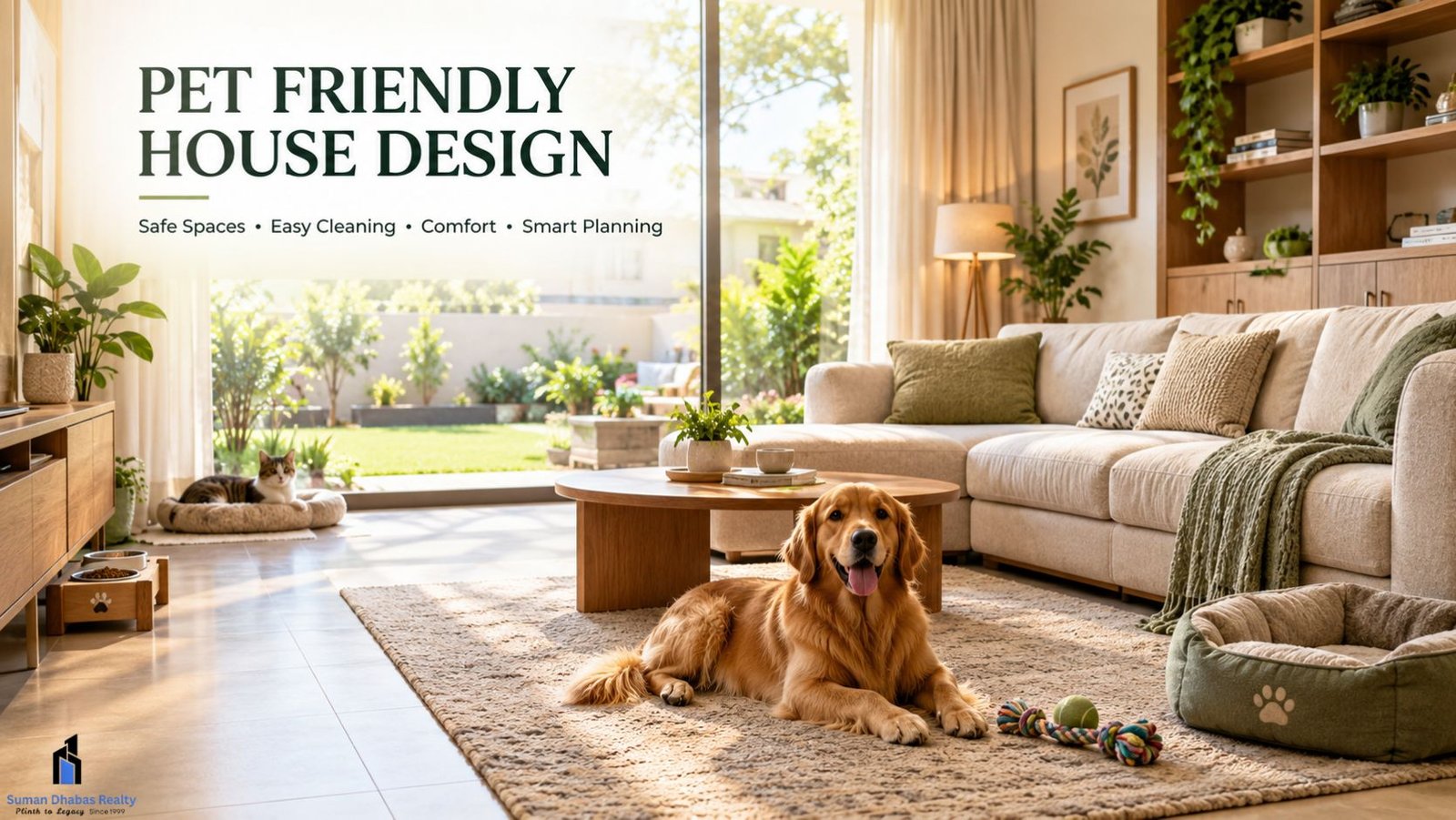
A Pet Friendly House Design can make everyday life easier for both pets and their owners. Dogs and cats use the home differently from people. They move across floors, explore corners, rest near windows, and need safe spaces to play and relax. Therefore, a good home should consider their needs from the beginning.
Pet-friendly design does not mean turning your entire house into a pet zone. Instead, it means making practical choices about flooring, furniture, storage, ventilation, outdoor areas, and cleaning. With thoughtful planning, you can create a home that looks stylish while remaining comfortable and safe for your pets.
What Is Pet Friendly House Design?
Pet Friendly House Design focuses on creating a home that accommodates pets without compromising everyday comfort or aesthetics.
The design should consider how pets move through the house and where they eat, sleep, play, and spend time alone. It should also make cleaning easier for the owners.
For example, scratch-resistant flooring can handle active pets better than delicate surfaces. Similarly, washable fabrics can make sofas and cushions easier to maintain.
The key is to combine durability with comfort.
Choose Pet-Friendly Flooring
Flooring is one of the most important elements of a pet-friendly home. Pets spend a lot of time walking, running, and resting on the floor.
Smooth surfaces can sometimes become slippery, especially for older dogs. Therefore, choose flooring that offers reasonable grip and is easy to clean.
Good options may include:
- Textured tiles
- Matte-finish tiles
- Durable vinyl
- Certain types of laminate
- Sealed natural stone
Avoid surfaces that scratch easily or become dangerously slippery when wet. Rugs can add comfort, but choose ones that are easy to wash and have a secure backing.
Create a Dedicated Pet Corner
Pets benefit from having a familiar area they can call their own. A small corner can become a comfortable sleeping and resting zone.
You could place a pet bed near a quiet part of the living room. Alternatively, a space beneath a staircase or beside a cabinet can become a compact pet nook if it has sufficient ventilation and room.
Keep food and water bowls in an area that is easy to clean. A washable mat underneath can help protect the floor from spills.
This approach also keeps pet belongings organised instead of spreading them throughout the house.
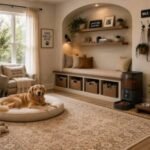
Pet Friendly House Design and Storage
Pet accessories can quickly create clutter. Leashes, toys, food, grooming supplies, and cleaning products all need dedicated storage.
Built-in cabinets can help keep these items organised. A small drawer near the entrance can hold leashes and collars. Similarly, a closed cabinet can store food and grooming supplies.
However, keep pet food and potentially harmful household products away from areas where animals can access them.
Good storage therefore improves both organisation and safety.
Make Furniture More Pet-Friendly
Furniture should be selected with your pet’s behaviour in mind.
If your dog regularly jumps onto the sofa, washable or removable covers can make maintenance easier. For cats, scratch-resistant materials can help protect upholstery.
Avoid furniture with easily accessible sharp edges. Rounded corners can provide a safer option, particularly in homes where pets frequently run through the living area.
At the same time, you do not need to sacrifice style. Neutral upholstery, textured fabrics, wooden furniture, and simple silhouettes can create an attractive interior while remaining practical.
Plan Safe Windows and Balconies
Windows and balconies deserve special attention in a Pet Friendly House Design.
Curious pets may try to squeeze through openings or climb onto ledges. Therefore, secure screens, appropriate barriers, and safe balcony railings can reduce potential risks.
Do not place chairs, tables, or other climbable furniture directly beside unsecured balcony edges.
For cats, enclosed or screened balcony areas can provide a stimulating outdoor view while offering greater protection.
Give Pets Access to Natural Light
Pets enjoy spending time in bright, comfortable spaces. A window with natural daylight can become an excellent resting area.
However, direct sunlight can make rooms extremely warm. Provide shade where necessary and ensure that your pet can move to a cooler area.
Good ventilation is equally important. Cross-ventilation can improve indoor airflow and make the home more comfortable.
Create Easy-to-Clean Spaces
Pets can bring dirt, hair, and moisture into the house. A practical entry area can help manage this.
If space allows, create a small cleaning station near the entrance. Keep towels, wipes, grooming supplies, and cleaning materials nearby.
An outdoor tap or washing area can also be useful for homes with larger pets. After a muddy walk, you can clean your pet before they move through the main living areas.
This small planning decision can significantly reduce cleaning work.
Pet Friendly House Design for Outdoor Areas
A garden, terrace, or courtyard can provide valuable space for pets. Yet, the outdoor area should be planned carefully.
Use secure boundaries to prevent pets from wandering outside. Avoid plants that may be harmful to animals, and provide shaded areas during hot weather.
A small patch of lawn can offer a comfortable play area. Durable paving can work around it and create an easy-to-clean surface.
For homes in warmer regions, shade becomes especially important. Trees, pergolas, or covered areas can give pets a cooler place to rest.
Design for Different Pet Needs
Not every pet needs the same environment.
Dogs may benefit from larger movement areas and easy outdoor access. Cats often appreciate vertical spaces, hiding areas, and window views.
If you have a cat, wall-mounted shelves or a dedicated climbing structure can add enrichment without taking up much floor space.
For dogs, an open living area can provide more room for movement. Therefore, the design should reflect the animal’s size, age, habits, and activity level.
Pet-Friendly Homes in New Townships
Pet owners should also consider the surroundings when choosing a new home or residential plot. Internal roads, open spaces, greenery, walking areas, and the overall neighbourhood environment can affect everyday pet routines.
Planned residential developments can offer opportunities to create homes with better indoor and outdoor connections. In the Khatu Shyam region, Suman Dhabas Realty Pvt Ltd is associated with township-oriented residential development. For buyers with pets, factors such as open areas, accessibility, home layout, and the surrounding neighbourhood can be considered alongside the property itself.
These details may seem small at first. However, they can make daily walks, outdoor time, and general pet care much more convenient.
Common Mistakes to Avoid
Even a beautiful home can become difficult for pets if basic safety is overlooked.
Avoid:
- Slippery flooring
- Exposed electrical wires
- Easily accessible cleaning chemicals
- Unsecured balconies
- Sharp furniture corners
- Toxic plants in accessible areas
- Fragile décor placed within reach
- Poor ventilation in pet areas
Regularly inspect the home as your pet grows. A space that was safe for a small puppy may not remain safe for a larger or more active dog.
Conclusion
A thoughtful Pet Friendly House Design can create a safer and more comfortable environment for the entire household. Start with practical elements such as flooring, furniture, storage, ventilation, and secure outdoor spaces.
Then, consider your pet’s individual habits. A dog may need more floor space, while a cat may benefit from vertical areas and window access.
Ultimately, the best pet-friendly home does not look like a pet facility. It feels like a well-designed home where pets and people can comfortably share the same space.