
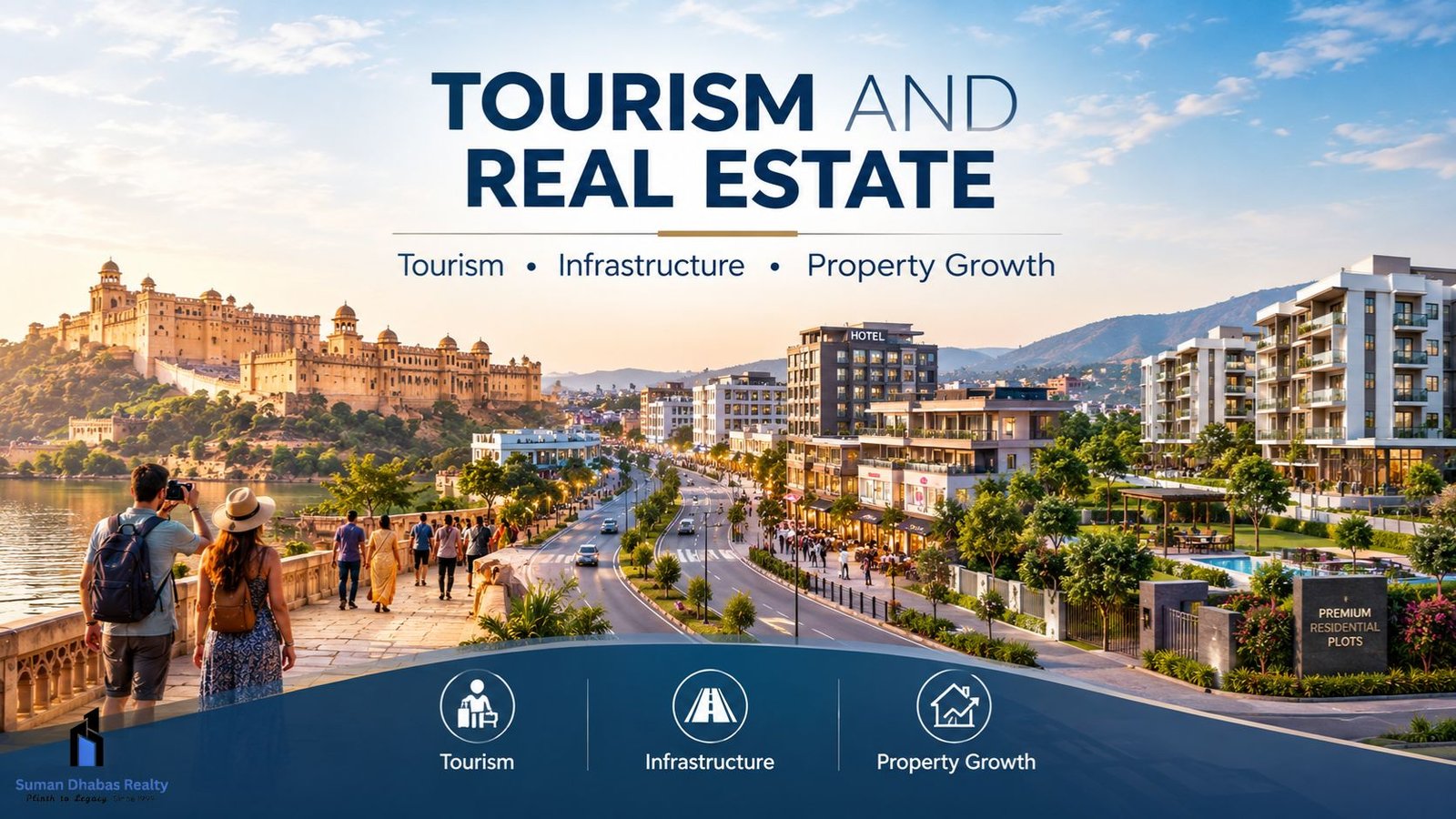
Tourism and real estate are closely connected. When a location attracts more visitors, the demand for hotels, restaurants, shops, transportation and other services usually increases. Over time, this activity can encourage new infrastructure and property development.
In India, this connection can be seen in many tourist and pilgrimage destinations. Improved connectivity, growing visitor numbers and new commercial activity can make an area more attractive for real estate development. Colliers has also identified tourism, infrastructure and spiritual travel as important factors behind the growth of emerging real estate markets in India.
How Tourism and Real Estate Are Connected
Tourism creates economic activity around a destination. Visitors need places to stay, eat, shop and travel. Businesses then develop to meet this demand.
As businesses grow, they may require hotels, restaurants, offices, retail spaces and staff housing. This creates demand for different types of real estate.
The process can look like this:
More Tourists → More Business Activity → Better Infrastructure → Higher Property Demand → More Real Estate Development
However, tourism alone does not guarantee property growth. Connectivity, infrastructure, land availability, local regulations and long-term demand also matter.
1. Tourism Increases Property Demand
One of the most direct effects of tourism is increased demand for accommodation.
Popular destinations may attract:
- Hotels
- Resorts
- Guest houses
- Serviced apartments
- Holiday homes
- Restaurants
- Retail shops
- Commercial spaces
Residential demand can also increase when tourism creates employment. Workers and business owners may need homes close to their workplaces.
Therefore, tourism can influence both commercial and residential real estate.
2. Better Infrastructure Can Support Property Growth
Tourist destinations often need better roads, transportation, public facilities and other infrastructure.
Improved infrastructure can make a location easier to access. It can also encourage businesses and developers to consider nearby areas.
Transport infrastructure is particularly important because better connectivity can influence where people choose to live, work and invest. Research published through India’s Ministry of External Affairs notes that infrastructure development can have a direct effect on property values and development patterns.
This is why investors should look beyond the tourist attraction itself. The surrounding infrastructure can be equally important.
3. Tourism Can Create New Real Estate Opportunities
As a destination becomes popular, development may spread beyond the main tourist zone.
For example, an area near a major tourist or pilgrimage destination may gradually see:
- New residential projects
- Planned townships
- Hotels
- Commercial centres
- Restaurants
- Parking facilities
- Rental properties
- Second homes
This can create opportunities for different types of property buyers.
However, investors should not assume that every property near a tourist destination will appreciate. The exact location and development potential still need careful evaluation.
4. Religious Tourism and Property Development
Religious tourism is an important part of India’s travel ecosystem. Pilgrimage destinations can attract visitors throughout the year, along with seasonal peaks during festivals and special occasions.
As visitor activity increases, demand can develop for accommodation, food, transportation, retail and other services.
This can gradually influence the surrounding real estate market.
Recent market research has highlighted the growing relationship between spiritual tourism, infrastructure development and real estate growth in destinations such as Ayodhya, Vrindavan and Varanasi.
This trend is particularly interesting for smaller towns that are developing into larger tourism and residential hubs.
5. Tourism Can Support Rental Demand
Tourist locations can create different rental opportunities.
Depending on the location, property owners may consider:
- Long-term residential rentals
- Short-term stays
- Holiday homes
- Serviced apartments
- Commercial rentals
However, rental income depends heavily on actual demand.
A property in a tourist location is not automatically a good rental investment. Investors should study visitor patterns, occupancy, local competition, operating costs and applicable regulations before making a decision.
6. Tourism Can Encourage Commercial Development
Tourists spend money on more than accommodation.
They also spend on food, shopping, transportation, entertainment and local experiences. This can create opportunities for businesses.
As commercial activity grows, demand for suitable commercial property may also increase.
For example, a growing tourist destination may require more restaurants, cafés, retail outlets, travel services and convenience stores.
This creates another link between tourism and real estate.
7. Connectivity Matters as Much as Tourism
A tourist destination may have strong visitor demand, but poor connectivity can limit its long-term development.
Good roads, public transport and access to major cities can make a destination more convenient for visitors and residents.
For real estate buyers, it is therefore useful to examine:
- Road connectivity
- Distance from major cities
- Public transportation
- Nearby airports or railway stations
- Upcoming infrastructure
- Access to schools and hospitals
- Availability of everyday services
These factors can influence the usability and long-term demand for property.
8. Tourism Does Not Always Mean Higher Property Prices
It is important to avoid assuming that tourism automatically increases property values.
Property prices depend on several factors. These include location, infrastructure, demand, supply, legal status, land use and overall economic activity.
Tourism may create an opportunity, but it is only one part of the investment decision.
A property buyer should also verify ownership, approvals, land use, access, development plans and other relevant documents before purchasing.
What Should Property Buyers Check?
If you are considering property in a tourism-driven location, look at the complete picture rather than focusing only on tourist numbers.
Check:
- Location: Is the property in a practical and accessible area?
- Connectivity: How easily can people reach the location?
- Infrastructure: Are roads and essential services available?
- Development: Is the surrounding area actually developing?
- Demand: Is demand seasonal or consistent?
- Legal status: Are the ownership and property documents clear?
- Land use: Is the property permitted for the intended purpose?
- Future potential: Are there credible infrastructure or development plans?
- Total cost: Include registration, taxes, development and maintenance expenses.
Good research can help separate a genuine opportunity from a property that is simply being marketed as a “tourist destination investment.”
The Future of Tourism and Real Estate
The relationship between tourism and real estate is likely to remain important as more destinations develop beyond traditional metropolitan markets.
NITI Aayog‘s 2026 report on India’s tourism and hospitality sector highlights the need for greater investment in tourism infrastructure and notes that inadequate supply creation can limit the ability to fully capture tourism demand.
At the same time, India’s hotel investment market recorded strong growth in 2025, with Tier-II and Tier-III cities contributing a significant share of transaction activity.
This shows why emerging destinations can become interesting areas for real estate research. Still, investors should focus on fundamentals rather than short-term speculation.
Final Thoughts
Tourism and real estate can influence each other in several ways. More visitors can increase demand for accommodation and businesses. Growing economic activity can encourage infrastructure development. Better connectivity can then make the area more attractive to residents, businesses and investors.
However, tourism should never be the only reason to buy property.
Before investing, study the location, infrastructure, connectivity, legal documents, land use, existing development and future potential. A well-researched property decision should be based on the overall strength of the location, not simply its popularity among tourists.



Pingback: Key Land Value Factors That Affect Property Prices - Suman Dhabas Realty