
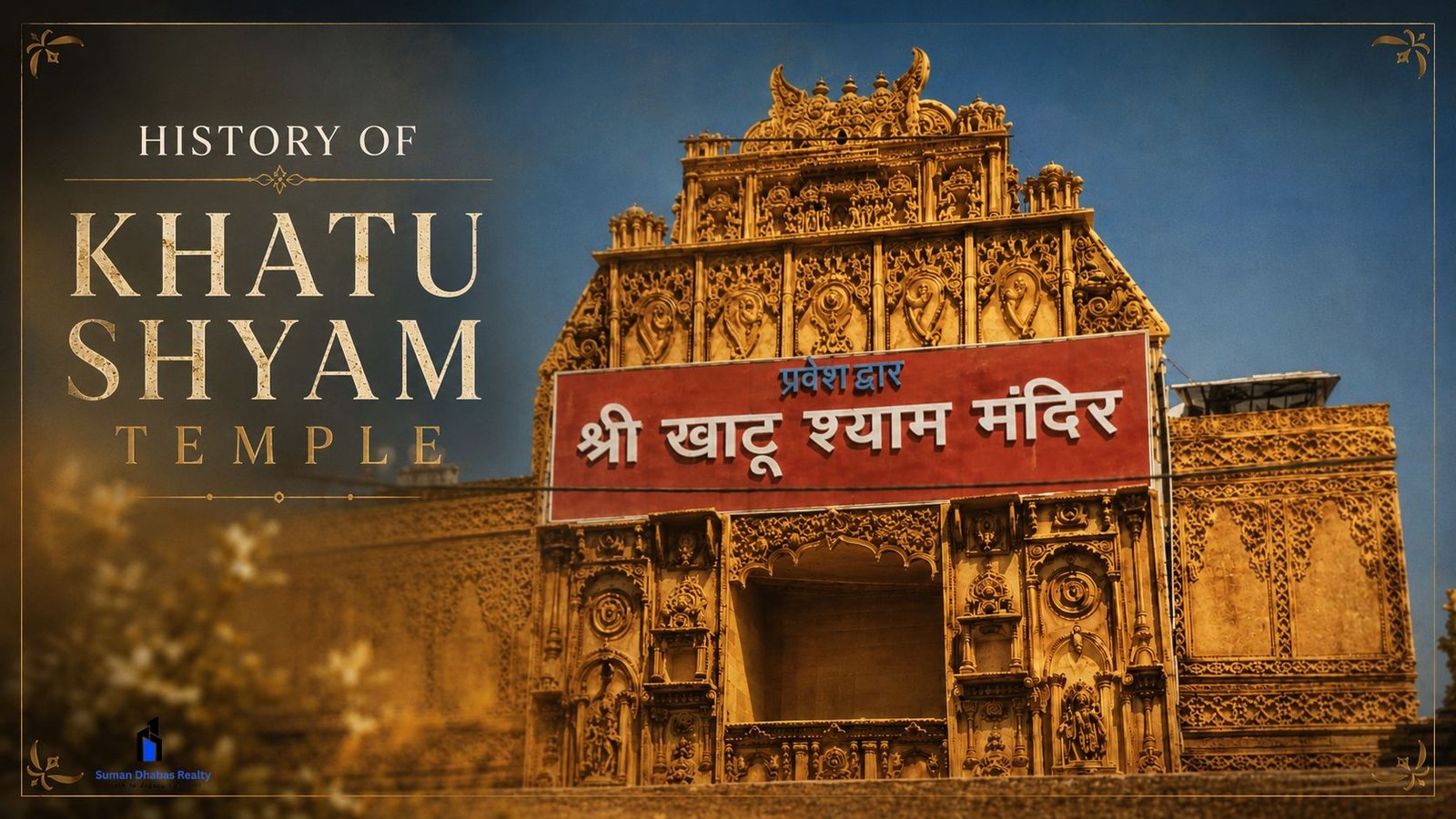
Rajasthan is home to many famous forts, palaces, and temples. Among its important pilgrimage sites, Khatu Shyam Ji has a special place. The temple stands in Khatu village in Rajasthan’s Sikar district. Devotees visit this sacred site throughout the year.
The story behind the temple connects with Barbarika, a warrior from the Mahabharata. Hindu tradition describes him as the son of Ghatotkacha and the grandson of Bhima. His story includes powerful weapons, a promise to his mother, and a meeting with Lord Krishna.
According to the traditional account, Krishna gave Barbarika the name Shyam after his sacrifice. Krishna also blessed him with a special place in the Kali Yuga. This belief forms the foundation of the worship of Khatu Shyam Ji.
Today, Khatu Dham attracts devotees from many parts of India. The annual fair also brings a large number of visitors to the town. The history, legends, and traditions of this place make it an important part of Rajasthan’s religious culture.
Barbarika and the Mahabharata Connection
The traditional story of Khatu Shyam Ji begins with Barbarika. Hindu mythology describes him as a skilled warrior with remarkable abilities. His father was Ghatotkacha, while Bhima was his grandfather.
Barbarika possessed three special arrows known as the Teen Baan. According to the legend, these arrows gave him extraordinary power during battle.
His promise to his mother made his story even more unusual. Barbarika vowed to support the weaker side whenever he entered a battle. He followed this principle with complete commitment.
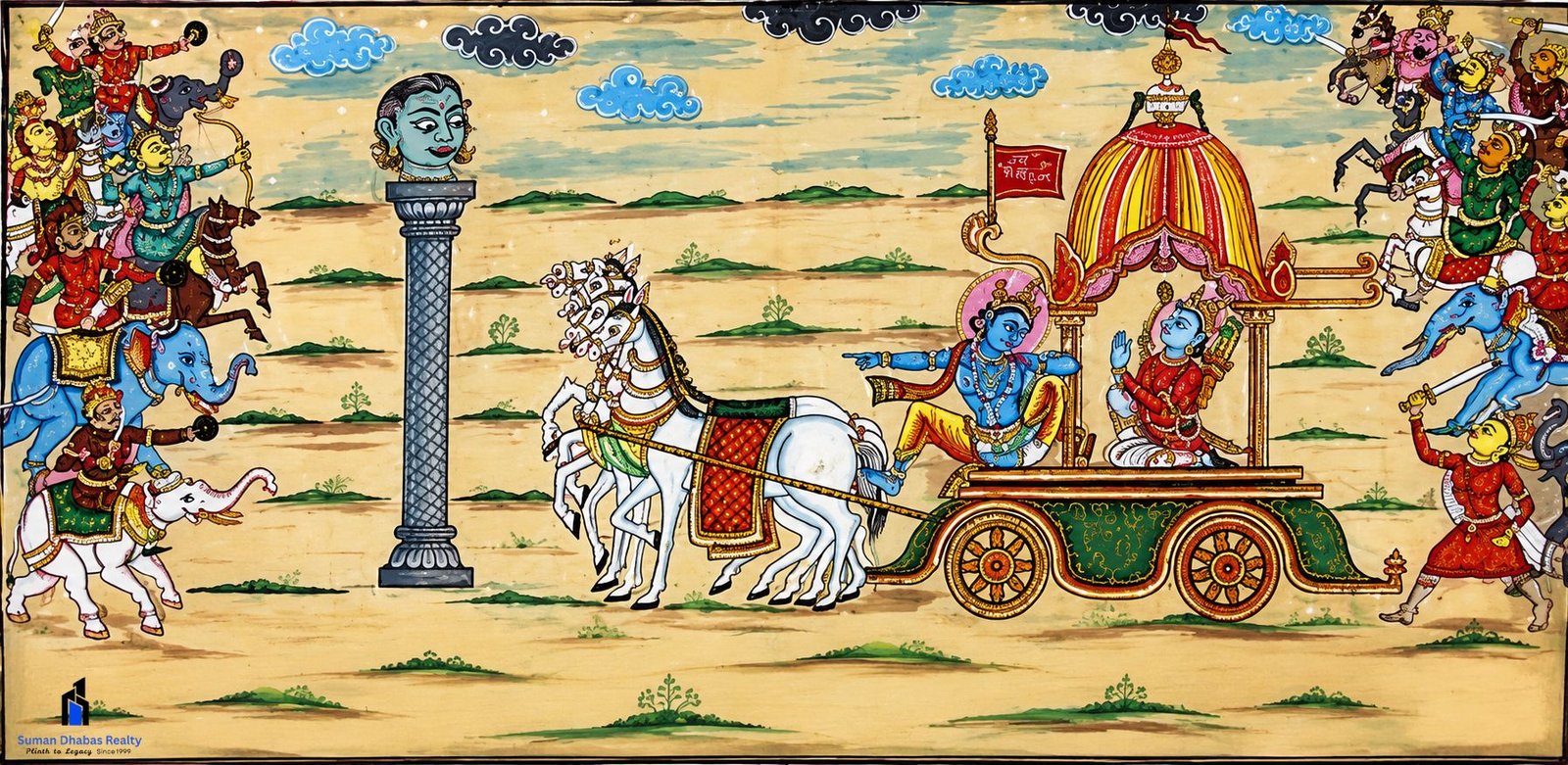
Later, Barbarika decided to join the Kurukshetra war. Lord Krishna knew about his powerful weapons and his promise. He understood that Barbarika could change the course of the conflict by repeatedly switching sides.
Krishna then met Barbarika and tested his abilities. The traditional story says that Krishna asked him for a sacrifice before the battle began. Barbarika accepted the request.
His sacrifice became an important part of the legend that later connected him with Khatu Shyam Ji.
How Barbarika Became Shyam
The connection between Barbarika and the name Shyam comes from the traditional account of his meeting with Lord Krishna.
After Barbarika made his sacrifice, Krishna blessed him. According to the legend, Krishna gave him the name Shyam and declared that people would worship him during the Kali Yuga.
This blessing forms an important part of the faith surrounding Baba Shyam.
Devotees often call Shyam Ji “Hare Ka Sahara.” The phrase expresses the belief that Baba Shyam supports people during difficult periods. For many worshippers, this idea creates a deep emotional connection with the deity.
The story therefore goes beyond the events of the Mahabharata. It also explains why devotees associate Barbarika with the name Shyam and why millions of people continue to visit Khatu Dham.
The Story Behind the Discovery
Another important part of Khatu Shyam Temple History involves the discovery of the sacred head associated with Barbarika.
Local tradition says that the sacred head remained hidden for many years after the Mahabharata period. One popular story describes a cow that regularly released milk at the same location.
People noticed this unusual event and became curious about the spot. According to the traditional account, they investigated the area and discovered something sacred beneath the ground.
Another version of the story mentions King Roop Singh Chauhan. According to local belief, the king received a divine dream that showed him where the sacred head lay hidden.
These traditional accounts connect the discovery with the area now known as Shyam Kund. The kund remains an important religious spot for people visiting Khatu Dham.
When Was the Khatu Shyam Temple Built?
The early development of the temple is surrounded by traditional accounts, so its history cannot be explained through one simple date.
The present temple complex is generally associated with later periods of development, while Rajasthan government sources have connected the temple with the year 1777. Over time, continued devotion transformed the site into a major pilgrimage centre.
The temple’s importance did not emerge overnight. Generations of devotees helped preserve the traditions surrounding Baba Shyam. Religious gatherings, festivals, pilgrimages, and local customs gradually strengthened Khatu Dham’s identity.
Today, the temple is one of the best-known religious destinations in Rajasthan.
Shyam Kund and Its Religious Importance
Shyam Kund is closely connected with the legend of Khatu Shyam Ji.
According to the traditional belief, the sacred head of Barbarika was discovered at this location. Because of this association, the kund has become an important stop for many pilgrims.
Visitors may include Shyam Kund as part of their journey to the temple. Some devotees also follow the religious practice of taking a bath at the kund.
Whether viewed through the lens of mythology, local tradition, or pilgrimage culture, Shyam Kund adds another layer to the story of Khatu Dham.
Khatu Shyam Ji Fair
The annual Khatu Shyam Ji fair is one of the biggest events associated with the temple.
The fair is traditionally held during the Hindu month of Phalguna, which generally falls around February or March. During this period, large numbers of devotees travel towards Khatu from different parts of Rajasthan and other parts of India.
The atmosphere changes considerably during the festival. Religious processions, devotional singing, bhajans, and other activities become part of the pilgrimage experience.
The fair also affects everyday activity in the surrounding area. Accommodation providers, restaurants, shops, transport operators, and other local services experience increased demand as visitor numbers rise.
For this reason, the fair is significant not only from a religious perspective but also from a social and local economic point of view.
How Khatu Dham Has Developed
The growing popularity of Khatu Shyam Ji has influenced the development of the surrounding area.
As pilgrimage numbers increase, the need for supporting infrastructure also becomes greater. Roads, parking facilities, accommodation, restaurants, shops, and transport services all contribute to a smoother experience for visitors.
This gradual development has made Khatu Dham interesting beyond its religious importance. The area demonstrates how a major pilgrimage destination can influence activity in its surrounding region.
However, development alone should not be treated as a guarantee of property growth. Anyone considering real estate in or around an emerging location should examine factors such as road connectivity, infrastructure, land records, planning regulations, surrounding development, and the actual location of a property.
Suman Dhabas Realty and Emerging Areas
The development of pilgrimage destinations can also create wider interest in surrounding regions. As infrastructure and visitor activity expand, residential and commercial development may receive greater attention.
Suman Dhabas Realty Private Limited works across different real estate segments and has projects associated with locations including Jaipur, Mumbai, and Goa. Its portfolio includes plotted developments, villas, farmhouses, resorts, and open land projects.
For people exploring emerging areas, the most important step is still research. Location, documentation, development plans, accessibility, and project details should be checked carefully before making a property decision.
Why Khatu Shyam Temple History Still Matters
The importance of Khatu Shyam Temple History comes from the way mythology, devotion, local tradition, and present-day pilgrimage come together.
The story begins with Barbarika and his connection with the Mahabharata. His legendary sacrifice leads to the traditional association with Shyam Ji. The account of the sacred head’s discovery adds another chapter, while Shyam Kund connects that tradition with a physical place that pilgrims can visit today.
Over the years, Khatu Dham has developed into much more than a small pilgrimage destination. Its annual fair, devotional traditions, local culture, and growing visitor activity have helped shape the identity of the area.
For someone interested in Rajasthan’s religious heritage, the story of Khatu Shyam Ji offers a fascinating journey from an ancient epic to a living pilgrimage tradition. For devotees, it remains a place of faith and hope. For visitors, it provides an opportunity to experience an important part of Rajasthan’s spiritual and cultural landscape.



Pingback: Jaipur to Khatu Shyam Distance & Route Guide
Pingback: Khatu Shyam Temple Architecture: Design & Features - Suman Dhabas Realty
Pingback: Khatu Shyam Prasad: Meaning and Significance
Pingback: Khatu Shyam Booking Online: What Devotees Should Know - Suman Dhabas Realty
Pingback: Khatu Shyam Quotes Hindi: 50+ Heartfelt Baba Shyam Quotes - Suman Dhabas Realty