

A Sale Deed transfer is an important step when buying or selling a property. It legally records the transfer of ownership from the seller to the buyer. However, signing a sale deed alone is not enough. The document must be properly prepared, stamped and registered according to applicable rules.
For property buyers, this process deserves careful attention. Errors in ownership details, property descriptions or previous records can create problems later. Therefore, buyers should verify the property and documents before completing the transaction.
In Rajasthan, property registration is supported through the government’s e-Panjiyan system. The process includes valuation, document entry, payment and registration.
What is a Sale Deed Transfer?
A Sale Deed transfer means transferring ownership of an immovable property from one person to another through a registered sale deed.
The sale deed generally contains details about:
Buyer and seller
Property location and description
Sale consideration
Terms and conditions
Property boundaries
Payment details
Signatures of the parties
Witness details
The Rajasthan Registration and Stamps Department states that a sale involves consideration, agreement between the seller and buyer, property and transfer of ownership. citeturn0search2
Once the transaction is completed correctly, the buyer can proceed with the relevant post-registration ownership and mutation processes.
Sale Deed Transfer Process in Rajasthan
The exact process can vary depending on the property and transaction. However, the general Sale Deed transfer process involves several important stages.
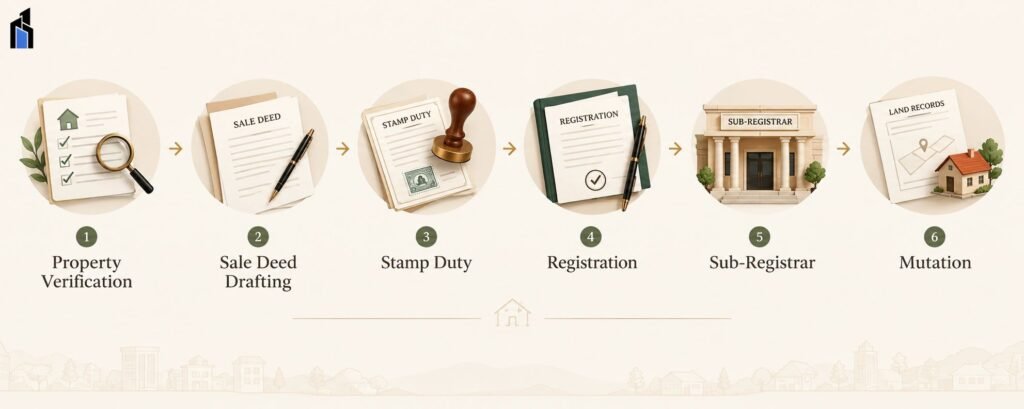
1. Verify the Property Before Sale Deed Transfer
Start with property verification. Check the seller’s ownership and previous transaction records. You should also examine the property’s title, boundaries and relevant approvals.
For plots in Jaipur, additional records may be relevant when the property falls under JDA-related processes. JDA lists documents such as the registered sale deed, possession letter, lease deed or patta, allotment letter and site plan for certain name-transfer applications.
This step can help identify ownership disputes, missing documents or other issues before money changes hands.
2. Prepare the Sale Deed
The sale deed should accurately mention the parties and property.
Check every important detail carefully. This includes names, addresses, property area, plot number, boundaries and sale consideration.
Any mistake can cause complications during registration or later property transactions. It is therefore sensible to have the deed reviewed by a qualified legal professional before signing.
3. Calculate Stamp Duty and Registration Charges
The buyer or parties involved must pay the applicable stamp duty and registration charges.
In Rajasthan, the e-Panjiyan portal provides facilities for valuation, fee calculation and registration-related services. The portal also provides information about DLC rates and document-wise fees.
Since rates and applicable concessions can change, always check the latest government information before making payment.
4. Complete the Online Registration Formalities
Rajasthan’s e-Panjiyan system allows citizens to enter property, party and payment details and prepare the deed. Relevant documents can also be uploaded through the system. After this, a registration time slot can be booked.
The parties then need to visit the designated Sub-Registrar Office with the required original documents.
5. Present the Documents at the Sub-Registrar Office
On the scheduled date, the buyer and seller appear before the registration authority.
The original documents are checked. The parties may also complete photographs, biometric verification and other registration formalities. The deed is then processed for registration.
This stage is important because the registration authority verifies the execution of the document and records the transaction.
6. Complete Mutation After Registration
Registration and mutation are related but different processes.
Registration records the property transaction. Mutation updates the ownership name in the relevant land or municipal records.
The Rajasthan government describes mutation as the process of changing the ownership name in official records after a property transfer.
Therefore, buyers should not stop at registration. They should also check whether the required mutation or name-transfer process has been completed.
Documents Required for Sale Deed Transfer
The exact document list depends on the property and transaction. Common documents may include:
Identity proof of buyer and seller
Address proof
Existing title or ownership documents
Previous sale deed
Sale agreement, where applicable
Property tax or relevant dues records
Property map or site plan
Possession-related documents
Patta or lease deed, where applicable
Required photographs
Stamp duty and registration payment proof
For JDA-related properties, additional documents may be required depending on the type of name transfer.
Always confirm the current document checklist before visiting the registration office.
Common Mistakes to Avoid During Sale Deed Transfer
A Sale Deed transfer can become complicated when buyers rush through the process.
Avoid these common mistakes:
Ignoring title verification: Never rely only on the seller’s statements. Examine ownership records.
Incorrect property details: Even a small error in the plot number, area or boundaries can create future problems.
Skipping document checks: Verify previous deeds, approvals, dues and relevant property records.
Not checking government charges: Stamp duty and registration fees should be calculated using the applicable rules.
Forgetting mutation: Registration does not mean you should ignore subsequent name-transfer requirements.
Relying only on photocopies: Carry and verify original documents wherever required.
Why Due Diligence Matters Before Buying a Property
A property purchase involves a significant financial commitment. Therefore, buyers should look beyond the sale deed itself.
Check the ownership history, approvals, land use, encumbrances, property boundaries and outstanding dues. Also compare the documents with the actual property.
This approach becomes particularly useful when buying a plot in a developing residential area. Planned township projects can offer better infrastructure and organised development, but buyers should still perform their own legal and document checks.
For example, developments associated with Suman Dhabas Realty Pvt. Ltd. in the Khatu Shyam area can be considered as part of the wider growth of residential real estate around emerging destinations.
However, buyers should always verify project-specific documents, approvals and transaction terms before purchasing. Independent due diligence remains important regardless of the project or developer.
Final Checklist for Sale Deed Transfer
Before completing your transaction, check:
Seller’s ownership
Previous title documents
Property description
Property measurements
Sale consideration
Applicable stamp duty
Registration charges
Required approvals
Original documents
Signatures and witness details
Registration status
Mutation or name-transfer requirements
A careful approach can make the Sale Deed transfer process smoother and reduce the risk of future disputes.
Conclusion
A Sale Deed transfer is more than simply signing a document. It involves property verification, deed preparation, payment of applicable charges, registration and post-registration formalities.
Buyers should therefore take time to verify the property before completing the transaction. In Rajasthan, government platforms such as e-Panjiyan make several registration-related steps easier to manage.
Most importantly, do not treat document verification as a formality. A properly checked property transaction can provide greater confidence and help protect your investment in the long run



Pingback: How to Sell a Residential Plot: Process, Documents & Tips - Suman Dhabas Realty