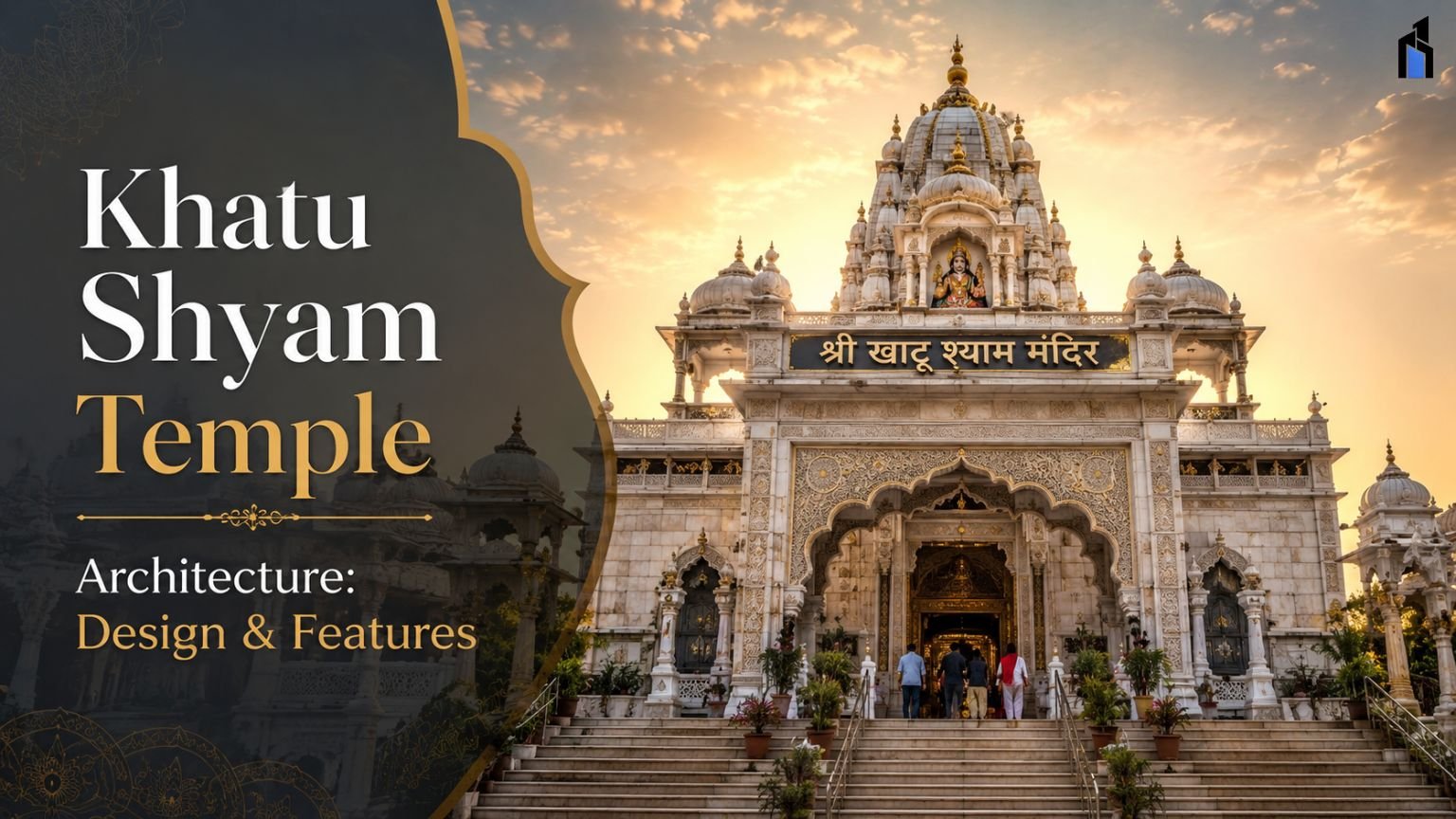
The Khatu Shyam Temple Architecture is one of the most striking features of this famous pilgrimage site in Rajasthan. Located in Khatu town in Sikar district, the temple attracts devotees as well as visitors interested in its design and artistic details. Its use of marble, decorated entrances, painted walls, and silver-covered sanctum doors gives the temple a distinctive appearance. Rajasthan’s Devasthan Department describes the temple as being built with marble, lime mortar, and mosaic tiles.
Beyond its spiritual importance, the temple also reflects the craftsmanship and artistic traditions associated with Rajasthan.
Khatu Shyam Temple Architecture and Its Main Features
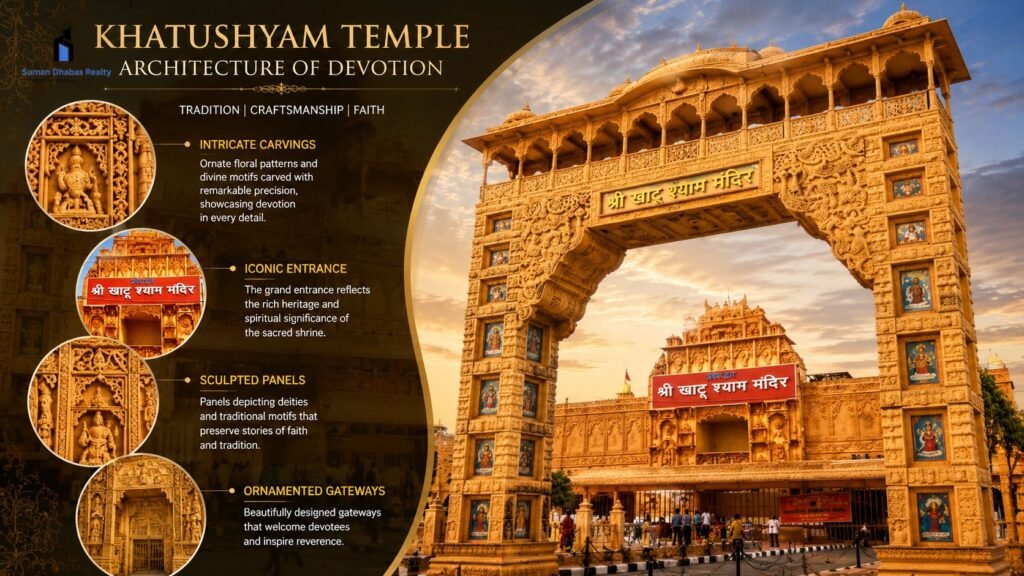
The Khatu Shyam Temple Architecture combines several decorative and structural elements. White marble forms an important part of the temple’s appearance. The material gives the structure a bright and elegant look.
The temple also includes a large prayer hall known as the Jagmohan. Its walls feature elaborate paintings that depict mythological scenes. These artworks add colour and storytelling to the otherwise marble-dominated structure.
The entrance and exit gates are also made from marble. Their frames and brackets feature ornamental floral designs. These details show the attention given to decoration throughout the temple complex.
The White Marble Beauty of Khatu Shyam Temple
One of the first things visitors notice is the temple’s extensive use of white marble. Marble gives the building a clean and luminous appearance.
The temple’s marble work is not limited to its outer structure. It also appears in important architectural elements within the complex.
Because Rajasthan has a long tradition of stone craftsmanship, marble is an important part of many significant religious and heritage structures across the region.
Khatu Shyam Temple Architecture and Marble Work
The marble used in the temple contributes both to its appearance and its sense of grandeur. Carved frames, decorative elements, and entrance details create a refined visual character.
At the same time, the temple does not depend only on stonework. Lime mortar and mosaic tiles also form part of its construction, creating a combination of materials and textures.
The Jagmohan Hall
The Jagmohan is an important part of the temple’s architectural experience. It functions as an outside prayer hall where devotees gather.
Its walls are decorated with painted mythological scenes. These paintings help connect the physical structure with stories and traditions associated with the temple.
As a result, visitors experience more than just architectural beauty. The artwork also adds a storytelling element to the space.
Silver Doors of the Sanctum
Another notable feature of the Khatu Shyam Temple Architecture is the treatment of the sanctum’s doors.
The shutters of the Garbhagriha, or inner sanctum, are covered with silver sheets. The silver surface adds a striking contrast to the white marble around it.
The sanctum is the most important spiritual space in the temple. It houses the sacred representation of Khatu Shyam Ji, traditionally associated with the head, or sheesh, of Barbarika.
Therefore, the silver detailing around this area adds to the sense of importance and devotion.
Decorative Floral Designs
Floral patterns appear across several architectural elements of the temple. The marble entrance and exit structures feature ornamental floral designs.
These patterns are more than simple decoration. They add softness to the strong geometric forms of the marble structure.
Moreover, floral motifs are a familiar element in traditional Indian architecture. They can be seen across temples, palaces, and other historic structures in Rajasthan.
Khatu Shyam Temple Architecture and Spiritual Experience
Architecture plays an important role in shaping a visitor’s experience. At Khatu Shyam Temple, the combination of marble, paintings, silver details, and devotional activity creates a distinctive atmosphere.
The temple is also part of a much larger pilgrimage environment. Shops, accommodation, roads, and other facilities have developed around Khatu Dham because of the steady flow of devotees.
This growth has also increased interest in the wider Khatu Shyam region. Residential and township developments around the Jaipur–Khatu Shyam corridor are gaining attention as the area develops. For businesses such as Suman Dhabas Realty Pvt Ltd, this growing region provides a connection between planned residential development and the wider appeal of Khatu Shyam as a destination.
However, the cultural and spiritual identity of the area remains an important part of its character.
Why Is Khatu Shyam Temple Architecture Unique?
The temple stands out because of the way different elements come together. Its major features include:
- White marble construction
- Decorative marble entrances
- Ornamental floral designs
- Silver-covered sanctum doors
- The Jagmohan prayer hall
- Mythological wall paintings
- Mosaic and other decorative elements
Together, these features create an architectural style that is both visually rich and closely connected with the temple’s religious identity.
Khatu Shyam Temple Architecture: Final Thoughts
The Khatu Shyam Temple Architecture is an important part of the identity of Khatu Dham. Its white marble structure immediately catches attention. However, the smaller details make the experience more memorable.
The painted walls of the Jagmohan, floral marble designs, and silver-covered sanctum doors each contribute to the temple’s character.
For visitors, the temple therefore offers more than a place of worship. It also provides an opportunity to appreciate Rajasthan’s artistic traditions, craftsmanship, and architectural heritage.