
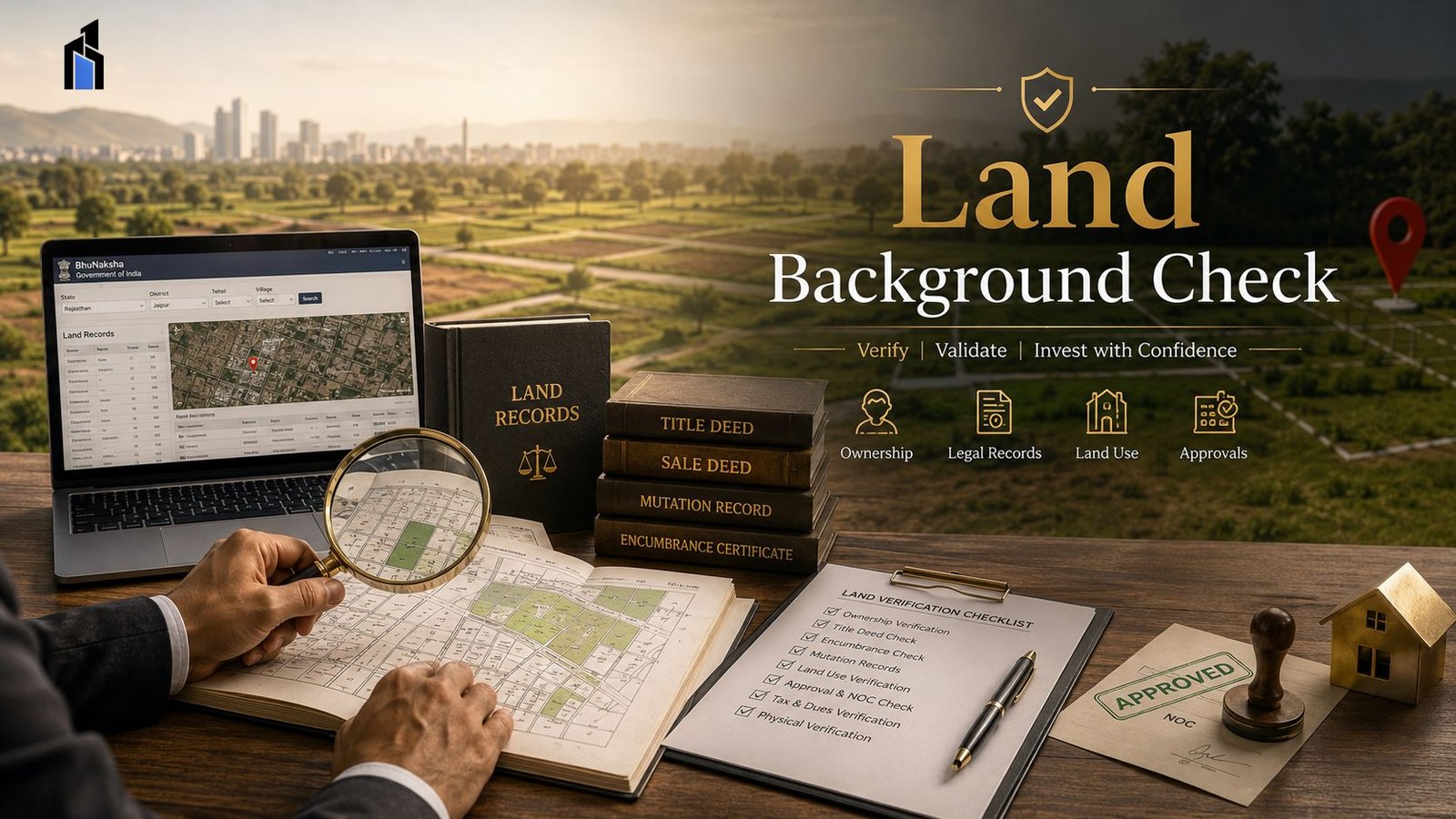
Buying a piece of land requires careful research. Before paying an advance or signing a purchase agreement, buyers need to know whether the property is legally and financially safe. A Land Background Check helps buyers examine important details such as ownership, title history, land records, encumbrances, approvals, disputes, and boundaries. These checks can reveal issues that may otherwise create problems after the purchase.
A plot may appear perfect during a site visit. Its location may be attractive and the price may fit your budget. However, these factors do not confirm that the property is safe to buy. The documents and official records also need careful attention.
What Is a Land Background Check?
A Land Background Check means examining a property before purchasing it. The main purpose is to understand who owns the land, how the ownership was transferred, and whether any known issue could affect the transaction.
Depending on the property, the verification may include:
- Current ownership details
- Previous ownership records
- Title documents
- Revenue records
- Khasra and khata information
- Land-use status
- Encumbrances
- Existing loans or claims
- Government restrictions
- Approved layouts
- Development permissions
- Court disputes
- Physical boundaries
In simple words, the process helps answer one basic question: Is the property safe to purchase?
It is important to remember that a background check should not depend on a single document. Information from different records should be compared to identify inconsistencies.
Why Is a Land Background Check Important?
Buying land involves a considerable financial commitment. A documentation error or unresolved claim can therefore create serious difficulties for the buyer.
For instance, the person offering the property for sale may not hold complete ownership rights. A property may also have an existing claim, loan, or legal dispute. In some situations, the plot shown to the buyer may not correspond with the approved layout or available records.
A Land Background Check can bring these concerns to light before the transaction moves forward.
It also allows buyers to make decisions based on documented information rather than verbal assurances. This is particularly useful in developing locations where new roads, residential projects, and townships are increasing interest in land.
Even when an area has strong development potential, the individual property still requires independent verification.
Land Background Check: Documents You Should Verify
Documents are an essential part of land verification. Buyers should collect the relevant records and compare the information mentioned in them.
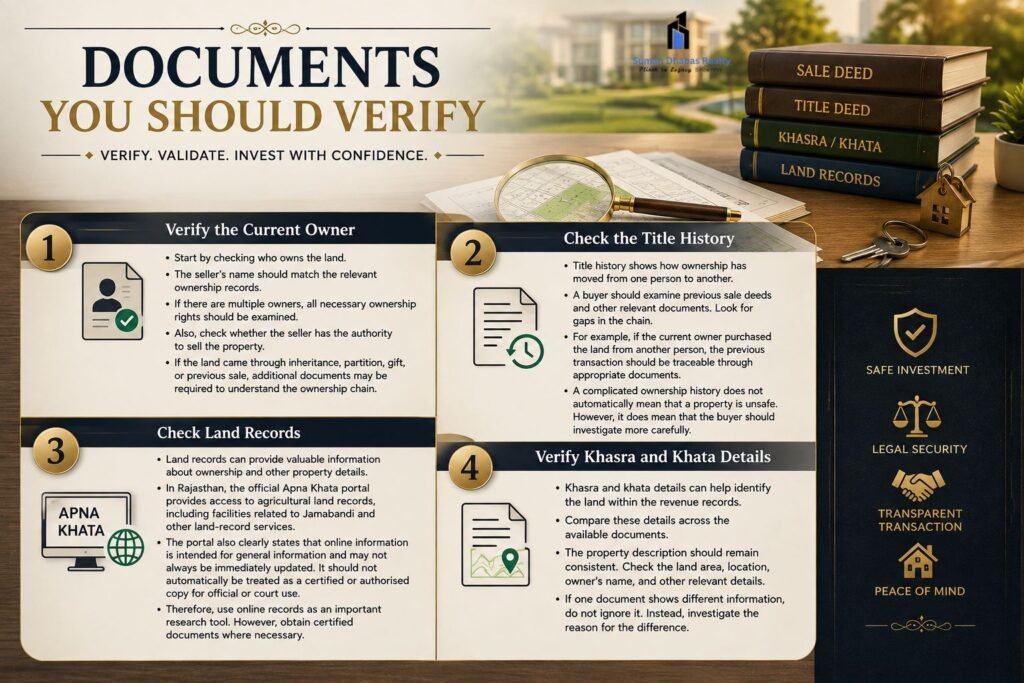
1. Verify the Current Owner
The first step is to establish who currently owns the property.
The seller’s name should correspond with the relevant ownership records. If the property has more than one owner, the rights of all owners should be examined.
It is equally important to confirm that the person selling the land has the authority to complete the transaction.
Properties received through inheritance, partition, gift, or an earlier sale may require additional documents. These records can help explain how the current ownership was established.
2. Check the Title History
Title history provides information about previous transfers of ownership.
Review earlier sale deeds and other relevant documents to understand how the property moved from one owner to another. Pay attention to any missing links in this chain.
For example, if the present owner bought the property from another person, the earlier transaction should be supported by appropriate records.
A long or complicated ownership history does not necessarily make land unsafe. However, it may require a more detailed review before purchase.
3. Check Land Records
Land records can help verify important information about a property.
In Rajasthan, the official Apna Khata portal provides access to agricultural land records and services related to Jamabandi and other revenue information. The portal also explains that online information is provided for general reference and may not always be updated immediately.
Therefore, online records should be treated as an important research source rather than automatically assuming that they are certified copies for official or court purposes.
Where necessary, buyers should obtain certified records.
4. Verify Khasra and Khata Details
Khasra and khata details help identify land within revenue records.
These details should be compared across the documents available for the property. Check information such as the owner’s name, land area, location, and other property particulars.
If two documents contain different information, do not overlook the difference. Find out why the details do not match before continuing with the transaction.
Land Background Check for Encumbrances
An encumbrance may indicate that another financial or legal interest is connected with the property.
For example, land may have been offered as security against a loan. There may also be a registered claim or another interest affecting the property.
For this reason, buyers should check for existing encumbrances before finalising the purchase.
A verbal assurance that the property is “clear” should not be the only basis for making a decision. Buyers should request appropriate documentary evidence and seek professional assistance when the situation requires it.
Check Land Use and Approvals
Land cannot always be used for every purpose.
A property may have conditions or restrictions connected with agricultural use, residential development, commercial activity, or another permitted purpose.
Before purchasing, buyers should therefore understand the applicable land-use status and verify the permissions required for the intended use.
This is especially important when purchasing a residential plot in an area that is still developing.
If the property is part of a larger plotted project or township, buyers should also examine the approved layout and relevant development permissions.
Check for Legal Disputes
Legal disputes can make a property purchase uncertain.
Before buying, investigate whether there are known ownership conflicts, court cases, government claims, acquisition concerns, or other legal matters involving the land.
This check becomes even more important when a property has changed hands several times.
If the documents are complicated or raise questions, a property lawyer can review them and provide an independent legal opinion.
Land Background Check for Township Properties
Township properties require a wider form of due diligence.
When purchasing a plot in a township, you are not evaluating only the individual plot. You are also considering the larger development in which that plot is located.
Check the Township Layout
Begin by reviewing the overall township layout.
Pay attention to:
- Internal roads
- Plot numbers
- Open spaces
- Common areas
- Access routes
- Planned amenities
- Development boundaries
- Surrounding land
The plot shown during a site visit should correspond with the relevant property documents and approved layout.
Check RERA Details Where Applicable
When a project falls under applicable RERA requirements, buyers should check its registration and available project information.
The official Rajasthan RERA portal allows users to search for projects using information such as the project name, promoter, district, registration number, project type, and status.
Registered project records may also contain useful information and documents. Depending on the project, these can include title searches, land-title documents, approved site plans, location details, and other project-related records.
This information can form an important part of the overall verification process.
For buyers considering developing residential areas around Jaipur and Khatu Shyam, the same principle applies. A promising location can attract attention, but the land and project documents still deserve careful examination.
This approach is also relevant when assessing township developments associated with Suman Dhabas Realty Pvt Ltd. Instead of looking only at lifestyle features or future growth, buyers can review the available documentation, applicable approvals, project details, and location before making a decision.
Physically Verify the Land
Document checks are important, but buyers should also visit the actual property.
During the site visit, confirm that the plot’s location matches the documents and approved layout. Examine the boundaries, access road, nearby properties, electricity lines, drainage, and surrounding development.
The approximate dimensions should also be compared with the available property records.
When the exact boundary is unclear, professional measurement or demarcation may be useful.
Any difference between the physical property and its documents should be investigated before moving ahead with the purchase.
Common Land Verification Mistakes
Land buyers can sometimes overlook simple but important checks.
Common mistakes include:
- Looking only at the current sale deed
- Ignoring previous ownership documents
- Depending on verbal promises
- Skipping land-record checks
- Failing to investigate encumbrances
- Overlooking land-use restrictions
- Not reviewing the approved layout
- Ignoring applicable RERA information
- Skipping the physical site visit
- Paying a substantial advance before completing due diligence
Such oversights can turn a straightforward property purchase into a complicated situation.
A practical approach is to prepare a verification checklist and complete the important checks before making a significant financial commitment.
How to Conduct a Land Background Check
Land verification becomes easier when the process is followed step by step.
- Collect the documents provided by the seller.
- Confirm the current owner’s identity and right to sell the property.
- Examine the property’s ownership history.
- Compare the available land records with the seller’s documents.
- Verify khasra, khata, land area, and other property details.
- Check for encumbrances, loans, and existing claims.
- Confirm the land-use status and relevant permissions.
- Investigate known court cases or other legal concerns.
- If the property is part of a township or development, review the approved layout.
- Visit the site and compare the physical property with the documents.
- Consult a qualified property lawyer if the documents or ownership history are difficult to understand.
Once the important checks have been completed and the information is satisfactory, buyers can decide whether to proceed.
Final Thoughts
A Land Background Check is an important part of the land-buying process. It gives buyers a clearer understanding of ownership, title history, land records, encumbrances, approvals, disputes, and physical boundaries.
However, no individual document can provide a complete picture of a property.
The safer approach is to compare relevant records and investigate anything that appears inconsistent. Online government portals can support the initial research, while certified documents and professional legal advice may be necessary for certain transactions.
Whether you are purchasing an individual plot or considering a property within a planned township, due diligence should come before payment.
Take time to review the records, ask questions, inspect the property, and address unclear points before committing your money. Careful verification can help you make a more informed property decision.



Pingback: Property NOC: Meaning, Types, Uses & Importance - Suman Dhabas Realty