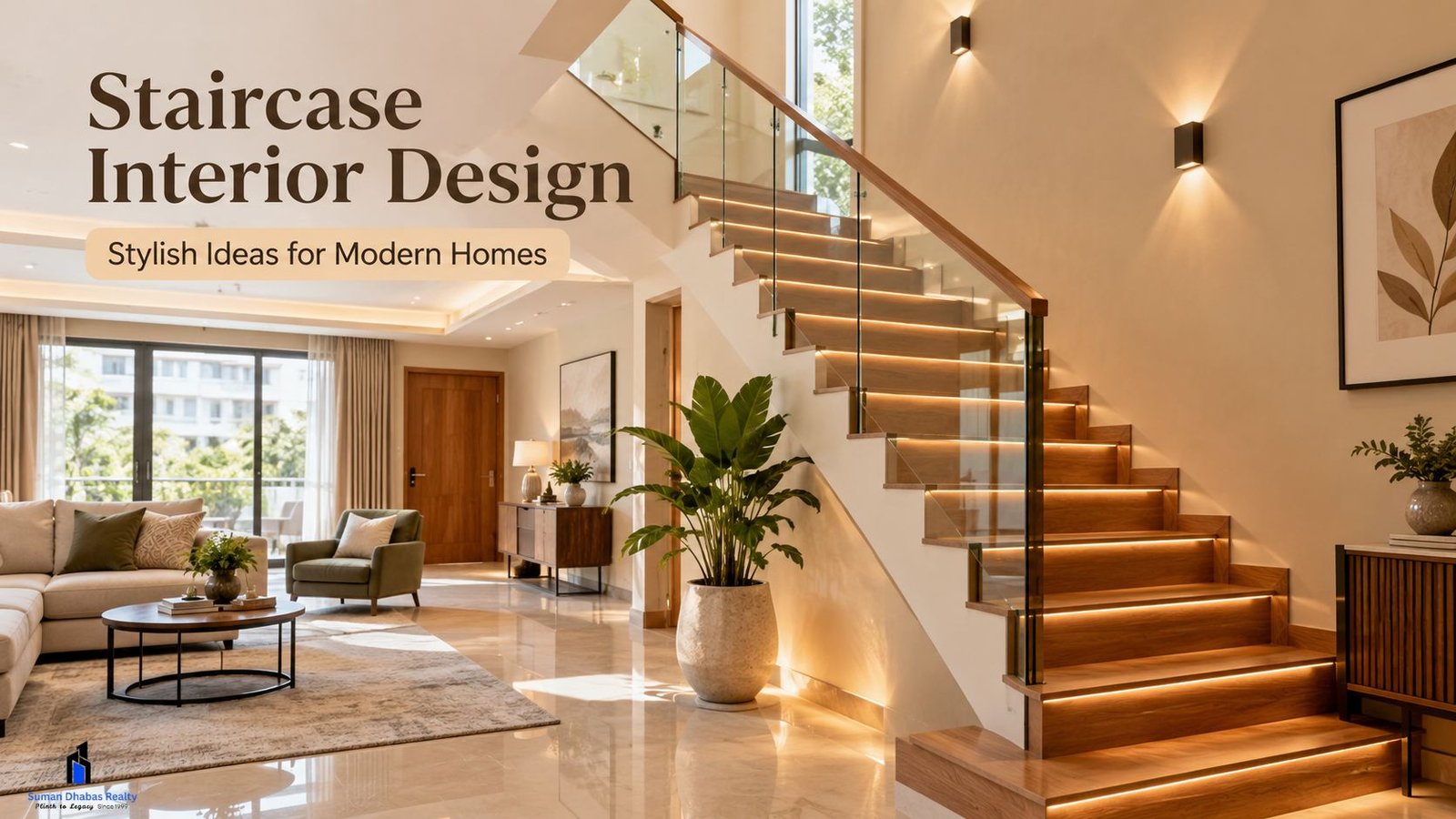
A staircase is more than a connection between two floors. It can also become an important architectural feature of a home. The right Staircase Interior Design can improve the appearance of a space while making everyday movement comfortable and safe. From floating steps to wooden finishes, homeowners can choose designs that match their interiors, available space, and budget.
A well-planned staircase should balance appearance, functionality, safety, and maintenance. Therefore, it is important to consider the staircase structure along with the surrounding walls, lighting, flooring, and furniture.
Why Staircase Interior Design Matters
The staircase often occupies a noticeable part of a living room, entrance area, or hallway. As a result, its design can influence the overall character of the interior.
A suitable Staircase Interior Design can make a compact area feel organised and spacious. In larger homes, it can create a strong visual focal point. Furthermore, the materials and colours used around the staircase can connect different areas of the home.
Before selecting a design, consider the staircase location, available floor area, ceiling height, natural light, and the needs of household members.
Popular Staircase Interior Design Ideas
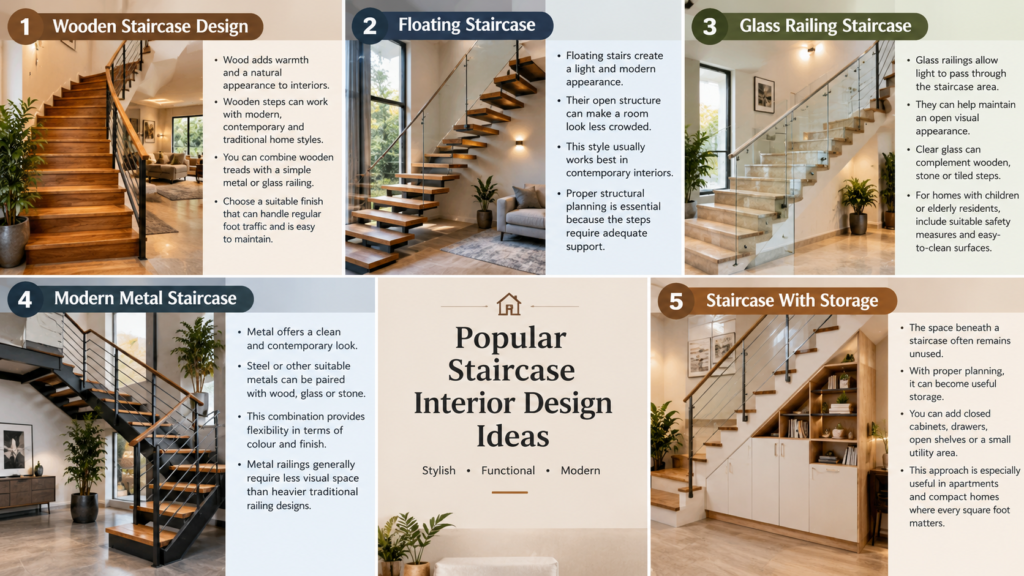
1. Wooden Staircase Design
Wood adds warmth and a natural appearance to interiors. Wooden steps can work with modern, contemporary, and traditional home styles.
You can combine wooden treads with a simple metal or glass railing. However, choose a suitable finish that can handle regular foot traffic and is easy to maintain.
2. Floating Staircase
Floating stairs create a light and modern appearance. Their open structure can make a room look less crowded.
This style usually works best in contemporary interiors. Still, proper structural planning is essential because the steps require adequate support.
3. Glass Railing Staircase
Glass railings allow light to pass through the staircase area. Therefore, they can help maintain an open visual appearance.
Clear glass can complement wooden, stone, or tiled steps. For homes with children or elderly residents, the design should also include suitable safety measures and easy-to-clean surfaces.
4. Modern Metal Staircase
Metal offers a clean and contemporary look. Steel or other suitable metals can be paired with wood, glass, or stone.
This combination provides flexibility in terms of colour and finish. In addition, metal railings generally require less visual space than heavier traditional railing designs.
5. Staircase With Storage
The space beneath a staircase often remains unused. With proper planning, it can become useful storage.
You can add closed cabinets, drawers, open shelves, or a small utility area. This approach is especially useful in apartments and compact homes where every square foot matters.
Choosing Colours for the Staircase
Colour plays an important role in Staircase Interior Design. Light shades such as white, beige, cream, and soft grey can make the area appear brighter.
Meanwhile, darker wood or charcoal accents can create contrast. You can also coordinate the staircase with the flooring and wall colours.
Avoid using too many contrasting shades in a small staircase area. Instead, select one primary finish and one or two complementary accents.
Staircase Lighting Ideas
Good lighting improves both appearance and safety. Natural light can brighten the staircase during the day, while artificial lighting helps after sunset.
Wall lights, ceiling fixtures, recessed lights, and step lighting are common options. LED strips can also highlight individual steps when installed correctly.
However, lighting should not create excessive glare or strong shadows. The goal is to make each step clearly visible without making the space visually overwhelming.
Safety Features to Consider
A beautiful staircase should also provide comfortable and safe movement. Step dimensions should remain consistent, and surfaces should offer suitable grip.
Handrails should be easy to hold and positioned at a practical height. The staircase should also have adequate lighting, particularly near changes in direction.
Families with young children or older adults may need additional safety considerations. Therefore, staircase planning should focus on practical use rather than appearance alone.
Making the Staircase Match the Home
The best Staircase Interior Design usually complements the rest of the home instead of appearing disconnected.
For example, a home with warm wooden furniture can use timber steps or wood-look finishes. A minimalist interior may work better with glass, metal, or simple concrete-style finishes.
Similarly, traditional interiors can incorporate carved wood, decorative railings, or classic stone finishes. The key is to maintain a consistent design language throughout the space.
Staircase Planning in Modern Townships
In a planned residential township, staircase and interior choices can be considered alongside the broader layout of the home and community. Developers such as Suman Dhabas Realty Pvt Ltd focus on residential projects where planning, open spaces, and everyday usability form part of the larger living environment. Such planning can give homeowners a practical foundation for creating interiors that suit their individual preferences.
How to Choose the Right Staircase Design
Start by measuring the available area and understanding the existing structure. Next, decide whether the staircase should be a major design feature or blend into the background.
Then, compare materials based on durability, maintenance, appearance, and cost. Also, think about lighting, railing style, storage requirements, and safety.
Finally, consult a qualified architect, structural engineer, or interior professional before making structural changes. A staircase must meet applicable building and safety requirements, so visual appeal should never replace proper planning.
Final Thoughts
A staircase can become one of the most attractive elements of a home when its design combines style and practical use. From wooden and floating stairs to glass railings, metal finishes, storage solutions, and layered lighting, there are many options for different interiors.
The right Staircase Interior Design depends on the home’s size, architectural style, daily requirements, and maintenance preferences. With thoughtful planning, even an ordinary staircase can become a functional and visually appealing part of the interior.