
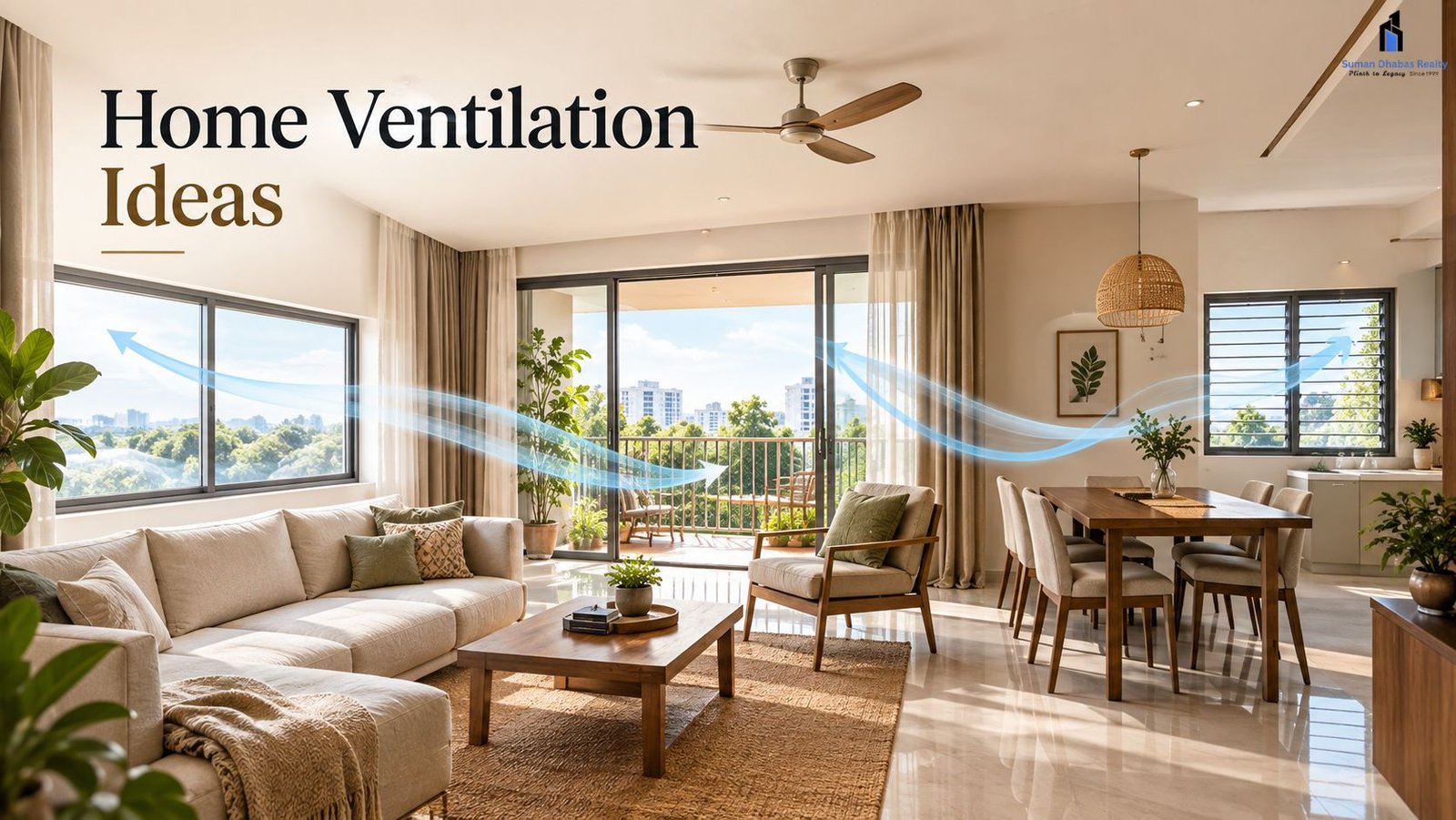
Good airflow can make a home feel fresher, cooler, and more comfortable. Home Ventilation Ideas can help homeowners plan better air movement by using windows, vents, exhaust systems, open spaces, and thoughtful room layouts. Proper ventilation also helps remove indoor pollutants, excess moisture, odours, and stale air. The World Health Organization notes that improved ventilation can support healthier indoor environments, although the right approach depends on outdoor air quality, climate, building design, and how the home is used.
Why Is Ventilation Important in a Home?
A well-ventilated home allows outdoor air to enter while helping indoor air leave. This process can dilute indoor pollutants and control factors such as humidity, odours, and temperature. The U.S. Environmental Protection Agency also identifies adequate ventilation as one of the important strategies for maintaining indoor air quality.
Poor airflow can make rooms feel stuffy. It can also allow moisture to build up, particularly in kitchens, bathrooms, and other areas where water vapour is regularly produced. Excess moisture may contribute to dampness and mould growth.
Home Ventilation Ideas for Better Airflow
1. Create Cross Ventilation
Cross ventilation is one of the simplest Home Ventilation Ideas for residential spaces. It works by placing openings, such as windows or doors, on different sides of a room or home so air can move through the space.
For example, a living room with windows on opposite or adjacent sides may receive better airflow than a room with only one small opening. The exact result depends on the building’s orientation, surrounding structures, wind conditions, and window placement.
2. Use Large, Well-Placed Windows
Window size and location can influence natural airflow. Larger openings can provide more opportunities for fresh outdoor air to enter, while strategically positioned windows can support air movement across rooms.
However, bigger windows do not automatically guarantee good ventilation. Their effectiveness depends on the overall layout. When planning a new home, consider window positions alongside room orientation and prevailing local conditions.
3. Add Ventilators Near the Ceiling
Warm air can rise, so high-level ventilators can help release accumulated warm air from certain spaces. They can be particularly useful in kitchens, bathrooms, stairwells, and rooms with high ceilings.
A combination of lower-level openings for incoming air and higher openings for outgoing air can support natural airflow. Traditional architectural designs have also used high-level openings and air spaces to encourage heat release and ventilation.
4. Install Exhaust Fans in Kitchens and Bathrooms
Kitchens and bathrooms produce moisture, odours, and other indoor pollutants. Exhaust fans can help move unwanted air outside instead of allowing it to spread through the home.
In kitchens, a properly installed range hood or exhaust system can help remove cooking-related pollutants. Bathrooms can benefit from exhaust fans that operate during and after activities that generate moisture.
The WHO notes that ventilation devices such as hoods and chimneys can reduce exposure to indoor cooking smoke, although ventilation works best alongside cleaner cooking fuels and low-emission appliances.
5. Keep Internal Air Paths Open
Even a home with good windows may experience poor airflow if furniture, partitions, or doors block the movement of air.
Therefore, keep important air paths reasonably clear. Avoid placing tall furniture directly in front of windows or blocking vents with cabinets. Where appropriate, open internal doors can also help air travel between connected rooms.
6. Consider a Courtyard or Open-to-Sky Space
For new houses, a courtyard can become both an architectural feature and an opportunity for natural airflow. An open central space can connect different rooms while allowing daylight and outdoor air to enter.
Courtyard planning works especially well when it is integrated into the home’s overall orientation and ventilation strategy. It should not be treated as a standalone solution.
7. Use Balcony and Utility Areas Wisely
Balconies, utility areas, and semi-open spaces can provide additional opportunities for air movement. Positioning openings toward these spaces may improve airflow in suitable layouts.
At the same time, avoid treating every outdoor opening as automatically beneficial. Outdoor pollution, dust, noise, heat, and security considerations can affect whether an opening should remain open. WHO specifically notes that natural ventilation may be less beneficial when outdoor air pollution is higher than indoor pollution.
Home Ventilation Ideas for Indian Homes
Indian homes experience different climatic conditions, from hot and dry regions to warm and humid coastal areas. Therefore, ventilation strategies should match the local climate.
In warm regions, shaded windows, ventilated balconies, high-level openings, and suitable cross ventilation can help manage indoor heat. In humid areas, ventilation should work alongside moisture control. In polluted locations, simply opening every window may not always be the best approach.
For a new property, buyers can also examine window placement, room orientation, balcony design, kitchen exhaust provision, bathroom ventilation, and the overall spacing between buildings.
Projects developed with attention to planning and usable residential layouts can make these factors easier to evaluate. Suman Dhabas Realty Pvt. Ltd., for example, focuses on plotted developments, villas, farmhouses, and resorts, with its development work connected to a construction legacy dating back to 1999. Its Siddhi Vinayak Homes project represents its plotted-township development approach.
How to Improve Ventilation Without Major Renovation
You do not always need structural changes to improve airflow. Start by keeping windows and vents unobstructed. Clean exhaust fans regularly and make sure they discharge air outdoors. Use kitchen and bathroom exhaust systems when moisture or pollutants are generated.
You can also rearrange bulky furniture that blocks windows or internal air paths. During suitable weather, opening windows on different sides of the home can encourage cross ventilation.
However, ventilation should not replace source control. Reducing indoor pollution at its source, controlling moisture, and using suitable filtration can work together to improve indoor air quality.
Common Ventilation Mistakes to Avoid
Some common mistakes can reduce the effectiveness of a ventilation plan:
- Blocking windows with furniture or storage units
- Ignoring kitchen and bathroom exhaust requirements
- Creating rooms with no practical airflow path
- Assuming larger windows alone will solve ventilation problems
- Allowing excessive moisture to remain indoors
- Ignoring outdoor pollution when planning natural ventilation
- Neglecting regular cleaning and maintenance of exhaust systems
Final Thoughts
Effective ventilation is a combination of design, airflow, maintenance, and appropriate everyday habits. The best Home Ventilation Ideas depend on the home’s layout, climate, orientation, outdoor environment, and occupancy.
For new homebuyers, ventilation is worth considering alongside natural light, room sizes, storage, connectivity, and overall layout. A home that combines practical planning with suitable ventilation can offer a more comfortable indoor environment while making better use of natural airflow.



Pingback: How Cross Ventilation Works: Improve Airflow in Your Home - Suman Dhabas Realty