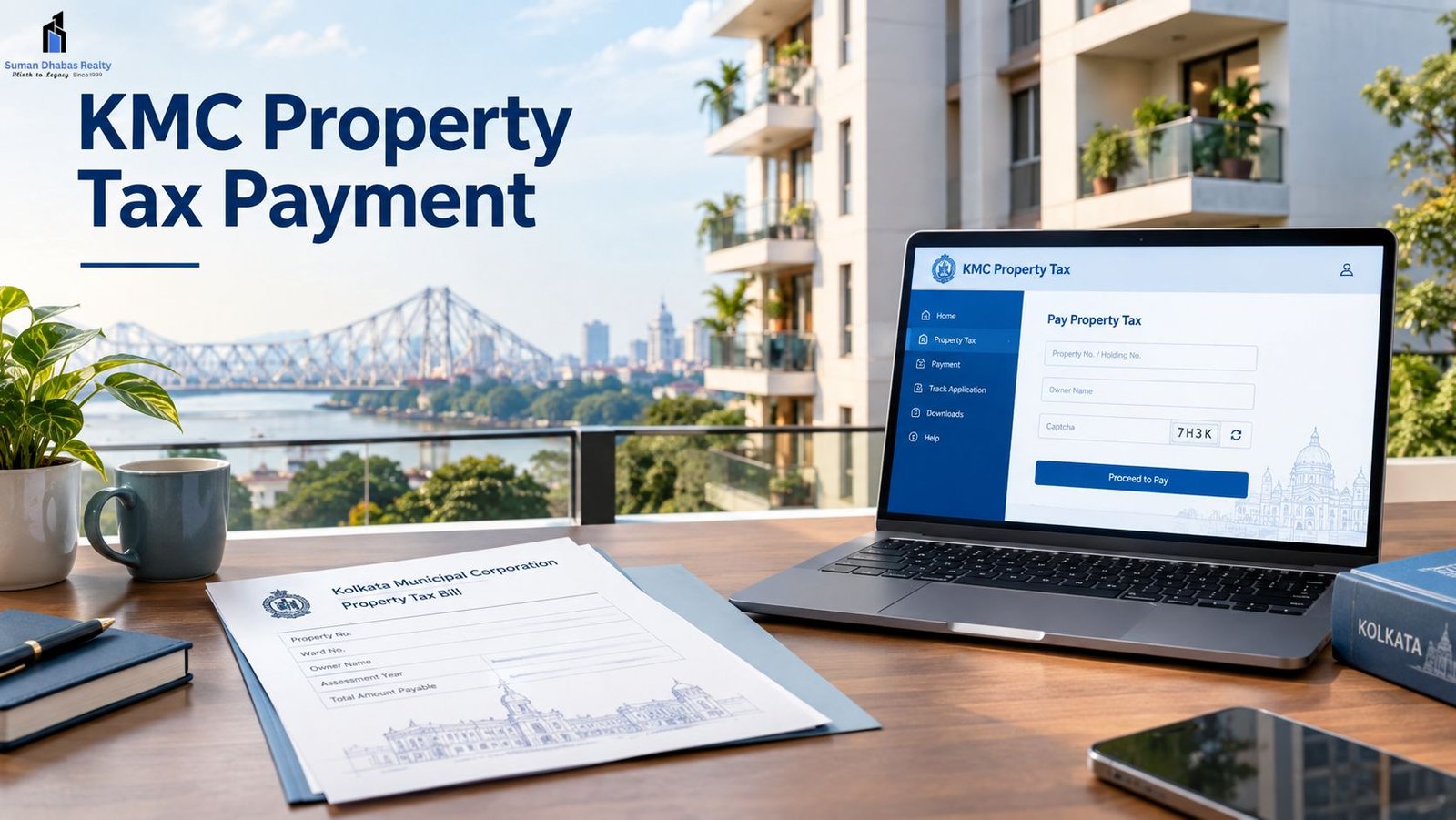
Paying municipal property tax is an important responsibility for property owners in Kolkata. KMC property tax payment allows eligible taxpayers to settle their municipal tax dues and keep their property records up to date. The Kolkata Municipal Corporation (KMC) provides online services for property tax assessment, demand checking and payment.
Whether you own a house, flat, commercial property or another taxable premises within the KMC area, understanding the assessment system and payment process can make tax management easier.
What Is KMC Property Tax?
KMC property tax is a municipal tax imposed on taxable properties within the Kolkata Municipal Corporation area. The Assessment and Collection Department is responsible for identifying taxable premises, maintaining property details, determining valuation and collecting property tax.
KMC uses the Unit Area Assessment (UAA) system for property taxation. The system considers factors such as location, area, purpose of use, occupancy and the type of structure while determining the applicable valuation. The UAA system began in Kolkata from April 1, 2017.
How KMC Property Tax Payment Works
The KMC property tax payment process can generally be started through the Corporation’s official online services. KMC’s website provides a dedicated Property Tax Quick Pay option, along with facilities for checking demands and making payments.
Before making a payment, keep your property-related details and latest tax demand information available. The exact amount payable depends on the assessment and applicable charges recorded for the property.
Steps for KMC Property Tax Payment
A basic online payment process can be approached in the following order:
- Visit the official Kolkata Municipal Corporation website.
- Open the property tax or Assessment-Collection section.
- Use the available demand or quick-payment facility.
- Enter the required property or assessee details.
- Review the outstanding amount and applicable charges.
- Select the available payment option.
- Complete the transaction.
- Save or print the payment receipt for future reference.
KMC’s portal currently provides options related to checking demands, making payments and printing receipts.
KMC Property Tax Assessment
Property tax depends on the valuation determined under the applicable KMC system. Under UAA, properties are assessed using a structured approach based on location and property characteristics. KMC divides areas into categories and uses Base Unit Area Values along with property-specific factors.
Therefore, two properties in different locations or with different characteristics may not have the same tax liability.
Property owners should check their assessment details if they believe the valuation or tax demand does not reflect the property’s actual circumstances.
KMC Property Tax Due Dates and Rebates
KMC generally structures property tax payments in quarterly instalments, with the relevant schedule mentioned on the tax bill. The Corporation also publishes presentation and rebate-date schedules for property tax demand bills.
Timely payment can also help taxpayers receive applicable rebates. KMC’s FAQ states that failure to pay within the specified period can result in the loss of rebate.
Because dates can change by financial year, property owners should check the latest KMC schedule instead of relying on an old payment calendar.
What Happens If Property Tax Is Paid Late?
Late payment can have financial consequences. According to KMC’s published FAQ, a one-time penalty of up to 15% of the tax may apply when payment is not made within the relevant presentation quarter. The Corporation also states that the rebate may be lost when payment is not made within the specified period.
For this reason, keeping track of quarterly bills can help prevent unnecessary additional charges.
What Documents and Details Should Owners Keep?
Property owners should maintain copies of important property and tax records. These may include:
- Assessee number
- Property or premises details
- Previous property tax bills
- Payment receipts
- Ownership documents
- Assessment-related correspondence
- Mutation documents, where applicable
The assessee number can be particularly useful when dealing with tax payments and outstanding demands. KMC also states that non-receipt of a tax bill does not necessarily remove the taxpayer’s responsibility to pay outstanding property tax.
Property Mutation and Tax Records
Mutation is another important part of maintaining updated municipal property records. KMC’s mutation process requires the prescribed Form A-42 and, in relevant cases, a No Outstanding Certificate from the Assessment and Collection Department. Additional documents may be required depending on the type of mutation.
Therefore, buyers should not treat tax payment and mutation as completely separate property-record matters. Both can be relevant when ownership changes.
Property Buyers and Tax Verification
Property buyers should review outstanding municipal dues before completing a purchase. Checking available tax records can help identify whether there are unpaid demands associated with the property.
This is particularly relevant when purchasing a resale property, where the buyer should review ownership documents, tax receipts, mutation status and other applicable records.
For those exploring planned residential developments, companies such as Suman Dhabas Realty Pvt Ltd also highlight the importance of organised planning and property information. The company develops plots, villas, farmhouses and other real-estate formats.
However, buyers should independently verify the documents, approvals, tax status and other applicable records of any property before completing a transaction.
Common Mistakes to Avoid
A few simple mistakes can create problems later. Avoid:
- Ignoring old tax dues
- Relying on outdated payment dates
- Losing payment receipts
- Assuming mutation automatically settles every tax issue
- Ignoring differences in property records
- Using unofficial websites for payments
Instead, check the latest information directly through KMC’s official portal.
Final Thoughts
KMC property tax payment is an essential part of managing taxable property within Kolkata’s municipal area. Understanding the assessment system, checking the latest demand, paying within the applicable schedule and keeping receipts can make the process more organised.
Property owners should also review mutation and ownership records when a property changes hands. Most importantly, use the official KMC website for current payment facilities, schedules and assessment-related information because procedures and dates can change.
For property buyers, tax verification should form part of broader due diligence alongside title documents, approvals, ownership records and other relevant checks.